Compare commits
26 Commits
| Author | SHA1 | Date | |
|---|---|---|---|

|
2429eef5e0 | ||
| 2563f398da | |||
| 0cad35e2da | |||
| 65edf40164 | |||
| c3f88b7846 | |||
|
|
088d9c1edb | ||
| a6ec769a9b | |||
|
|
7430fbf3ef | ||
| ce397b35aa | |||
|
|
caf184c327 | ||
| 488b05f062 | |||
|
|
2447a47269 | ||
| 9380342b4f | |||
|
|
9b36e9d911 | ||
| c9a961d5e8 | |||
| 77878888ca | |||
|
|
50e8564027 | ||
| f07ac1c70c | |||
|
|
b6e7ae0c8b | ||
| 854af4c3bc | |||
|
|
0eaba42f27 | ||
| b2791e3aae | |||
|
|
2eb2358589 | ||
| 8b862b3fe0 | |||
|
|
5922269f7e | ||
| 99ce5c28d0 |

@@ -50,33 +50,13 @@ jobs:
|
||||
env:
|
||||
GITHUB_TOKEN: ${{ secrets.GITHUB_TOKEN }}
|
||||
|
||||
upload_blender_addon:
|
||||
name: Upload Blender Add-on
|
||||
needs: draft_release
|
||||
runs-on: ubuntu-latest
|
||||
steps:
|
||||
- name: Checkout Code
|
||||
uses: actions/checkout@v4
|
||||
with:
|
||||
lfs: "true"
|
||||
- name: Zip Add-on
|
||||
run: |
|
||||
zip -r package.zip bioxelnodes
|
||||
- name: Upload Release Asset
|
||||
id: upload-release-asset
|
||||
uses: actions/upload-release-asset@v1
|
||||
env:
|
||||
GITHUB_TOKEN: ${{ secrets.GITHUB_TOKEN }}
|
||||
with:
|
||||
upload_url: ${{ needs.draft_release.outputs.upload_url }} # This pulls from the CREATE RELEASE step above, referencing it's ID to get its outputs object, which include a `upload_url`. See this blog post for more info: https://jasonet.co/posts/new-features-of-github-actions/#passing-data-to-future-steps
|
||||
asset_path: ./package.zip
|
||||
asset_name: BioxelNodes_Addon_${{ needs.draft_release.outputs.version }}.zip
|
||||
asset_content_type: application/zip
|
||||
|
||||
upload_blender_extension:
|
||||
name: Upload Blender Extension
|
||||
build_blender_add-on:
|
||||
name: Build Blender Extension
|
||||
needs: draft_release
|
||||
runs-on: ubuntu-latest
|
||||
strategy:
|
||||
matrix:
|
||||
platform: ["windows-x64", "linux-x64", "macos-arm64", "macos-x64"]
|
||||
steps:
|
||||
- name: Checkout Code
|
||||
uses: actions/checkout@v4
|
||||
@@ -86,13 +66,10 @@ jobs:
|
||||
uses: actions/setup-python@v4
|
||||
with:
|
||||
python-version: 3.11
|
||||
- name: Zip Extension
|
||||
- name: Build Add-on
|
||||
run: |
|
||||
pip download SimpleITK==2.3.1 --dest bioxelnodes/wheels --only-binary=:all: --python-version=3.11 --platform=win_amd64
|
||||
rm -r bioxelnodes/externalpackage
|
||||
cp extension/__init__.py bioxelnodes/__init__.py
|
||||
cp extension/preferences.py bioxelnodes/preferences.py
|
||||
cp extension/blender_manifest.toml bioxelnodes/blender_manifest.toml
|
||||
pip install tomlkit
|
||||
python build.py ${{ matrix.platform }}
|
||||
zip -r package.zip bioxelnodes
|
||||
- name: Upload Release Asset
|
||||
id: upload-release-asset
|
||||
@@ -102,5 +79,5 @@ jobs:
|
||||
with:
|
||||
upload_url: ${{ needs.draft_release.outputs.upload_url }} # This pulls from the CREATE RELEASE step above, referencing it's ID to get its outputs object, which include a `upload_url`. See this blog post for more info: https://jasonet.co/posts/new-features-of-github-actions/#passing-data-to-future-steps
|
||||
asset_path: ./package.zip
|
||||
asset_name: BioxelNodes_Extension_${{ needs.draft_release.outputs.version }}.zip
|
||||
asset_name: BioxelNodes_${{ needs.draft_release.outputs.version }}_${{ matrix.platform }}.zip
|
||||
asset_content_type: application/zip
|
||||
2
.gitignore
vendored
@@ -133,4 +133,4 @@ blendcache_*
|
||||
|
||||
.secrets
|
||||
|
||||
!bioxelnodes/scipy/_nd_image.cp311-win_amd64.pyd
|
||||
!scipy_ndimage/*/**
|
||||
88
README.md
@@ -1,70 +1,76 @@
|
||||
[中文文档](https://uj6xfhbzp0.feishu.cn/wiki/Qx3VwHuNPimeI8kr6nDcvl1DnHf?from=from_copylink)
|
||||
|
||||
# 🦖 Bioxel Nodes
|
||||
# Bioxel Nodes
|
||||
|
||||

|
||||

|
||||

|
||||

|
||||
[](https://blender.org/)
|
||||

|
||||

|
||||

|
||||
|
||||
Bioxel Nodes is a Blender extension for scientific volumetric data visualization. It using Blender's powerful Geometry Nodes and Cycles to process and render volumetric data. You are free to share your blender file to anyone who does not install this extension, since most processes were done by Blender's native nodes.
|
||||
[](https://discord.gg/pYkNyq2TjE)
|
||||
|
||||
## About
|
||||
|
||||
Before us, there have been many tutorials and extensions for importing volumetric data into Blender. However, we found that there were many scientific issues that were not addressed in place, and the volume render results were not epic. With Bioxel Nodes, you can easily import any format volumetric data into Blender, and more importantly, make a beautiful realistic volume rendering quickly.
|
||||
|
||||
Below are some examples with Bioxel Nodes. Thanks to Cycles Render, the volumetric data can be rendered with great detail:
|
||||
Bioxel Nodes is a Blender addon for scientific volumetric data visualization. It using Blender's powerful **Geometry Nodes** and **Cycles** to process and render volumetric data.
|
||||
|
||||
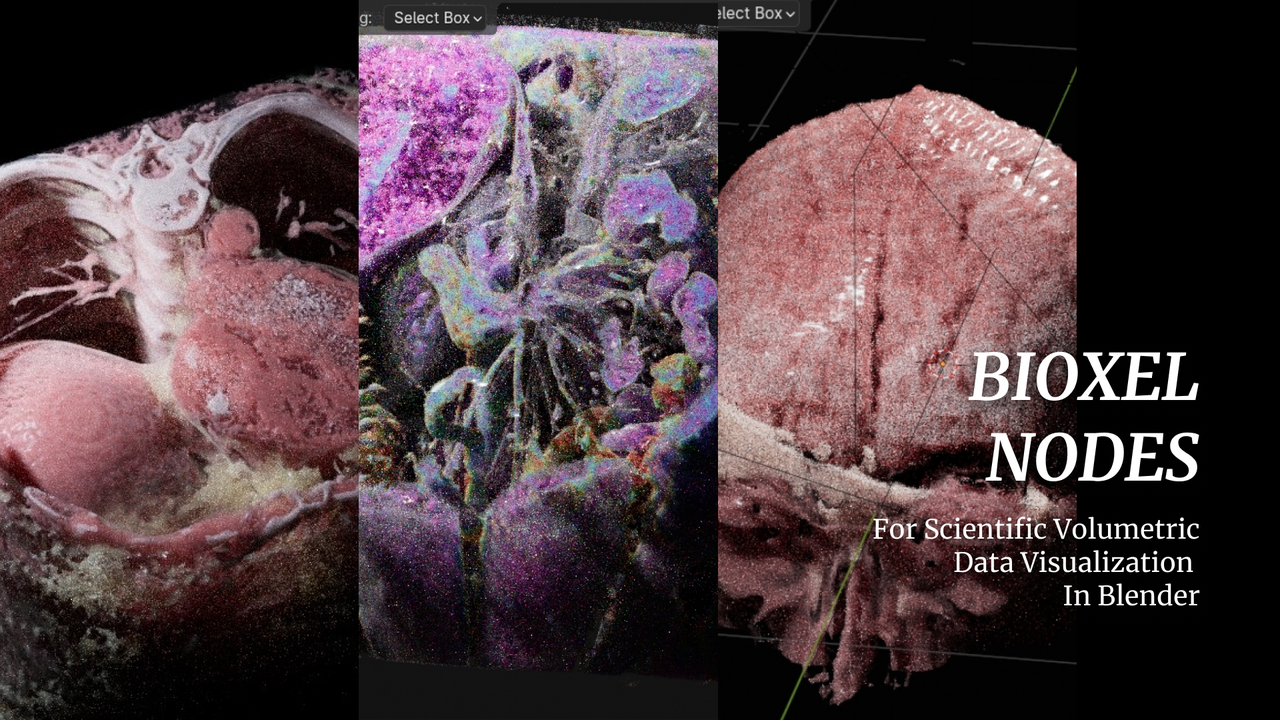
|
||||
|
||||
So how to use this extension? please check [Getting Started](https://omoolab.github.io/BioxelNodes/latest/getting-started)
|
||||
- Realistic rendering result, also support EEVEE NEXT.
|
||||
- Support multiple formats.
|
||||
- Support 4D volumetric data.
|
||||
- All kinds of cutters.
|
||||
- Simple and powerful nodes.
|
||||
- Based on blender natively, can work without addon.
|
||||
|
||||
## Supported Format
|
||||
**Read the [getting started](https://omoolab.github.io/BioxelNodes/latest/installation) to begin your journey into visualizing volumetric data!**
|
||||
|
||||
Welcome to our [discord server](https://discord.gg/pYkNyq2TjE), if you have any problems with this add-on.
|
||||
|
||||
## Support Multiple Formats
|
||||
|
||||
| Format | EXT | Test |
|
||||
| ------ | ---------------------------------------- | ------- |
|
||||
| DICOM | .dcm, .DICOM | ✅ pass |
|
||||
| DICOM | .dcm, .DCM, .DICOM, .ima, .IMA | ✅ pass |
|
||||
| BMP | .bmp, .BMP | ✅ pass |
|
||||
| JPEG | .jpg, .JPG, .jpeg, .JPEG | ✅ pass |
|
||||
| PNG | .png, .PNG | ✅ pass |
|
||||
| TIFF | .tif, .TIF, .tiff, .TIFF | ✅ pass |
|
||||
| Nifti | .nia, .nii, .nii.gz, .hdr, .img, .img.gz | ✅ pass |
|
||||
| Nrrd | .nrrd, .nhdr | ✅ pass |
|
||||
| Meta | .mha, .mhd | yet |
|
||||
| HDF5 | .hdf, .h4, .hdf4, .he2, .h5, .hdf5, .he5 | ✅ pass |
|
||||
| VTK | .vtk | yet |
|
||||
| BioRad | .PIC, .pic | yet |
|
||||
| Gipl | .gipl, .gipl.gz | yet |
|
||||
| LSM | .lsm, .LSM | yet |
|
||||
| MINC | .mnc, .MNC | yet |
|
||||
| MRC | .mrc, .rec | yet |
|
||||
| OME | .ome.tiff, .ome.tif | ✅ pass |
|
||||
| MRC | .mrc, .mrc.gz, .map, .map.gz | ✅ pass |
|
||||
|
||||
## Support 4D volumetric data
|
||||
|
||||
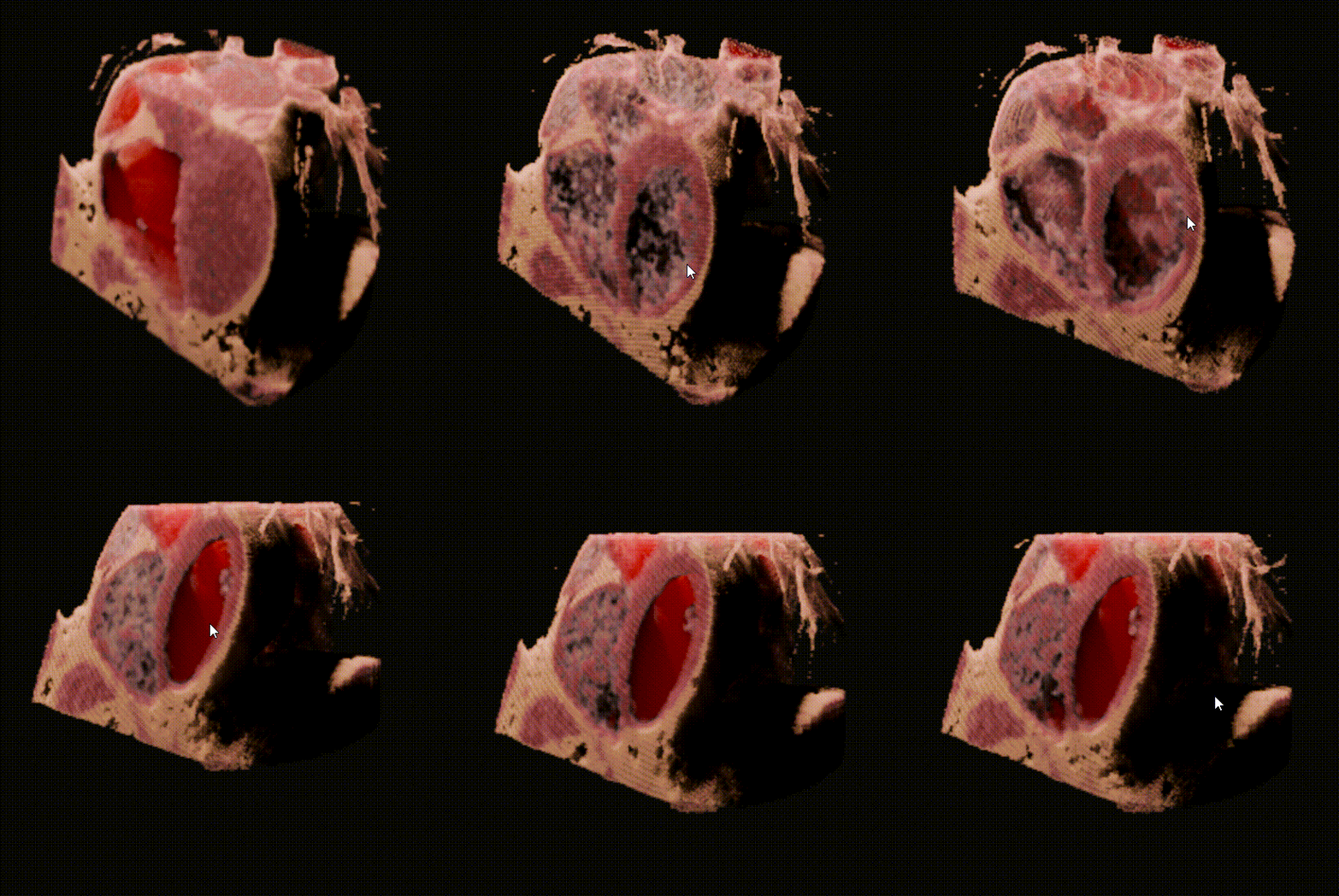
|
||||
|
||||
🥰 4D volumetric data can also be imported into Blender.
|
||||
|
||||
## Support EEVEE NEXT
|
||||
|
||||
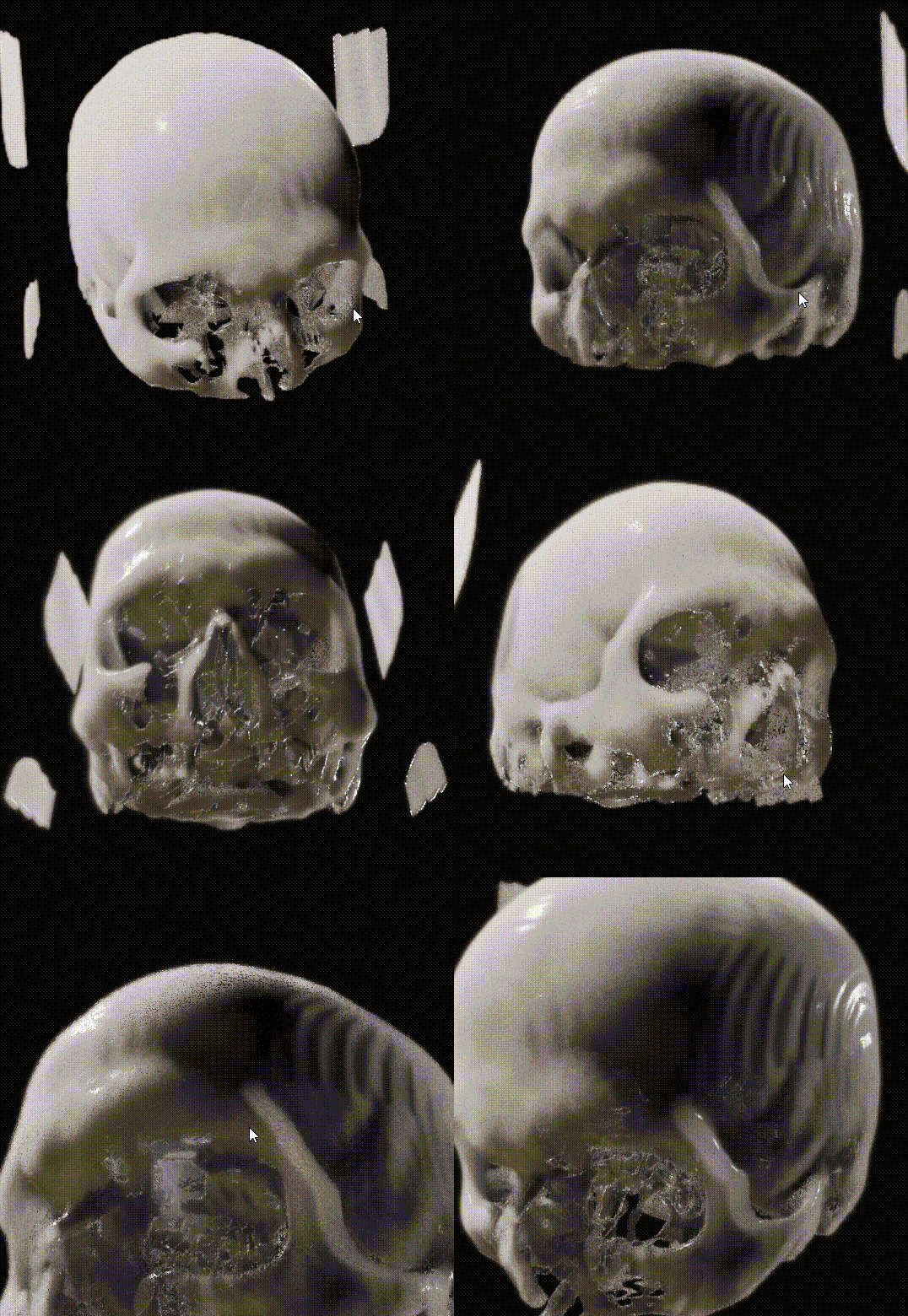
|
||||
|
||||
👍 EEVEE NEXT is absolutely AWESOME! Bioxel Nodes is fully support EEVEE NEXT now! However, there are some limitations:
|
||||
|
||||
1. Only one cutter supported.
|
||||
2. EEVEE result is not that great as Cycles does.
|
||||
|
||||
## Known Limitations
|
||||
|
||||
- Sections cannot be generated (will be supported soon)
|
||||
- Time sequence volume not supported (will be supported soon)
|
||||
- Only works with Cycles CPU , Cycles GPU (OptiX), EEVEE
|
||||
- Section surface cannot be generated when convert to mesh (will be supported soon)
|
||||
|
||||
## Upgrade from 0.1.x to 0.2.x
|
||||
## Compatible to Newer Version
|
||||
|
||||
You need to do the following:
|
||||
**v0.3.x is not compatible to v0.2.x, Updating this addon may break old files. Read the following carefully before upgradation**
|
||||
|
||||
1. Remove the old version of Bioxel Nodes at Preferences > Add-ons
|
||||
2. Add the new version and restart Blender.
|
||||
Before upgradation, you need to ask yourself whether this project file will be modified again or not, if it's an archived project file, I would recommend that you run **Bioxel Nodes > Save Staged Data** to make the addon nodes permanent. In this way, there will be no potential problem with the nodes not functioning due to the addon update.
|
||||
|
||||
It is not support editing the same blender file across extension versions. In order to make sure that the previous file works properly. You need to save the staged data before upgrading ( read the last section of [Getting Started](https://omoolab.github.io/BioxelNodes/latest/getting-started/#share-your-file) ).
|
||||
After the addon update, your old project files may not work either, this may be because you had executed **Save Staged Data**. If so, you need to execute **Bioxel Nodes > Relink Nodes to Addon** to relink them to make sure that the addon's new functionality and the addon nodes are synchronized.
|
||||
|
||||
But even then, there is still no guarantee that the new version of the extension will work on the old blender file. Therefore, it is highly recommended to open a new blender file to start the creating, not based on the old one.
|
||||
Also, the older shaders are not based on OSL, so if you find that you can't render volumes, you need to turn on **Open Shading Language (OSL)** in the Render Settings.
|
||||
|
||||
Alternatively, objects from the old file that have nothing to do with Bioxel Nodes could be append to the new blender file.
|
||||
## Roadmap
|
||||
|
||||
## About EEVEE Render
|
||||
|
||||
Bioxel Nodes is designed for Cycles Render. However, it does support eevee render partially. "Solid Shader" node and "Volume Shader" node have a toggle called "EEVEE Render". If you want to render Bioxel Component in real-time, turn it on.
|
||||
|
||||
Also, there are some limitations:
|
||||
|
||||
1. Only one cutter supported.
|
||||
2. You cannot use "Color Ramp" over 2 colors.
|
||||
3. EEVEE Render result is not that great as Cycles does.
|
||||
|
||||
> "Volume Shader" node is not work properly in EEVEE Next since 4.2. It is because EEVEE Next is not support attributes from instances of volume shader by now. But the Blender 4.2 docs still say attributes reading is ok, so I suppose this feature will eventually be implemented.
|
||||
- Better multi-format import experience
|
||||
- One-click bake model with texture
|
||||
- AI Segmentation to Generate Labels
|
||||
|
||||
@@ -4,28 +4,14 @@ from . import auto_load
|
||||
from . import menus
|
||||
|
||||
|
||||
bl_info = {
|
||||
"name": "Bioxel Nodes",
|
||||
"author": "Ma Nan",
|
||||
"description": "",
|
||||
"blender": (4, 0, 0),
|
||||
"version": (0, 2, 4),
|
||||
"location": "File -> Import",
|
||||
"warning": "",
|
||||
"category": "Node"
|
||||
}
|
||||
|
||||
auto_load.init()
|
||||
|
||||
|
||||
def register():
|
||||
auto_load.register()
|
||||
bpy.types.WindowManager.bioxelnodes_progress_factor = bpy.props.FloatProperty()
|
||||
bpy.types.WindowManager.bioxelnodes_progress_text = bpy.props.StringProperty()
|
||||
menus.add()
|
||||
bpy.types.Scene.bioxel_layer_dir = bpy.props.StringProperty(
|
||||
name="Layer Directory",
|
||||
subtype='DIR_PATH',
|
||||
default="//"
|
||||
)
|
||||
|
||||
|
||||
def unregister():
|
||||
|
||||
BIN
bioxelnodes/assets/Nodes/BioxelNodes_4.2.blend
LFS
Normal file
0
bioxelnodes/bioxel/__init__.py
Normal file
9
bioxelnodes/bioxel/container.py
Normal file
@@ -0,0 +1,9 @@
|
||||
from .layer import Layer
|
||||
|
||||
|
||||
class Container():
|
||||
def __init__(self,
|
||||
name,
|
||||
layers: list[Layer] = []) -> None:
|
||||
self.name = name
|
||||
self.layers = layers
|
||||
43
bioxelnodes/bioxel/io.py
Normal file
@@ -0,0 +1,43 @@
|
||||
from pathlib import Path
|
||||
import uuid
|
||||
|
||||
|
||||
# 3rd-party
|
||||
import h5py
|
||||
|
||||
from .container import Container
|
||||
from .layer import Layer
|
||||
|
||||
|
||||
def load_container(load_file: str):
|
||||
load_path = Path(load_file).resolve()
|
||||
with h5py.File(load_path, 'r') as file:
|
||||
layers = []
|
||||
for key, layer_dset in file['layers'].items():
|
||||
layers.append(Layer(data=layer_dset[:],
|
||||
name=layer_dset.attrs['name'],
|
||||
kind=layer_dset.attrs['kind'],
|
||||
affine=layer_dset.attrs['affine']))
|
||||
|
||||
container = Container(name=file.attrs['name'],
|
||||
layers=layers)
|
||||
|
||||
return container
|
||||
|
||||
|
||||
def save_container(container: Container, save_file: str, overwrite=False):
|
||||
save_path = Path(save_file).resolve()
|
||||
if overwrite:
|
||||
if save_path.is_file():
|
||||
save_path.unlink()
|
||||
|
||||
with h5py.File(save_path, "w") as file:
|
||||
file.attrs['name'] = container.name
|
||||
layer_group = file.create_group("layers")
|
||||
for layer in container.layers:
|
||||
layer_key = uuid.uuid4().hex[:8]
|
||||
layer_dset = layer_group.create_dataset(name=layer_key,
|
||||
data=layer.data)
|
||||
layer_dset.attrs['name'] = layer.name
|
||||
layer_dset.attrs['kind'] = layer.kind
|
||||
layer_dset.attrs['affine'] = layer.affine
|
||||
135
bioxelnodes/bioxel/layer.py
Normal file
@@ -0,0 +1,135 @@
|
||||
import copy
|
||||
import numpy as np
|
||||
|
||||
from . import scipy
|
||||
from . import skimage as ski
|
||||
|
||||
# 3rd-party
|
||||
import transforms3d
|
||||
|
||||
# TODO: turn to dataclasses
|
||||
|
||||
|
||||
class Layer():
|
||||
def __init__(self,
|
||||
data: np.ndarray,
|
||||
name: str,
|
||||
kind="scalar",
|
||||
affine=np.identity(4)) -> None:
|
||||
if data.ndim != 5:
|
||||
raise Exception("Data shape order should be TXYZC")
|
||||
|
||||
affine = np.array(affine)
|
||||
if affine.shape != (4, 4):
|
||||
raise Exception("affine shape should be (4,4)")
|
||||
|
||||
self.data = data
|
||||
self.name = name
|
||||
self.kind = kind
|
||||
self.affine = affine
|
||||
|
||||
@property
|
||||
def bioxel_size(self):
|
||||
t, r, z, s = transforms3d.affines.decompose44(self.affine)
|
||||
return z.tolist()
|
||||
|
||||
@property
|
||||
def shape(self):
|
||||
return self.data.shape[1:4]
|
||||
|
||||
@property
|
||||
def dtype(self):
|
||||
return self.data.dtype
|
||||
|
||||
@property
|
||||
def origin(self):
|
||||
t, r, z, s = transforms3d.affines.decompose44(self.affine)
|
||||
return t.tolist()
|
||||
|
||||
@property
|
||||
def euler(self):
|
||||
t, r, z, s = transforms3d.affines.decompose44(self.affine)
|
||||
return list(transforms3d.euler.mat2euler(r))
|
||||
|
||||
@property
|
||||
def min(self):
|
||||
return float(np.min(self.data))
|
||||
|
||||
@property
|
||||
def frame_count(self):
|
||||
return self.data.shape[0]
|
||||
|
||||
@property
|
||||
def channel_count(self):
|
||||
return self.data.shape[-1]
|
||||
|
||||
@property
|
||||
def max(self):
|
||||
return float(np.max(self.data))
|
||||
|
||||
def copy(self):
|
||||
return copy.deepcopy(self)
|
||||
|
||||
def fill(self, value: float, mask: np.ndarray):
|
||||
mask_frames = ()
|
||||
if mask.ndim == 4:
|
||||
if mask.shape[0] != self.frame_count:
|
||||
raise Exception("Mask frame count is not same as ")
|
||||
for f in range(self.frame_count):
|
||||
mask_frame = mask[f, :, :, :]
|
||||
mask_frame = scipy.minimum_filter(
|
||||
mask_frame.astype(np.float32), size=3)
|
||||
# mask_frame = scipy.median_filter(
|
||||
# mask_frame.astype(np.float32), size=2)
|
||||
mask_frames += (mask_frame,)
|
||||
elif mask.ndim == 3:
|
||||
for f in range(self.frame_count):
|
||||
mask_frame = mask[:, :, :]
|
||||
mask_frame = scipy.minimum_filter(
|
||||
mask_frame.astype(np.float32), size=3)
|
||||
# mask_frame = scipy.median_filter(
|
||||
# mask_frame.astype(np.float32), size=2)
|
||||
mask_frames += (mask_frame,)
|
||||
else:
|
||||
raise Exception("Mask shape order should be TXYZ or XYZ")
|
||||
|
||||
_mask = np.stack(mask_frames)
|
||||
_mask = np.expand_dims(_mask, axis=-1)
|
||||
self.data = _mask * value + (1-_mask) * self.data
|
||||
|
||||
def resize(self, shape:tuple, progress_callback=None):
|
||||
if len(shape) != 3:
|
||||
raise Exception("Shape must be 3 dim")
|
||||
|
||||
data = self.data
|
||||
|
||||
# TXYZC > TXYZ
|
||||
if self.kind in ['label', 'scalar']:
|
||||
data = np.amax(data, -1)
|
||||
|
||||
if self.kind in ['scalar']:
|
||||
dtype = data.dtype
|
||||
data = data.astype(np.float32)
|
||||
|
||||
data_frames = ()
|
||||
for f in range(self.frame_count):
|
||||
if progress_callback:
|
||||
progress_callback(f, self.frame_count)
|
||||
|
||||
frame = ski.resize(data[f, :, :, :],
|
||||
shape,
|
||||
preserve_range=True,
|
||||
anti_aliasing=data.dtype.kind != "b")
|
||||
|
||||
data_frames += (frame,)
|
||||
|
||||
data = np.stack(data_frames)
|
||||
|
||||
if self.kind in ['scalar']:
|
||||
data = data.astype(dtype)
|
||||
|
||||
# TXYZ > TXYZC
|
||||
if self.kind in ['label', 'scalar']:
|
||||
data = np.expand_dims(data, axis=-1) # expend channel
|
||||
|
||||
self.data = data
|
||||
393
bioxelnodes/bioxel/parse.py
Normal file
@@ -0,0 +1,393 @@
|
||||
from pathlib import Path
|
||||
import numpy as np
|
||||
from .layer import Layer
|
||||
|
||||
# 3rd-party
|
||||
import SimpleITK as sitk
|
||||
from pyometiff import OMETIFFReader
|
||||
import mrcfile
|
||||
import transforms3d
|
||||
|
||||
|
||||
"""
|
||||
Convert any volumetric data to 3D numpy array with order TXYZC
|
||||
"""
|
||||
|
||||
SUPPORT_EXTS = ['', '.dcm', '.DCM', '.DICOM', '.ima', '.IMA',
|
||||
'.ome.tiff', '.ome.tif',
|
||||
'.tif', '.TIF', '.tiff', '.TIFF',
|
||||
'.mrc', '.mrc.gz', '.map', '.map.gz',
|
||||
'.bmp', '.BMP',
|
||||
'.png', '.PNG',
|
||||
'.jpg', '.JPG', '.jpeg', '.JPEG',
|
||||
'.PIC', '.pic',
|
||||
'.gipl', '.gipl.gz',
|
||||
'.lsm', '.LSM',
|
||||
'.mnc', '.MNC',
|
||||
'.mrc', '.rec',
|
||||
'.mha', '.mhd',
|
||||
'.hdf', '.h4', '.hdf4', '.he2', '.h5', '.hdf5', '.he5',
|
||||
'.nia', '.nii', '.nii.gz', '.hdr', '.img', '.img.gz',
|
||||
'.nrrd', '.nhdr',
|
||||
'.vtk',
|
||||
'.gz']
|
||||
|
||||
OME_EXTS = ['.ome.tiff', '.ome.tif',
|
||||
'.tif', '.TIF', '.tiff', '.TIFF']
|
||||
|
||||
MRC_EXTS = ['.mrc', '.mrc.gz', '.map', '.map.gz']
|
||||
|
||||
DICOM_EXTS = ['', '.dcm', '.DCM', '.DICOM', '.ima', '.IMA']
|
||||
|
||||
SEQUENCE_EXTS = ['.bmp', '.BMP',
|
||||
'.jpg', '.JPG', '.jpeg', '.JPEG',
|
||||
'.tif', '.TIF', '.tiff', '.TIFF',
|
||||
'.png', '.PNG']
|
||||
|
||||
|
||||
def get_ext(filepath: Path) -> str:
|
||||
if filepath.name.endswith(".nii.gz"):
|
||||
return ".nii.gz"
|
||||
elif filepath.name.endswith(".img.gz"):
|
||||
return ".img.gz"
|
||||
elif filepath.name.endswith(".gipl.gz"):
|
||||
return ".gipl.gz"
|
||||
elif filepath.name.endswith(".ome.tiff"):
|
||||
return ".ome.tiff"
|
||||
elif filepath.name.endswith(".ome.tif"):
|
||||
return ".ome.tif"
|
||||
elif filepath.name.endswith(".mrc.gz"):
|
||||
return ".mrc.gz"
|
||||
elif filepath.name.endswith(".map.gz"):
|
||||
return ".map.gz"
|
||||
else:
|
||||
return filepath.suffix
|
||||
|
||||
|
||||
def get_file_name(filepath: Path):
|
||||
ext = get_ext(filepath)
|
||||
return filepath.name.removesuffix(ext).replace(" ", "-")
|
||||
|
||||
|
||||
def get_file_number(filepath: Path) -> str:
|
||||
name = get_file_name(filepath)
|
||||
digits = ""
|
||||
|
||||
# Iterate through the characters in reverse order
|
||||
started = False
|
||||
for char in name[::-1]:
|
||||
if char.isdigit():
|
||||
started = True
|
||||
# If the character is a digit, add it to the digits string
|
||||
digits += char
|
||||
else:
|
||||
if started:
|
||||
# If a non-digit character is encountered, stop the loop
|
||||
break
|
||||
|
||||
# Reverse the digits string to get the correct order
|
||||
return digits[::-1]
|
||||
|
||||
|
||||
def get_sequence_name(filepath: Path) -> str:
|
||||
name = get_file_name(filepath)
|
||||
number = get_file_number(filepath)
|
||||
return name.removesuffix(number)
|
||||
|
||||
|
||||
def get_sequence_index(filepath: Path) -> int:
|
||||
number = get_file_number(filepath)
|
||||
return int(number) if number != "" else 0
|
||||
|
||||
|
||||
def collect_sequence(filepath: Path):
|
||||
file_dict = {}
|
||||
for f in filepath.parent.iterdir():
|
||||
if f.is_file() \
|
||||
and get_ext(filepath) == get_ext(f) \
|
||||
and get_sequence_name(filepath) == get_sequence_name(f):
|
||||
index = get_sequence_index(f)
|
||||
file_dict[index] = f
|
||||
|
||||
# reomve isolated seq file
|
||||
for key in file_dict.copy().keys():
|
||||
if not file_dict.get(key+1) \
|
||||
and not file_dict.get(key-1):
|
||||
del file_dict[key]
|
||||
|
||||
file_dict = dict(sorted(file_dict.items()))
|
||||
sequence = [str(f) for f in file_dict.values()]
|
||||
|
||||
if len(sequence) == 0:
|
||||
sequence = [str(filepath)]
|
||||
|
||||
return sequence
|
||||
|
||||
|
||||
def parse_volumetric_data(data_file: str, series_id="", progress_callback=None) -> Layer:
|
||||
"""Parse any volumetric data to numpy with shap (T,X,Y,Z,C)
|
||||
|
||||
Args:
|
||||
data_file (str): file path
|
||||
series_id (str, optional): DICOM series id. Defaults to "".
|
||||
|
||||
Returns:
|
||||
_type_: _description_
|
||||
"""
|
||||
|
||||
data_path = Path(data_file).resolve()
|
||||
ext = get_ext(data_path)
|
||||
|
||||
if progress_callback:
|
||||
progress_callback(0, "Reading the Data...")
|
||||
|
||||
is_sequence = False
|
||||
if ext in SEQUENCE_EXTS:
|
||||
sequence = collect_sequence(data_path)
|
||||
if len(sequence) > 1:
|
||||
is_sequence = True
|
||||
|
||||
data = None
|
||||
name = "",
|
||||
description = ""
|
||||
affine = np.identity(4)
|
||||
spacing = (1, 1, 1)
|
||||
origin = (0, 0, 0)
|
||||
direction = (1, 0, 0, 0, 1, 0, 0, 0, 1)
|
||||
|
||||
# Parsing with mrcfile
|
||||
if data is None and ext in MRC_EXTS and not is_sequence:
|
||||
print("Parsing with mrcfile...")
|
||||
# TODO: much to do with mrc
|
||||
with mrcfile.open(data_path, 'r') as mrc:
|
||||
data = mrc.data
|
||||
# mrc.print_header()
|
||||
# print(data.shape)
|
||||
# print(mrc.voxel_size)
|
||||
|
||||
if mrc.is_single_image():
|
||||
data = np.expand_dims(data, axis=0) # expend frame
|
||||
data = np.expand_dims(data, axis=-1) # expend Z
|
||||
data = np.expand_dims(data, axis=-1) # expend channel
|
||||
|
||||
elif mrc.is_image_stack():
|
||||
data = np.expand_dims(data, axis=-1) # expend Z
|
||||
data = np.expand_dims(data, axis=-1) # expend channel
|
||||
|
||||
elif mrc.is_volume():
|
||||
data = np.expand_dims(data, axis=0) # expend frame
|
||||
data = np.expand_dims(data, axis=-1) # expend channel
|
||||
|
||||
elif mrc.is_volume_stack():
|
||||
data = np.expand_dims(data, axis=-1) # expend channel
|
||||
|
||||
name = get_file_name(data_path)
|
||||
spacing = (mrc.voxel_size.x,
|
||||
mrc.voxel_size.y,
|
||||
mrc.voxel_size.z)
|
||||
|
||||
# Parsing with OMETIFFReader
|
||||
if data is None and ext in OME_EXTS and not is_sequence:
|
||||
print("Parsing with OMETIFFReader...")
|
||||
reader = OMETIFFReader(fpath=data_path)
|
||||
ome_image, metadata, xml_metadata = reader.read()
|
||||
|
||||
# TODO: some old bio-format tiff the header is not the same.
|
||||
if progress_callback:
|
||||
progress_callback(0.5, "Transpose to 'TXYZC'...")
|
||||
|
||||
try:
|
||||
# print(ome_image.shape)
|
||||
# for key in metadata:
|
||||
# print(f"{key},{metadata[key]}")
|
||||
ome_order = metadata['DimOrder BF Array']
|
||||
if ome_image.ndim == 2:
|
||||
ome_order = ome_order.replace("T", "")\
|
||||
.replace("C", "").replace("Z", "")
|
||||
bioxel_order = (ome_order.index('X'),
|
||||
ome_order.index('Y'))
|
||||
data = np.transpose(ome_image, bioxel_order)
|
||||
data = np.expand_dims(data, axis=0) # expend frame
|
||||
data = np.expand_dims(data, axis=-1) # expend Z
|
||||
data = np.expand_dims(data, axis=-1) # expend channel
|
||||
|
||||
elif ome_image.ndim == 3:
|
||||
# -> XYZC
|
||||
ome_order = ome_order.replace("T", "").replace("C", "")
|
||||
bioxel_order = (ome_order.index('X'),
|
||||
ome_order.index('Y'),
|
||||
ome_order.index('Z'))
|
||||
data = np.transpose(ome_image, bioxel_order)
|
||||
data = np.expand_dims(data, axis=0) # expend frame
|
||||
data = np.expand_dims(data, axis=-1) # expend channel
|
||||
elif ome_image.ndim == 4:
|
||||
# -> XYZC
|
||||
ome_order = ome_order.replace("T", "")
|
||||
bioxel_order = (ome_order.index('X'),
|
||||
ome_order.index('Y'),
|
||||
ome_order.index('Z'),
|
||||
ome_order.index('C'))
|
||||
data = np.transpose(ome_image, bioxel_order)
|
||||
data = np.expand_dims(data, axis=0) # expend frame
|
||||
elif ome_image.ndim == 5:
|
||||
# -> TXYZC
|
||||
bioxel_order = (ome_order.index('T'),
|
||||
ome_order.index('X'),
|
||||
ome_order.index('Y'),
|
||||
ome_order.index('Z'),
|
||||
ome_order.index('C'))
|
||||
data = np.transpose(ome_image, bioxel_order)
|
||||
|
||||
try:
|
||||
spacing = (metadata['PhysicalSizeX'],
|
||||
metadata['PhysicalSizeY'],
|
||||
metadata['PhysicalSizeZ'])
|
||||
except:
|
||||
...
|
||||
|
||||
name = get_file_name(data_path)
|
||||
except:
|
||||
...
|
||||
|
||||
# Parsing with SimpleITK
|
||||
if data is None:
|
||||
print("Parsing with SimpleITK...")
|
||||
if ext in DICOM_EXTS:
|
||||
data_dirpath = data_path.parent
|
||||
reader = sitk.ImageSeriesReader()
|
||||
reader.MetaDataDictionaryArrayUpdateOn()
|
||||
reader.LoadPrivateTagsOn()
|
||||
series_files = reader.GetGDCMSeriesFileNames(
|
||||
str(data_dirpath), series_id)
|
||||
reader.SetFileNames(series_files)
|
||||
|
||||
itk_image = reader.Execute()
|
||||
# for k in reader.GetMetaDataKeys(0):
|
||||
# v = reader.GetMetaData(0, k)
|
||||
# print(f'({k}) = = "{v}"')
|
||||
|
||||
def get_meta(key):
|
||||
try:
|
||||
stirng = reader.GetMetaData(0, key).removesuffix(" ")
|
||||
if stirng in ["No study description",
|
||||
"No series description",
|
||||
""]:
|
||||
return None
|
||||
else:
|
||||
return stirng
|
||||
except:
|
||||
return None
|
||||
|
||||
study_description = get_meta("0008|1030")
|
||||
series_description = get_meta("0008|103e")
|
||||
series_modality = get_meta("0008|0060")
|
||||
|
||||
name = study_description or data_dirpath.name
|
||||
if series_description and series_modality:
|
||||
description = f"{series_description}-{series_modality}"
|
||||
elif series_description:
|
||||
description = series_description
|
||||
elif series_modality:
|
||||
description = series_modality
|
||||
else:
|
||||
description = ""
|
||||
|
||||
name = name.replace(" ", "-")
|
||||
description = description.replace(" ", "-")
|
||||
|
||||
elif ext in SEQUENCE_EXTS and is_sequence:
|
||||
itk_image = sitk.ReadImage(sequence)
|
||||
name = get_sequence_name(data_path)
|
||||
else:
|
||||
itk_image = sitk.ReadImage(data_path)
|
||||
name = get_file_name(data_path)
|
||||
|
||||
# for key in itk_image.GetMetaDataKeys():
|
||||
# print(f"{key},{itk_image.GetMetaData(key)}")
|
||||
|
||||
if progress_callback:
|
||||
progress_callback(0.5, "Transpose to 'TXYZC'...")
|
||||
|
||||
if itk_image.GetDimension() == 2:
|
||||
|
||||
data = sitk.GetArrayFromImage(itk_image)
|
||||
|
||||
if data.ndim == 3:
|
||||
data = np.transpose(data, (1, 0, 2))
|
||||
|
||||
data = np.expand_dims(data, axis=-2) # expend Z
|
||||
else:
|
||||
data = np.transpose(data)
|
||||
data = np.expand_dims(data, axis=-1) # expend Z
|
||||
data = np.expand_dims(data, axis=-1) # expend channel
|
||||
|
||||
data = np.expand_dims(data, axis=0) # expend frame
|
||||
|
||||
elif itk_image.GetDimension() == 3:
|
||||
if ext not in SEQUENCE_EXTS:
|
||||
itk_image = sitk.DICOMOrient(itk_image, 'RAS')
|
||||
# After sitk.DICOMOrient(), origin and direction will also orient base on LPS
|
||||
# so we need to convert them into RAS
|
||||
# affine = axis_conversion(from_forward='-Z',
|
||||
# from_up='-Y',
|
||||
# to_forward='-Z',
|
||||
# to_up='Y').to_4x4()
|
||||
|
||||
affine = np.array([[-1.0000, 0.0000, 0.0000, 0.0000],
|
||||
[0.0000, -1.0000, 0.0000, 0.0000],
|
||||
[0.0000, 0.0000, 1.0000, 0.0000],
|
||||
[0.0000, 0.0000, 0.0000, 1.0000]])
|
||||
|
||||
spacing = tuple(itk_image.GetSpacing())
|
||||
origin = tuple(itk_image.GetOrigin())
|
||||
direction = tuple(itk_image.GetDirection())
|
||||
|
||||
data = sitk.GetArrayFromImage(itk_image)
|
||||
# transpose ijk to kji
|
||||
if data.ndim == 4:
|
||||
data = np.transpose(data, (2, 1, 0, 3))
|
||||
else:
|
||||
data = np.transpose(data)
|
||||
data = np.expand_dims(data, axis=-1) # expend channel
|
||||
|
||||
data = np.expand_dims(data, axis=0) # expend frame
|
||||
|
||||
elif itk_image.GetDimension() == 4:
|
||||
|
||||
spacing = tuple(itk_image.GetSpacing()[:3])
|
||||
origin = tuple(itk_image.GetOrigin()[:3])
|
||||
# FIXME: not sure...
|
||||
direction = np.array(itk_image.GetDirection())
|
||||
direction = direction.reshape(3, 3) if itk_image.GetDimension() == 3 \
|
||||
else direction.reshape(4, 4)
|
||||
|
||||
direction = direction[1:, 1:]
|
||||
direction = tuple(direction.flatten())
|
||||
|
||||
data = sitk.GetArrayFromImage(itk_image)
|
||||
|
||||
if data.ndim == 5:
|
||||
data = np.transpose(data, (0, 3, 2, 1, 4))
|
||||
else:
|
||||
data = np.transpose(data, (0, 3, 2, 1))
|
||||
data = np.expand_dims(data, axis=-1)
|
||||
|
||||
if itk_image.GetDimension() > 5:
|
||||
raise Exception
|
||||
|
||||
t = origin
|
||||
r = np.array(direction).reshape((3, 3))
|
||||
affine = np.dot(affine,
|
||||
transforms3d.affines.compose(t, r, [1, 1, 1]))
|
||||
|
||||
meta = {
|
||||
"name": name,
|
||||
"description": description,
|
||||
"spacing": spacing,
|
||||
"affine": affine,
|
||||
"xyz_shape": data.shape[1:4],
|
||||
"frame_count": data.shape[0],
|
||||
"channel_count": data.shape[-1],
|
||||
}
|
||||
|
||||
return data, meta
|
||||
5
bioxelnodes/bioxel/scipy/__init__.py
Normal file
@@ -0,0 +1,5 @@
|
||||
from ._interpolation import zoom
|
||||
from ._filters import (gaussian_filter,
|
||||
median_filter,
|
||||
maximum_filter,
|
||||
minimum_filter)
|
||||
0
bioxelnodes/bioxelutils/__init__.py
Normal file
180
bioxelnodes/bioxelutils/container.py
Normal file
@@ -0,0 +1,180 @@
|
||||
import bpy
|
||||
|
||||
from ..bioxel.container import Container
|
||||
from bpy_extras.io_utils import axis_conversion
|
||||
from mathutils import Matrix, Vector
|
||||
|
||||
|
||||
from .layer import Layer, get_container_layer_objs, layer_to_obj, obj_to_layer
|
||||
from ..nodes import custom_nodes
|
||||
from .node import get_nodes_by_type, move_node_to_node
|
||||
|
||||
|
||||
NODE_TYPE = {
|
||||
"label": "BioxelNodes_MaskByLabel",
|
||||
"scalar": "BioxelNodes_MaskByThreshold"
|
||||
}
|
||||
|
||||
|
||||
def calc_bbox_verts(origin: tuple, size: tuple):
|
||||
bbox_origin = Vector(
|
||||
(origin[0], origin[1], origin[2]))
|
||||
bbox_size = Vector(
|
||||
(size[0], size[1], size[2]))
|
||||
bbox_verts = [
|
||||
(
|
||||
bbox_origin[0] + 0,
|
||||
bbox_origin[1] + 0,
|
||||
bbox_origin[2] + 0
|
||||
),
|
||||
(
|
||||
bbox_origin[0] + 0,
|
||||
bbox_origin[1] + 0,
|
||||
bbox_origin[2] + bbox_size[2]
|
||||
),
|
||||
(
|
||||
bbox_origin[0] + 0,
|
||||
bbox_origin[1] + bbox_size[1],
|
||||
bbox_origin[2] + 0
|
||||
),
|
||||
(
|
||||
bbox_origin[0] + 0,
|
||||
bbox_origin[1] + bbox_size[1],
|
||||
bbox_origin[2] + bbox_size[2]
|
||||
),
|
||||
(
|
||||
bbox_origin[0] + bbox_size[0],
|
||||
bbox_origin[1] + 0,
|
||||
bbox_origin[2] + 0
|
||||
),
|
||||
(
|
||||
bbox_origin[0] + bbox_size[0],
|
||||
bbox_origin[1] + 0,
|
||||
bbox_origin[2] + bbox_size[2],
|
||||
),
|
||||
(
|
||||
bbox_origin[0] + bbox_size[0],
|
||||
bbox_origin[1] + bbox_size[1],
|
||||
bbox_origin[2] + 0,
|
||||
),
|
||||
(
|
||||
bbox_origin[0] + bbox_size[0],
|
||||
bbox_origin[1] + bbox_size[1],
|
||||
bbox_origin[2] + bbox_size[2],
|
||||
),
|
||||
]
|
||||
return bbox_verts
|
||||
|
||||
|
||||
def get_container_objs_from_selection():
|
||||
container_objs = []
|
||||
for obj in bpy.context.selected_objects:
|
||||
if get_container_obj(obj):
|
||||
container_objs.append(obj)
|
||||
|
||||
return list(set(container_objs))
|
||||
|
||||
|
||||
def get_container_obj(current_obj):
|
||||
if current_obj:
|
||||
if current_obj.get('bioxel_container'):
|
||||
return current_obj
|
||||
elif current_obj.get('bioxel_layer'):
|
||||
parent = current_obj.parent
|
||||
return parent if parent.get('bioxel_container') else None
|
||||
return None
|
||||
|
||||
|
||||
def add_layers(layers: list[Layer],
|
||||
container_obj: bpy.types.Object,
|
||||
cache_dir: str):
|
||||
|
||||
container_node_group = container_obj.modifiers[0].node_group
|
||||
|
||||
for i, layer in enumerate(layers):
|
||||
layer_obj = layer_to_obj(layer, container_obj, cache_dir)
|
||||
mask_node = custom_nodes.add_node(container_node_group,
|
||||
NODE_TYPE[layer.kind])
|
||||
mask_node.label = layer_obj.name
|
||||
mask_node.inputs[0].default_value = layer_obj
|
||||
|
||||
# Connect to output if no output linked
|
||||
output_node = get_nodes_by_type(container_node_group,
|
||||
'NodeGroupOutput')[0]
|
||||
if len(output_node.inputs[0].links) == 0:
|
||||
container_node_group.links.new(mask_node.outputs[0],
|
||||
output_node.inputs[0])
|
||||
move_node_to_node(mask_node, output_node, (-300, 0))
|
||||
else:
|
||||
move_node_to_node(mask_node, output_node, (0, -100 * (i+1)))
|
||||
|
||||
return container_obj
|
||||
|
||||
|
||||
def obj_to_container(container_obj: bpy.types.Object):
|
||||
layer_objs = get_container_layer_objs(container_obj)
|
||||
layers = [obj_to_layer(obj) for obj in layer_objs]
|
||||
container = Container(name=container_obj.name,
|
||||
layers=layers)
|
||||
return container
|
||||
|
||||
|
||||
def container_to_obj(container: Container,
|
||||
scene_scale: float,
|
||||
cache_dir: str):
|
||||
# Wrapper a Container
|
||||
|
||||
# Make transformation
|
||||
# (S)uperior -Z -> Y
|
||||
# (A)osterior Y -> Z
|
||||
mat_ras2blender = axis_conversion(from_forward='-Z',
|
||||
from_up='Y',
|
||||
to_forward='Y',
|
||||
to_up='Z').to_4x4()
|
||||
|
||||
mat_scene_scale = Matrix.Scale(scene_scale,
|
||||
4)
|
||||
|
||||
bpy.ops.mesh.primitive_cube_add(enter_editmode=False,
|
||||
align='WORLD',
|
||||
location=(0, 0, 0),
|
||||
scale=(1, 1, 1))
|
||||
|
||||
container_obj = bpy.context.active_object
|
||||
|
||||
bbox_verts = calc_bbox_verts((0, 0, 0), container.layers[0].shape)
|
||||
for i, vert in enumerate(container_obj.data.vertices):
|
||||
transform = Matrix(container.layers[0].affine)
|
||||
vert.co = transform @ Vector(bbox_verts[i])
|
||||
|
||||
container_obj.matrix_world = mat_ras2blender @ mat_scene_scale
|
||||
container_obj.name = container.name
|
||||
container_obj.data.name = container.name
|
||||
container_obj.show_in_front = True
|
||||
container_obj['bioxel_container'] = True
|
||||
|
||||
bpy.ops.node.new_geometry_nodes_modifier()
|
||||
container_node_group = container_obj.modifiers[0].node_group
|
||||
input_node = get_nodes_by_type(container_node_group,
|
||||
'NodeGroupInput')[0]
|
||||
container_node_group.links.remove(
|
||||
input_node.outputs[0].links[0])
|
||||
|
||||
for i, layer in enumerate(container.layers):
|
||||
layer_obj = layer_to_obj(layer, container_obj, cache_dir)
|
||||
mask_node = custom_nodes.add_node(container_node_group,
|
||||
NODE_TYPE[layer.kind])
|
||||
mask_node.label = layer_obj.name
|
||||
mask_node.inputs[0].default_value = layer_obj
|
||||
|
||||
# Connect to output if no output linked
|
||||
output_node = get_nodes_by_type(container_node_group,
|
||||
'NodeGroupOutput')[0]
|
||||
if len(output_node.inputs[0].links) == 0:
|
||||
container_node_group.links.new(mask_node.outputs[0],
|
||||
output_node.inputs[0])
|
||||
move_node_to_node(mask_node, output_node, (-300, 0))
|
||||
else:
|
||||
move_node_to_node(mask_node, output_node, (0, -100 * (i+1)))
|
||||
|
||||
return container_obj
|
||||
232
bioxelnodes/bioxelutils/layer.py
Normal file
@@ -0,0 +1,232 @@
|
||||
import random
|
||||
import re
|
||||
import bpy
|
||||
import numpy as np
|
||||
|
||||
import pyopenvdb as vdb
|
||||
from pathlib import Path
|
||||
from uuid import uuid4
|
||||
|
||||
from ..nodes import custom_nodes
|
||||
from ..bioxel.layer import Layer
|
||||
from .node import get_nodes_by_type, move_node_between_nodes
|
||||
|
||||
|
||||
def get_layer_obj(current_obj: bpy.types.Object):
|
||||
if current_obj:
|
||||
if current_obj.get('bioxel_layer') and current_obj.parent:
|
||||
if current_obj.parent.get('bioxel_container'):
|
||||
return current_obj
|
||||
return None
|
||||
|
||||
|
||||
def get_container_layer_objs(container_obj: bpy.types.Object):
|
||||
layer_objs = []
|
||||
for obj in bpy.context.scene.objects:
|
||||
if obj.parent == container_obj and get_layer_obj(obj):
|
||||
layer_objs.append(obj)
|
||||
|
||||
return layer_objs
|
||||
|
||||
|
||||
def get_all_layer_objs():
|
||||
layer_objs = []
|
||||
for obj in bpy.context.scene.objects:
|
||||
if get_layer_obj(obj):
|
||||
layer_objs.append(obj)
|
||||
|
||||
return layer_objs
|
||||
|
||||
|
||||
def obj_to_layer(layer_obj: bpy.types.Object):
|
||||
cache_filepath = Path(bpy.path.abspath(layer_obj.data.filepath)).resolve()
|
||||
is_sequence = re.search(r'\.\d{4}\.',
|
||||
cache_filepath.name) is not None
|
||||
if is_sequence:
|
||||
cache_path = cache_filepath.parent
|
||||
data_frames = ()
|
||||
for f in cache_path.iterdir():
|
||||
if not f.is_file() or f.suffix != ".vdb":
|
||||
continue
|
||||
grids, base_metadata = vdb.readAll(str(f))
|
||||
grid = grids[0]
|
||||
metadata = grid.metadata
|
||||
data_frame = np.ndarray(grid["data_shape"], np.float32)
|
||||
grid.copyToArray(data_frame)
|
||||
data_frames += (data_frame,)
|
||||
data = np.stack(data_frames)
|
||||
else:
|
||||
grids, base_metadata = vdb.readAll(str(cache_filepath))
|
||||
grid = grids[0]
|
||||
metadata = grid.metadata
|
||||
data = np.ndarray(grid["data_shape"], np.float32)
|
||||
grid.copyToArray(data)
|
||||
data = np.expand_dims(data, axis=0) # expend frame
|
||||
|
||||
name = metadata["layer_name"]
|
||||
kind = metadata["layer_kind"]
|
||||
affine = metadata["layer_affine"]
|
||||
dtype = metadata.get("data_dtype") or "float32"
|
||||
offset = metadata.get("data_offset") or 0
|
||||
data = data - np.full_like(data, offset)
|
||||
data = data.astype(dtype)
|
||||
|
||||
if kind in ["scalar", "label"]:
|
||||
data = np.expand_dims(data, axis=-1) # expend channel
|
||||
|
||||
layer = Layer(data=data,
|
||||
name=name,
|
||||
kind=kind,
|
||||
affine=affine)
|
||||
|
||||
return layer
|
||||
|
||||
|
||||
def layer_to_obj(layer: Layer,
|
||||
container_obj: bpy.types.Object,
|
||||
cache_dir: str):
|
||||
|
||||
data = layer.data
|
||||
|
||||
# TXYZC > TXYZ
|
||||
if layer.kind in ['label', 'scalar']:
|
||||
data = np.amax(data, -1)
|
||||
|
||||
offset = 0
|
||||
if layer.kind in ['scalar']:
|
||||
data = data.astype(np.float32)
|
||||
orig_min = float(np.min(data))
|
||||
if orig_min < 0:
|
||||
offset = -orig_min
|
||||
|
||||
data = data + np.full_like(data, offset)
|
||||
|
||||
metadata = {
|
||||
"layer_name": layer.name,
|
||||
"layer_kind": layer.kind,
|
||||
"layer_affine": layer.affine.tolist(),
|
||||
"data_shape": layer.shape,
|
||||
"data_dtype": layer.data.dtype.str,
|
||||
"data_offset": offset
|
||||
}
|
||||
|
||||
if layer.frame_count > 1:
|
||||
print(f"Saving the Cache of {layer.name}...")
|
||||
vdb_name = str(uuid4())
|
||||
sequence_path = Path(cache_dir, vdb_name)
|
||||
sequence_path.mkdir(parents=True, exist_ok=True)
|
||||
|
||||
cache_filepaths = []
|
||||
for f in range(layer.frame_count):
|
||||
grid = vdb.FloatGrid()
|
||||
grid.copyFromArray(data[f, :, :, :].copy().astype(np.float32))
|
||||
grid.transform = vdb.createLinearTransform(
|
||||
layer.affine.transpose())
|
||||
grid.metadata = metadata
|
||||
grid.name = layer.kind
|
||||
|
||||
cache_filepath = Path(sequence_path,
|
||||
f"{vdb_name}.{str(f+1).zfill(4)}.vdb")
|
||||
vdb.write(str(cache_filepath), grids=[grid])
|
||||
cache_filepaths.append(cache_filepath)
|
||||
|
||||
print(f"Loading the Cache of {layer.name}...")
|
||||
files = [{"name": str(cache_filepath.name), "name": str(cache_filepath.name)}
|
||||
for cache_filepath in cache_filepaths]
|
||||
|
||||
bpy.ops.object.volume_import(filepath=str(cache_filepaths[0]),
|
||||
directory=str(cache_filepaths[0].parent),
|
||||
files=files, align='WORLD', location=(0, 0, 0), scale=(1, 1, 1))
|
||||
|
||||
else:
|
||||
grid = vdb.FloatGrid()
|
||||
grid.copyFromArray(data[0, :, :, :].copy().astype(np.float32))
|
||||
grid.transform = vdb.createLinearTransform(
|
||||
layer.affine.transpose())
|
||||
grid.metadata = metadata
|
||||
grid.name = layer.kind
|
||||
|
||||
print(f"Saving the Cache of {layer.name}...")
|
||||
cache_filepath = Path(cache_dir, f"{uuid4()}.vdb")
|
||||
vdb.write(str(cache_filepath), grids=[grid])
|
||||
cache_filepaths = [cache_filepath]
|
||||
|
||||
print(f"Loading the Cache of {layer.name}...")
|
||||
bpy.ops.object.volume_import(filepath=str(cache_filepaths[0]),
|
||||
align='WORLD', location=(0, 0, 0), scale=(1, 1, 1))
|
||||
|
||||
layer_obj = bpy.context.active_object
|
||||
layer_obj.data.sequence_mode = 'REPEAT'
|
||||
|
||||
# Set props to VDB object
|
||||
layer_obj.name = f"{container_obj.name}_{layer.name}"
|
||||
layer_obj.data.name = f"{container_obj.name}_{layer.name}"
|
||||
|
||||
layer_obj.lock_location[0] = True
|
||||
layer_obj.lock_location[1] = True
|
||||
layer_obj.lock_location[2] = True
|
||||
layer_obj.lock_rotation[0] = True
|
||||
layer_obj.lock_rotation[1] = True
|
||||
layer_obj.lock_rotation[2] = True
|
||||
layer_obj.lock_scale[0] = True
|
||||
layer_obj.lock_scale[1] = True
|
||||
layer_obj.lock_scale[2] = True
|
||||
|
||||
layer_obj.visible_camera = False
|
||||
layer_obj.visible_diffuse = False
|
||||
layer_obj.visible_glossy = False
|
||||
layer_obj.visible_transmission = False
|
||||
layer_obj.visible_volume_scatter = False
|
||||
layer_obj.visible_shadow = False
|
||||
|
||||
layer_obj.hide_select = True
|
||||
layer_obj.hide_render = True
|
||||
layer_obj.hide_viewport = True
|
||||
|
||||
layer_obj['bioxel_layer'] = True
|
||||
layer_obj.parent = container_obj
|
||||
|
||||
for collection in layer_obj.users_collection:
|
||||
collection.objects.unlink(layer_obj)
|
||||
|
||||
for collection in container_obj.users_collection:
|
||||
collection.objects.link(layer_obj)
|
||||
|
||||
print(f"Creating Node for {layer.name}...")
|
||||
bpy.ops.node.new_geometry_nodes_modifier()
|
||||
node_group = layer_obj.modifiers[0].node_group
|
||||
layer_node = custom_nodes.add_node(node_group,
|
||||
"BioxelNodes__Layer")
|
||||
|
||||
layer_node.inputs['name'].default_value = layer.name
|
||||
layer_node.inputs['shape'].default_value = layer.shape
|
||||
layer_node.inputs['kind'].default_value = layer.kind
|
||||
|
||||
for i in range(layer.affine.shape[1]):
|
||||
for j in range(layer.affine.shape[0]):
|
||||
affine_key = f"affine{i}{j}"
|
||||
layer_node.inputs[affine_key].default_value = layer.affine[j, i]
|
||||
|
||||
layer_node.inputs['id'].default_value = random.randint(-200000000,
|
||||
200000000)
|
||||
layer_node.inputs['bioxel_size'].default_value = layer.bioxel_size[0]
|
||||
layer_node.inputs['dtype'].default_value = layer.dtype.str
|
||||
layer_node.inputs['dtype_num'].default_value = layer.dtype.num
|
||||
layer_node.inputs['offset'].default_value = max(0, -layer.min)
|
||||
layer_node.inputs['min'].default_value = layer.min
|
||||
layer_node.inputs['max'].default_value = layer.max
|
||||
|
||||
input_node = get_nodes_by_type(node_group,
|
||||
'NodeGroupInput')[0]
|
||||
output_node = get_nodes_by_type(node_group,
|
||||
'NodeGroupOutput')[0]
|
||||
|
||||
node_group.links.new(input_node.outputs[0],
|
||||
layer_node.inputs[0])
|
||||
node_group.links.new(layer_node.outputs[0],
|
||||
output_node.inputs[0])
|
||||
|
||||
move_node_between_nodes(
|
||||
layer_node, [input_node, output_node])
|
||||
|
||||
return layer_obj
|
||||
26
bioxelnodes/bioxelutils/node.py
Normal file
@@ -0,0 +1,26 @@
|
||||
def move_node_to_node(node, target_node, offset=(0, 0)):
|
||||
node.location.x = target_node.location.x + offset[0]
|
||||
node.location.y = target_node.location.y + offset[1]
|
||||
|
||||
|
||||
def move_node_between_nodes(node, target_nodes, offset=(0, 0)):
|
||||
xs = []
|
||||
ys = []
|
||||
for target_node in target_nodes:
|
||||
xs.append(target_node.location.x)
|
||||
ys.append(target_node.location.y)
|
||||
|
||||
node.location.x = sum(xs) / len(xs) + offset[0]
|
||||
node.location.y = sum(ys) / len(ys) + offset[1]
|
||||
|
||||
|
||||
def get_node_type(node):
|
||||
node_type = type(node).__name__
|
||||
if node_type == "GeometryNodeGroup":
|
||||
node_type = node.node_tree.name
|
||||
|
||||
return node_type
|
||||
|
||||
|
||||
def get_nodes_by_type(node_group, type_name: str):
|
||||
return [node for node in node_group.nodes if get_node_type(node) == type_name]
|
||||
38
bioxelnodes/blender_manifest.toml
Normal file
@@ -0,0 +1,38 @@
|
||||
schema_version = "1.0.0"
|
||||
|
||||
id = "bioxelnodes"
|
||||
version = "0.3.2"
|
||||
name = "Bioxel Nodes"
|
||||
tagline = "For scientific volumetric data visualization in Blender"
|
||||
maintainer = "Ma Nan <icrdr2010@outlook.com>"
|
||||
type = "add-on"
|
||||
website = "https://omoolab.github.io/BioxelNodes/latest"
|
||||
|
||||
tags = ["Geometry Nodes", "Render", "Import-Export"]
|
||||
blender_version_min = "4.2.0"
|
||||
license = ["SPDX:MIT"]
|
||||
copyright = ["2024 OmooLab"]
|
||||
platforms = ["windows-x64", "linux-x64", "macos-arm64", "macos-x64"]
|
||||
|
||||
wheels = [
|
||||
"./wheels/SimpleITK-2.3.1-cp311-cp311-win_amd64.whl",
|
||||
"./wheels/SimpleITK-2.3.1-cp311-cp311-macosx_10_9_x86_64.whl",
|
||||
"./wheels/SimpleITK-2.3.1-cp311-cp311-macosx_11_0_arm64.whl",
|
||||
"./wheels/SimpleITK-2.3.1-cp311-cp311-manylinux_2_17_x86_64.manylinux2014_x86_64.whl",
|
||||
"./wheels/lxml-5.2.2-cp311-cp311-win_amd64.whl",
|
||||
"./wheels/lxml-5.2.2-cp311-cp311-macosx_10_9_arm64.whl",
|
||||
"./wheels/lxml-5.2.2-cp311-cp311-macosx_10_9_x86_64.whl",
|
||||
"./wheels/lxml-5.2.2-cp311-cp311-manylinux_2_17_x86_64.manylinux2014_x86_64.whl",
|
||||
"./wheels/h5py-3.11.0-cp311-cp311-win_amd64.whl",
|
||||
"./wheels/h5py-3.11.0-cp311-cp311-macosx_11_0_arm64.whl",
|
||||
"./wheels/h5py-3.11.0-cp311-cp311-macosx_10_9_x86_64.whl",
|
||||
"./wheels/h5py-3.11.0-cp311-cp311-manylinux_2_17_x86_64.manylinux2014_x86_64.whl",
|
||||
"./wheels/tifffile-2024.7.24-py3-none-any.whl",
|
||||
"./wheels/pyometiff-1.0.0-py3-none-any.whl",
|
||||
"./wheels/mrcfile-1.5.1-py2.py3-none-any.whl",
|
||||
"./wheels/transforms3d-0.4.2-py3-none-any.whl",
|
||||
]
|
||||
|
||||
[permissions]
|
||||
files = "Import/export volume data from/to disk"
|
||||
|
||||
@@ -1,65 +1,14 @@
|
||||
import shutil
|
||||
import bpy
|
||||
from pathlib import Path
|
||||
from .nodes import AddCustomNode
|
||||
|
||||
|
||||
class SaveAllNodes(bpy.types.Operator):
|
||||
bl_idname = "customnodes.save_all_nodes"
|
||||
bl_label = "Save All Nodes"
|
||||
bl_description = "Save All Custom Nodes to Directory."
|
||||
bl_options = {'UNDO'}
|
||||
|
||||
def execute(self, context):
|
||||
files = []
|
||||
for classname in dir(bpy.types):
|
||||
if "CUSTOMNODES_MT_NODES_" in classname:
|
||||
cls = getattr(bpy.types, classname)
|
||||
files.append(cls.nodes_file)
|
||||
files = list(set(files))
|
||||
|
||||
for file in files:
|
||||
file_name = Path(file).name
|
||||
# "//"
|
||||
customnodes_node_dir = bpy.path.abspath(context.scene.customnodes_node_dir)
|
||||
|
||||
output_path: Path = Path(customnodes_node_dir, file_name).resolve()
|
||||
source_path: Path = Path(file).resolve()
|
||||
|
||||
if output_path != source_path:
|
||||
shutil.copy(source_path, output_path)
|
||||
|
||||
for lib in bpy.data.libraries:
|
||||
lib_path = str(Path(bpy.path.abspath(lib.filepath)).resolve())
|
||||
if lib_path == file:
|
||||
blend_path = Path(bpy.path.abspath("//")).resolve()
|
||||
lib.filepath = bpy.path.relpath(
|
||||
str(output_path), start=str(blend_path))
|
||||
|
||||
self.report({"INFO"}, f"Successfully saved to {output_path}")
|
||||
|
||||
return {'FINISHED'}
|
||||
|
||||
|
||||
class CUSTOMNODES_PT_CustomNodes(bpy.types.Panel):
|
||||
bl_idname = "CUSTOMNODES_PT_CustomNodes"
|
||||
bl_label = "Custom Nodes"
|
||||
bl_space_type = "PROPERTIES"
|
||||
bl_region_type = "WINDOW"
|
||||
bl_context = "scene"
|
||||
|
||||
def draw(self, context):
|
||||
layout = self.layout
|
||||
scene = context.scene
|
||||
layout.prop(scene, 'customnodes_node_dir')
|
||||
layout.operator(SaveAllNodes.bl_idname)
|
||||
|
||||
|
||||
class CustomNodes():
|
||||
def __init__(
|
||||
self,
|
||||
menu_items,
|
||||
nodes_file,
|
||||
class_prefix="CUSTOMNODES_MT_NODES",
|
||||
root_label='CustomNodes',
|
||||
root_icon='NONE'
|
||||
) -> None:
|
||||
@@ -68,9 +17,10 @@ class CustomNodes():
|
||||
|
||||
self.menu_items = menu_items
|
||||
self.nodes_file = str(Path(nodes_file).resolve())
|
||||
|
||||
self.class_prefix = class_prefix
|
||||
self.root_label = root_label
|
||||
self.root_icon = root_icon
|
||||
self.class_prefix = class_prefix
|
||||
|
||||
menu_classes = []
|
||||
self._create_menu_class(
|
||||
@@ -80,7 +30,7 @@ class CustomNodes():
|
||||
)
|
||||
self.menu_classes = menu_classes
|
||||
|
||||
idname = f"CUSTOMNODES_MT_NODES_{root_label.replace(' ', '').upper()}"
|
||||
idname = f"{class_prefix}_{root_label.replace(' ', '').upper()}"
|
||||
|
||||
def add_node_menu(self, context):
|
||||
if ('GeometryNodeTree' == bpy.context.area.spaces[0].tree_type):
|
||||
@@ -92,7 +42,7 @@ class CustomNodes():
|
||||
|
||||
def _create_menu_class(self, menu_classes, items, label='CustomNodes', icon=0, idname_namespace=None):
|
||||
nodes_file = self.nodes_file
|
||||
idname_namespace = idname_namespace or "CUSTOMNODES_MT_NODES"
|
||||
idname_namespace = idname_namespace or self.class_prefix
|
||||
idname = f"{idname_namespace}_{label.replace(' ', '').upper()}"
|
||||
|
||||
# create submenu class if item is menu.
|
||||
@@ -161,7 +111,7 @@ class CustomNodes():
|
||||
self._find_item(found_items, self.menu_items, node_type)
|
||||
return found_items[0] if len(found_items) > 0 else None
|
||||
|
||||
def add_node(self, node_tree, node_type: str):
|
||||
def add_node(self, node_group, node_type: str):
|
||||
item = self.find_item(node_type)
|
||||
op = AddCustomNode()
|
||||
op.nodes_file = self.nodes_file
|
||||
@@ -174,7 +124,7 @@ class CustomNodes():
|
||||
op.node_label = ""
|
||||
op.node_link = True
|
||||
op.node_callback = ""
|
||||
return op.add_node(node_tree)
|
||||
return op.add_node(node_group)
|
||||
|
||||
def register(self):
|
||||
for cls in self.menu_classes:
|
||||
|
||||
@@ -85,10 +85,16 @@ class AddCustomNode():
|
||||
except:
|
||||
...
|
||||
|
||||
def add_node(self, node_tree):
|
||||
def add_node(self, node_group):
|
||||
# Deselect all nodes first
|
||||
for node in node_group.nodes:
|
||||
if node.select:
|
||||
node.select = False
|
||||
|
||||
self.get_node_tree(self.node_type, self.node_link)
|
||||
node = node_tree.new("GeometryNodeGroup")
|
||||
node = node_group.nodes.new("GeometryNodeGroup")
|
||||
self.assign_node_tree(node)
|
||||
node.show_options = False
|
||||
|
||||
return node
|
||||
|
||||
@@ -116,5 +122,6 @@ class CUSTOMNODES_OT_Add_Custom_Node(bpy.types.Operator, AddCustomNode):
|
||||
node = bpy.context.active_node
|
||||
|
||||
self.assign_node_tree(node)
|
||||
node.show_options = False
|
||||
|
||||
return {"FINISHED"}
|
||||
|
||||
4
bioxelnodes/exceptions.py
Normal file
@@ -0,0 +1,4 @@
|
||||
class CancelledByUser(Exception):
|
||||
def __init__(self):
|
||||
message = 'Cancelled by user'
|
||||
super().__init__(message)
|
||||
@@ -1,2 +0,0 @@
|
||||
from .preferences import ExternalPackagePreferences
|
||||
from .package import PackageInstaller
|
||||
@@ -1,393 +0,0 @@
|
||||
"""
|
||||
Handling installation of external python packages inside of Blender's bundled python.
|
||||
"""
|
||||
import subprocess
|
||||
import sys
|
||||
import logging
|
||||
from importlib.metadata import version as get_version, PackageNotFoundError
|
||||
import bpy
|
||||
from pathlib import Path
|
||||
|
||||
ADDON_NAME = __package__.split(".")[0]
|
||||
|
||||
PYPI_MIRROR = {
|
||||
# the original.
|
||||
'Default': '',
|
||||
# two mirrors in China Mainland to help those poor victims under GFW.
|
||||
'BFSU (Beijing)': 'https://mirrors.bfsu.edu.cn/pypi/web/simple',
|
||||
'TUNA (Beijing)': 'https://pypi.tuna.tsinghua.edu.cn/simple',
|
||||
# append more if necessary.
|
||||
}
|
||||
|
||||
|
||||
class InstallationError(Exception):
|
||||
"""
|
||||
Exception raised when there is an error installing a package.
|
||||
|
||||
Attributes
|
||||
----------
|
||||
package_name : str
|
||||
The name of the package that failed to install.
|
||||
error_message : str
|
||||
The error message returned by pip.
|
||||
|
||||
"""
|
||||
|
||||
def __init__(self, package_name, error_message):
|
||||
self.package_name = package_name
|
||||
self.error_message = error_message
|
||||
super().__init__(f"Failed to install {package_name}: {error_message}")
|
||||
|
||||
|
||||
class PackageInstaller():
|
||||
def __init__(
|
||||
self,
|
||||
requirements_dir: str,
|
||||
log_dir: str = None,
|
||||
pypi_mirror_provider='Default',
|
||||
) -> None:
|
||||
self.pypi_mirror_provider = pypi_mirror_provider
|
||||
self.log_path: Path = Path(log_dir) if log_dir \
|
||||
else Path.home() / '.externalpackage' / 'logs'
|
||||
self.requirements_path: Path = Path(requirements_dir)
|
||||
|
||||
def start_logging(self, logfile_name: str = 'side-packages-install') -> logging.Logger:
|
||||
"""
|
||||
Configure and start logging to a file.
|
||||
|
||||
Parameters
|
||||
----------
|
||||
logfile_name : str, optional
|
||||
The name of the log file. Defaults to 'side-packages-install'.
|
||||
|
||||
Returns
|
||||
-------
|
||||
logging.Logger
|
||||
A Logger object that can be used to write log messages.
|
||||
|
||||
This function sets up a logging configuration with a specified log file name and logging level.
|
||||
The log file will be created in the `ADDON_DIR/logs` directory. If the directory
|
||||
does not exist, it will be created. The function returns a Logger object that can be used to
|
||||
write log messages.
|
||||
|
||||
"""
|
||||
# Create the logs directory if it doesn't exist
|
||||
self.log_path.mkdir(parents=True, exist_ok=True)
|
||||
|
||||
# Set up logging configuration
|
||||
logfile_path = Path(self.log_path, f"{logfile_name}.log")
|
||||
logging.basicConfig(filename=logfile_path,
|
||||
level=logging.INFO, encoding='utf-8')
|
||||
|
||||
# Return logger object
|
||||
return logging.getLogger()
|
||||
|
||||
@property
|
||||
def pypi_mirror_url(self) -> str:
|
||||
"""
|
||||
Process a PyPI mirror provider and return the corresponding URL.
|
||||
|
||||
Parameters
|
||||
----------
|
||||
pypi_mirror_provider : str
|
||||
The PyPI mirror provider to process.
|
||||
|
||||
Returns
|
||||
-------
|
||||
str
|
||||
The URL of the PyPI mirror.
|
||||
|
||||
Raises
|
||||
------
|
||||
ValueError
|
||||
If the provided PyPI mirror provider is invalid.
|
||||
|
||||
"""
|
||||
if self.pypi_mirror_provider.startswith('https:'):
|
||||
return self.pypi_mirror_provider
|
||||
elif self.pypi_mirror_provider in PYPI_MIRROR.keys():
|
||||
return PYPI_MIRROR[self.pypi_mirror_provider]
|
||||
else:
|
||||
raise ValueError(
|
||||
f"Invalid PyPI mirror provider: {self.pypi_mirror_provider}")
|
||||
|
||||
@property
|
||||
def packages(self) -> dict:
|
||||
"""
|
||||
Read a requirements file and extract package information into a dictionary.
|
||||
|
||||
Parameters
|
||||
----------
|
||||
requirements : str, optional
|
||||
The path to the requirements file. If not provided, the function looks for a `requirements.txt`
|
||||
file in the same directory as the script.
|
||||
|
||||
Returns
|
||||
-------
|
||||
dict
|
||||
A dictionary containing package information. Each element of the dictionary is a dictionary containing the package name, version, and description.
|
||||
|
||||
Example
|
||||
-------
|
||||
Given the following requirements file:
|
||||
```python
|
||||
Flask==1.1.2 # A micro web framework for Python
|
||||
pandas==1.2.3 # A fast, powerful, flexible, and easy-to-use data analysis and manipulation tool
|
||||
numpy==1.20.1 # Fundamental package for scientific computing
|
||||
```
|
||||
The function would return the following dictionary:
|
||||
```python
|
||||
[
|
||||
{
|
||||
"package": "Flask",
|
||||
"version": "1.1.2",
|
||||
"description": "A micro web framework for Python"
|
||||
},
|
||||
{
|
||||
"package": "pandas",
|
||||
"version": "1.2.3",
|
||||
"description": "A fast, powerful, flexible, and easy-to-use data analysis and manipulation tool"
|
||||
},
|
||||
{
|
||||
"package": "numpy",
|
||||
"version": "1.20.1",
|
||||
"description": "Fundamental package for scientific computing"
|
||||
}
|
||||
]
|
||||
```
|
||||
"""
|
||||
requirements_filepath = self.requirements_path / "requirements.txt"
|
||||
if requirements_filepath.is_file():
|
||||
with requirements_filepath.open('r') as f:
|
||||
lines = f.read().splitlines()
|
||||
packages = {}
|
||||
for line in lines:
|
||||
try:
|
||||
package, description = line.split('#')
|
||||
package_meta = package.split('==')
|
||||
name = package_meta[0].strip()
|
||||
packages[name] = {
|
||||
"name": name,
|
||||
"version": package_meta[1].strip(),
|
||||
"description": description.strip()
|
||||
}
|
||||
except ValueError:
|
||||
# Skip line if it doesn't have the expected format
|
||||
pass
|
||||
return packages
|
||||
else:
|
||||
raise FileNotFoundError(requirements_filepath)
|
||||
|
||||
def is_installed(self, package_name: str) -> bool:
|
||||
"""
|
||||
Check if the specified package is installed and the version matches that specified
|
||||
in the `requirements.txt` file.
|
||||
|
||||
Parameters
|
||||
----------
|
||||
package : str
|
||||
The name of the package to check.
|
||||
|
||||
Returns
|
||||
-------
|
||||
bool
|
||||
True if the package is the current version, False otherwise.
|
||||
|
||||
"""
|
||||
package = self.packages.get(package_name)
|
||||
try:
|
||||
available_version = get_version(package['name'])
|
||||
return available_version == package['version']
|
||||
except PackageNotFoundError:
|
||||
return False
|
||||
|
||||
def run_python(self, cmd_list: list = None, timeout: int = 600):
|
||||
"""
|
||||
Runs pip command using the specified command list and returns the command output.
|
||||
|
||||
Parameters
|
||||
----------
|
||||
cmd_list : list, optional
|
||||
List of pip commands to be executed. Defaults to None.
|
||||
mirror_url : str, optional
|
||||
URL of a package repository mirror to be used for the command. Defaults to ''.
|
||||
timeout : int, optional
|
||||
Time in seconds to wait for the command to complete. Defaults to 600.
|
||||
|
||||
Returns
|
||||
-------
|
||||
tuple
|
||||
A tuple containing the command list, command return code, command standard output,
|
||||
and command standard error.
|
||||
|
||||
Example
|
||||
-------
|
||||
Install numpy using pip and print the command output
|
||||
```python
|
||||
cmd_list = ["-m", "pip", "install", "numpy"]
|
||||
mirror_url = 'https://pypi.org/simple/'
|
||||
cmd_output = run_python(cmd_list, timeout=300)
|
||||
print(cmd_output)
|
||||
```
|
||||
|
||||
"""
|
||||
|
||||
# path to python.exe
|
||||
python_exe = str(Path(sys.executable).resolve())
|
||||
|
||||
# build the command list
|
||||
cmd_list = [python_exe] + cmd_list
|
||||
|
||||
# add mirror to the command list if it's valid
|
||||
if self.pypi_mirror_url and self.pypi_mirror_url.startswith('https'):
|
||||
cmd_list += ['-i', self.pypi_mirror_url]
|
||||
|
||||
log = self.start_logging()
|
||||
log.info(f"Running Pip: '{cmd_list}'")
|
||||
|
||||
# run the command and capture the output
|
||||
result = subprocess.run(cmd_list, timeout=timeout,
|
||||
stdout=subprocess.PIPE, stderr=subprocess.PIPE)
|
||||
|
||||
try:
|
||||
if result.returncode != 0:
|
||||
log.error('Command failed: %s', cmd_list)
|
||||
log.error('stdout: %s', result.stdout.decode())
|
||||
log.error('stderr: %s', result.stderr.decode(errors='ignore'))
|
||||
else:
|
||||
log.info('Command succeeded: %s', cmd_list)
|
||||
log.info('stdout: %s', result.stdout.decode())
|
||||
except:
|
||||
...
|
||||
# return the command list, return code, stdout, and stderr as a tuple
|
||||
return result
|
||||
|
||||
def install_package(self, package: str) -> list:
|
||||
"""
|
||||
Install a Python package and its dependencies using pip.
|
||||
|
||||
Parameters
|
||||
----------
|
||||
package : str
|
||||
The name of the package to install.
|
||||
pypi_mirror_provider : str, optional
|
||||
The name/url of the PyPI mirror provider to use. Default is 'Default'.
|
||||
|
||||
Returns
|
||||
-------
|
||||
list
|
||||
A list of tuples containing the command list, return code, stdout, and stderr
|
||||
for each pip command run.
|
||||
|
||||
Raises
|
||||
------
|
||||
ValueError
|
||||
If the package name is not provided.
|
||||
|
||||
Example
|
||||
-------
|
||||
To install the package 'requests' from the PyPI mirror 'MyMirror', use:
|
||||
```
|
||||
install_package('requests', 'MyMirror')
|
||||
```
|
||||
|
||||
"""
|
||||
if not package:
|
||||
raise ValueError("Package name must be provided.")
|
||||
|
||||
print(f"Installing {package}...")
|
||||
print(f"Using PyPI mirror: {self.pypi_mirror_provider}")
|
||||
|
||||
self.run_python(["-m", "ensurepip"]),
|
||||
self.run_python(["-m", "pip", "install", "--upgrade", "pip"])
|
||||
result = self.run_python(["-m", "pip", "install", package, "--user"])
|
||||
|
||||
return result
|
||||
|
||||
def install_all_packages(self, pypi_mirror_provider: str = 'Default') -> list:
|
||||
"""
|
||||
Install all packages listed in the 'requirements.txt' file.
|
||||
|
||||
Parameters
|
||||
----------
|
||||
pypi_mirror_provider : str, optional
|
||||
The PyPI mirror to use for package installation. Defaults to 'Default',
|
||||
which uses the official PyPI repository.
|
||||
|
||||
Returns
|
||||
-------
|
||||
list
|
||||
A list of tuples containing the installation results for each package.
|
||||
|
||||
Raises
|
||||
------
|
||||
InstallationError
|
||||
If there is an error during package installation.
|
||||
|
||||
Example
|
||||
-------
|
||||
To install all packages listed in the 'requirements.txt' file, run the following command:
|
||||
```
|
||||
install_all_packages(pypi_mirror_provider='https://pypi.org/simple/')
|
||||
```
|
||||
|
||||
"""
|
||||
results = []
|
||||
for package in self.packages.items():
|
||||
|
||||
try:
|
||||
result = self.install_package(
|
||||
package=f"{package.get('name')}=={package.get('version')}"
|
||||
)
|
||||
results.append(result)
|
||||
except InstallationError as e:
|
||||
raise InstallationError(
|
||||
f"Error installing package {package.get('name')}: {str(e)}")
|
||||
return results
|
||||
|
||||
|
||||
class EXTERNALPACKAGE_OT_Install_Package(bpy.types.Operator):
|
||||
bl_idname = 'externalpackage.install_package'
|
||||
bl_label = 'Install Given Python Package'
|
||||
bl_options = {'REGISTER', 'INTERNAL'}
|
||||
|
||||
package: bpy.props.StringProperty(
|
||||
name='Python Package',
|
||||
description='Python Package to Install'
|
||||
) # type: ignore
|
||||
|
||||
version: bpy.props.StringProperty(
|
||||
name='Python Package',
|
||||
description='Python Package to Install'
|
||||
) # type: ignore
|
||||
|
||||
description: bpy.props.StringProperty(
|
||||
name='Operator description',
|
||||
default='Install specified python package.'
|
||||
) # type: ignore
|
||||
|
||||
@classmethod
|
||||
def description(cls, context, properties):
|
||||
return properties.description
|
||||
|
||||
def execute(self, context):
|
||||
preferences = context.preferences.addons[ADDON_NAME].preferences
|
||||
installer = PackageInstaller(
|
||||
pypi_mirror_provider=preferences.pypi_mirror_provider,
|
||||
log_dir=preferences.log_dir,
|
||||
requirements_dir=preferences.requirements_dir
|
||||
)
|
||||
|
||||
result = installer.install_package(f"{self.package}=={self.version}")
|
||||
if result.returncode == 0 or installer.is_installed(self.package):
|
||||
self.report(
|
||||
{'INFO'},
|
||||
f"Successfully installed {self.package} v{self.version}"
|
||||
)
|
||||
else:
|
||||
self.report(
|
||||
{'ERROR'},
|
||||
f"""Error installing package. Please check the log files
|
||||
in {preferences.log_dir}."""
|
||||
)
|
||||
return {'FINISHED'}
|
||||
@@ -1,95 +0,0 @@
|
||||
import bpy
|
||||
import subprocess
|
||||
from pathlib import Path
|
||||
from .package import PackageInstaller, PYPI_MIRROR
|
||||
|
||||
# Defines the preferences panel for the addon, which shows the buttons for
|
||||
# installing and reinstalling the required python packages defined in 'requirements.txt'
|
||||
|
||||
|
||||
def get_pypi_mirrors(self, context, edit_text):
|
||||
return PYPI_MIRROR.keys()
|
||||
|
||||
|
||||
class RebootBlender(bpy.types.Operator):
|
||||
bl_idname = "externalpackage.reboot_blender"
|
||||
bl_label = "Reboot Blender"
|
||||
bl_description = "Reboot Blender"
|
||||
bl_options = {'UNDO'}
|
||||
|
||||
def invoke(self, context, event):
|
||||
context.window_manager.invoke_confirm(self, event)
|
||||
return {'RUNNING_MODAL'}
|
||||
|
||||
def execute(self, context):
|
||||
blender_launcher = Path(
|
||||
bpy.app.binary_path).parent / "blender-launcher.exe"
|
||||
subprocess.run([str(blender_launcher), "-con", "--python-expr",
|
||||
"import bpy; bpy.ops.wm.recover_last_session()"])
|
||||
bpy.ops.wm.quit_blender()
|
||||
return {'FINISHED'}
|
||||
|
||||
|
||||
class ExternalPackagePreferences():
|
||||
requirements_dir: bpy.props.StringProperty(
|
||||
name="requirements.txt Directory",
|
||||
subtype='DIR_PATH',
|
||||
default=str(Path(__file__).parent)
|
||||
) # type: ignore
|
||||
|
||||
log_dir: bpy.props.StringProperty(
|
||||
name="Python Log Directory",
|
||||
subtype='DIR_PATH',
|
||||
default=str(Path(Path.home(), '.externalpackage', 'logs'))
|
||||
) # type: ignore
|
||||
|
||||
pypi_mirror_provider: bpy.props.StringProperty(
|
||||
name='pypi_mirror_provider',
|
||||
description='PyPI Mirror Provider',
|
||||
options={'TEXTEDIT_UPDATE', 'LIBRARY_EDITABLE'},
|
||||
default='Default',
|
||||
subtype='NONE',
|
||||
search=get_pypi_mirrors,
|
||||
) # type: ignore
|
||||
|
||||
def draw(self, context):
|
||||
layout = self.layout
|
||||
layout.label(
|
||||
text='**Install the required packages, then hit "Reboot Blender"**')
|
||||
|
||||
col_main = layout.column(heading='', align=False)
|
||||
row_import = col_main.row()
|
||||
row_import.prop(self, 'pypi_mirror_provider', text='PyPI Mirror')
|
||||
|
||||
installer = PackageInstaller(
|
||||
pypi_mirror_provider=self.pypi_mirror_provider,
|
||||
log_dir=self.log_dir,
|
||||
requirements_dir=self.requirements_dir
|
||||
)
|
||||
|
||||
for package in installer.packages.values():
|
||||
|
||||
name = package.get('name')
|
||||
version = package.get('version')
|
||||
description = package.get('description')
|
||||
|
||||
if installer.is_installed(name):
|
||||
row = layout.row()
|
||||
row.label(text=f"{name} version {version} is installed.")
|
||||
op = row.operator('externalpackage.install_package',
|
||||
text=f'Reinstall {name}')
|
||||
op.package = name
|
||||
op.version = version
|
||||
op.description = f'Reinstall {name}'
|
||||
else:
|
||||
row = layout.row(heading=f"Package: {name}")
|
||||
col = row.column()
|
||||
col.label(text=str(description))
|
||||
col = row.column()
|
||||
op = col.operator('externalpackage.install_package',
|
||||
text=f'Install {name}')
|
||||
op.package = name
|
||||
op.version = version
|
||||
op.description = f'Install required python package: {name}'
|
||||
|
||||
layout.operator(RebootBlender.bl_idname)
|
||||
@@ -1,782 +0,0 @@
|
||||
import math
|
||||
import bpy
|
||||
import shutil
|
||||
from bpy_extras.io_utils import axis_conversion
|
||||
import pyopenvdb as vdb
|
||||
import numpy as np
|
||||
from pathlib import Path
|
||||
from uuid import uuid4
|
||||
import mathutils
|
||||
import random
|
||||
|
||||
from . import skimage as ski
|
||||
from .nodes import custom_nodes
|
||||
from .props import BIOXELNODES_Series
|
||||
from .utils import (calc_bbox_verts, get_all_layers, get_container_from_selection, get_layer, get_text_index_str,
|
||||
get_node_by_type, hide_in_ray, lock_transform, save_vdb, show_message)
|
||||
|
||||
try:
|
||||
import SimpleITK as sitk
|
||||
except:
|
||||
...
|
||||
|
||||
SUPPORT_EXTS = ['', '.dcm', '.DCM', '.DICOM',
|
||||
'.bmp', '.BMP',
|
||||
'.PIC', '.pic',
|
||||
'.gipl', '.gipl.gz',
|
||||
'.jpg', '.JPG', '.jpeg', '.JPEG',
|
||||
'.lsm', '.LSM',
|
||||
'.tif', '.TIF', '.tiff', '.TIFF',
|
||||
'.mnc', '.MNC',
|
||||
'.mrc', '.rec',
|
||||
'.mha', '.mhd',
|
||||
'.hdf', '.h4', '.hdf4', '.he2', '.h5', '.hdf5', '.he5',
|
||||
'.nia', '.nii', '.nii.gz', '.hdr', '.img', '.img.gz',
|
||||
'.nrrd', '.nhdr',
|
||||
'.png', '.PNG',
|
||||
'.vtk']
|
||||
|
||||
SEQUENCE_EXTS = ['.dcm', '.DCM', '.DICOM',
|
||||
'.bmp', '.BMP',
|
||||
'.jpg', '.JPG', '.jpeg', '.JPEG',
|
||||
'.tif', '.TIF', '.tiff', '.TIFF',
|
||||
'.png', '.PNG']
|
||||
|
||||
DICOM_EXTS = ['', '.dcm', '.DCM', '.DICOM']
|
||||
|
||||
FH_EXTS = ['', '.dcm', '.DCM', '.DICOM',
|
||||
'.gipl', '.gipl.gz',
|
||||
'.mnc', '.MNC',
|
||||
'.mrc', '.rec',
|
||||
'.mha', '.mhd',
|
||||
'.nia', '.nii', '.nii.gz', '.hdr', '.img', '.img.gz',
|
||||
'.hdf', '.h4', '.hdf4', '.he2', '.h5', '.hdf5', '.he5',
|
||||
'.nrrd', '.nhdr',
|
||||
'.vtk',
|
||||
'.gz']
|
||||
|
||||
|
||||
def get_layer_shape(bioxel_size: float, orig_shape: tuple, orig_spacing: tuple):
|
||||
shape = (int(orig_shape[0] / bioxel_size * orig_spacing[0]),
|
||||
int(orig_shape[1] / bioxel_size * orig_spacing[1]),
|
||||
int(orig_shape[2] / bioxel_size * orig_spacing[2]))
|
||||
|
||||
return (shape[0] if shape[0] > 0 else 1,
|
||||
shape[1] if shape[1] > 0 else 1,
|
||||
shape[2] if shape[2] > 0 else 1)
|
||||
|
||||
|
||||
def get_layer_size(shape: tuple, bioxel_size: float, scale: float = 1.0):
|
||||
size = (float(shape[0] * bioxel_size * scale),
|
||||
float(shape[1] * bioxel_size * scale),
|
||||
float(shape[2] * bioxel_size * scale))
|
||||
|
||||
return size
|
||||
|
||||
|
||||
def get_ext(filepath: str) -> str:
|
||||
file_path = Path(filepath)
|
||||
if file_path.name.endswith(".nii.gz"):
|
||||
return ".nii.gz"
|
||||
elif file_path.name.endswith(".img.gz"):
|
||||
return ".img.gz"
|
||||
elif file_path.name.endswith(".gipl.gz"):
|
||||
return ".gipl.gz"
|
||||
else:
|
||||
return file_path.suffix
|
||||
|
||||
|
||||
def get_sequence_name(filepath: str) -> str:
|
||||
ext = get_ext(filepath)
|
||||
filename = Path(filepath).name.removesuffix(ext)
|
||||
index: str = get_text_index_str(filename)
|
||||
return filename.removesuffix(index)
|
||||
|
||||
|
||||
def get_sequence_index(filepath: str) -> int:
|
||||
ext = get_ext(filepath)
|
||||
filename = Path(filepath).name.removesuffix(ext)
|
||||
index: str = get_text_index_str(filename)
|
||||
return int(index) if index else 0
|
||||
|
||||
|
||||
def collect_sequence(filepath: str):
|
||||
file_path = Path(filepath).resolve()
|
||||
|
||||
files = list(file_path.parent.iterdir())
|
||||
files = [f for f in files if f.is_file()
|
||||
and get_ext(file_path) == get_ext(f)
|
||||
and get_sequence_name(file_path) == get_sequence_name(f)]
|
||||
|
||||
files.sort(key=get_sequence_index)
|
||||
sequence = [str(f) for f in files]
|
||||
return sequence
|
||||
|
||||
|
||||
def parse_volume_data(filepath: str, series_id=""):
|
||||
ext = get_ext(filepath)
|
||||
|
||||
if ext in DICOM_EXTS:
|
||||
dir_path = Path(filepath).resolve().parent
|
||||
reader = sitk.ImageSeriesReader()
|
||||
reader.MetaDataDictionaryArrayUpdateOn()
|
||||
reader.LoadPrivateTagsOn()
|
||||
series_files = reader.GetGDCMSeriesFileNames(
|
||||
str(dir_path), series_id)
|
||||
reader.SetFileNames(series_files)
|
||||
itk_volume = reader.Execute()
|
||||
name = dir_path.name
|
||||
|
||||
elif ext in SEQUENCE_EXTS:
|
||||
itk_volume = sitk.ReadImage(filepath)
|
||||
if itk_volume.GetDimension() == 2:
|
||||
sequence = collect_sequence(filepath)
|
||||
itk_volume = sitk.ReadImage(sequence)
|
||||
name = get_sequence_name(filepath)
|
||||
else:
|
||||
itk_volume = sitk.ReadImage(filepath)
|
||||
name = Path(filepath).name.removesuffix(ext)
|
||||
else:
|
||||
itk_volume = sitk.ReadImage(filepath)
|
||||
name = Path(filepath).name.removesuffix(ext)
|
||||
|
||||
itk_volume = sitk.DICOMOrient(itk_volume, 'RAS')
|
||||
volume = sitk.GetArrayFromImage(itk_volume)
|
||||
|
||||
if volume.ndim == 4:
|
||||
volume = np.transpose(volume, (2, 1, 0, 3))
|
||||
else:
|
||||
volume = np.transpose(volume)
|
||||
|
||||
meta = {
|
||||
"name": name,
|
||||
"shape": tuple(itk_volume.GetSize()),
|
||||
"spacing": tuple(itk_volume.GetSpacing()),
|
||||
"origin": tuple(itk_volume.GetOrigin()),
|
||||
"direction": tuple(itk_volume.GetDirection()),
|
||||
}
|
||||
|
||||
for key, value in meta.items():
|
||||
print(f"{key}: {value}")
|
||||
|
||||
return volume, meta
|
||||
|
||||
|
||||
class ImportVolumeDataDialog(bpy.types.Operator):
|
||||
bl_idname = "bioxelnodes.import_volume_data_dialog"
|
||||
bl_label = "Volume Data as Bioxel Layer"
|
||||
bl_description = "Import Volume Data as Bioxel Layer"
|
||||
bl_options = {'UNDO'}
|
||||
|
||||
filepath: bpy.props.StringProperty(
|
||||
subtype="FILE_PATH"
|
||||
) # type: ignore
|
||||
|
||||
container_name: bpy.props.StringProperty(
|
||||
name="Container Name"
|
||||
) # type: ignore
|
||||
|
||||
layer_name: bpy.props.StringProperty(
|
||||
name="Layer Name",
|
||||
) # type: ignore
|
||||
|
||||
series_id: bpy.props.StringProperty() # type: ignore
|
||||
|
||||
container: bpy.props.StringProperty() # type: ignore
|
||||
|
||||
read_as: bpy.props.EnumProperty(
|
||||
name="Read as",
|
||||
default="scalar",
|
||||
items=[("scalar", "Scalar", ""),
|
||||
("labels", "Labels", "")]
|
||||
) # type: ignore
|
||||
|
||||
bioxel_size: bpy.props.FloatProperty(
|
||||
name="Bioxel Size (Larger size means small resolution)",
|
||||
soft_min=0.1, soft_max=10.0,
|
||||
min=0.1, max=1e2,
|
||||
default=1,
|
||||
) # type: ignore
|
||||
|
||||
orig_spacing: bpy.props.FloatVectorProperty(
|
||||
name="Original Spacing",
|
||||
default=(1, 1, 1),
|
||||
) # type: ignore
|
||||
|
||||
orig_shape: bpy.props.IntVectorProperty(
|
||||
name="Original Shape",
|
||||
default=(100, 100, 100)
|
||||
) # type: ignore
|
||||
|
||||
scene_scale: bpy.props.FloatProperty(
|
||||
name="Scene Scale (Bioxel Unit pre Blender Unit)",
|
||||
soft_min=0.0001, soft_max=10.0,
|
||||
min=1e-6, max=1e6,
|
||||
default=0.01,
|
||||
) # type: ignore
|
||||
|
||||
do_orient: bpy.props.BoolProperty(
|
||||
name="Orient to RAS",
|
||||
default=True,
|
||||
) # type: ignore
|
||||
|
||||
def execute(self, context):
|
||||
is_first_import = len(get_all_layers()) == 0
|
||||
volume, meta = parse_volume_data(self.filepath)
|
||||
container_name = self.container_name or meta['name'] or "Container"
|
||||
bioxel_size = self.bioxel_size
|
||||
orig_spacing = self.orig_spacing
|
||||
|
||||
layer_spacing = (
|
||||
meta['spacing'][0] / orig_spacing[0] * bioxel_size,
|
||||
meta['spacing'][1] / orig_spacing[1] * bioxel_size,
|
||||
meta['spacing'][2] / orig_spacing[2] * bioxel_size
|
||||
)
|
||||
|
||||
layer_shape = get_layer_shape(
|
||||
bioxel_size, meta['shape'], orig_spacing)
|
||||
|
||||
# After sitk.DICOMOrient(), origin and direction will also orient base on LPS
|
||||
# so we need to convert them into RAS
|
||||
mat_lps2ras = axis_conversion(
|
||||
from_forward='-Z',
|
||||
from_up='-Y',
|
||||
to_forward='-Z',
|
||||
to_up='Y'
|
||||
).to_4x4()
|
||||
|
||||
mat_location = mathutils.Matrix.Translation(
|
||||
mathutils.Vector(meta['origin'])
|
||||
)
|
||||
|
||||
mat_rotation = mathutils.Matrix(
|
||||
np.array(meta['direction']).reshape((3, 3))
|
||||
).to_4x4()
|
||||
|
||||
mat_scale = mathutils.Matrix.Scale(
|
||||
bioxel_size, 4
|
||||
)
|
||||
|
||||
# transfrom = mat_lps2ras @ mat_location @ mat_rotation @ mat_scale \
|
||||
# if self.do_orient else mat_location @ mat_rotation @ mat_scale
|
||||
|
||||
transfrom = mat_lps2ras @ mat_location @ mat_rotation @ mat_scale
|
||||
|
||||
# Wrapper a Container
|
||||
if not self.container:
|
||||
# Make transformation
|
||||
scene_scale = float(self.scene_scale)
|
||||
|
||||
# (S)uperior -Z -> Y
|
||||
# (A)osterior Y -> Z
|
||||
mat_ras2blender = axis_conversion(
|
||||
from_forward='-Z',
|
||||
from_up='Y',
|
||||
to_forward='Y',
|
||||
to_up='Z'
|
||||
).to_4x4()
|
||||
|
||||
mat_scene_scale = mathutils.Matrix.Scale(
|
||||
scene_scale, 4
|
||||
)
|
||||
|
||||
bpy.ops.mesh.primitive_cube_add(
|
||||
enter_editmode=False, align='WORLD', location=(0, 0, 0), scale=(1, 1, 1)
|
||||
)
|
||||
container = bpy.context.active_object
|
||||
|
||||
bbox_verts = calc_bbox_verts((0, 0, 0), volume.shape)
|
||||
for index, vert in enumerate(container.data.vertices):
|
||||
bbox_transform = transfrom
|
||||
vert.co = bbox_transform @ mathutils.Vector(bbox_verts[index])
|
||||
|
||||
container.matrix_world = mat_ras2blender @ mat_scene_scale
|
||||
container.name = container_name
|
||||
container.data.name = container_name
|
||||
|
||||
container['bioxel_container'] = True
|
||||
container['scene_scale'] = scene_scale
|
||||
bpy.ops.node.new_geometry_nodes_modifier()
|
||||
container_node_tree = container.modifiers[0].node_group
|
||||
input_node = get_node_by_type(container_node_tree.nodes,
|
||||
'NodeGroupInput')[0]
|
||||
container_node_tree.links.remove(input_node.outputs[0].links[0])
|
||||
|
||||
else:
|
||||
container = bpy.data.objects[self.container]
|
||||
container_node_tree = container.modifiers[0].node_group
|
||||
|
||||
preferences = context.preferences.addons[__package__].preferences
|
||||
loc, rot, sca = transfrom.decompose()
|
||||
|
||||
layer_origin = tuple(loc)
|
||||
layer_rotation = tuple(rot.to_euler())
|
||||
|
||||
def create_layer(volume, layer_name, layer_type="scalar"):
|
||||
grid = vdb.FloatGrid()
|
||||
volume = volume.copy().astype(np.float32)
|
||||
grid.copyFromArray(volume)
|
||||
grid.transform = vdb.createLinearTransform(transfrom.transposed())
|
||||
grid.name = layer_type
|
||||
|
||||
vdb_path = save_vdb([grid], context)
|
||||
|
||||
# Read VDB
|
||||
print(f"Loading the cache to Blender scene...")
|
||||
bpy.ops.object.volume_import(
|
||||
filepath=str(vdb_path), align='WORLD', location=(0, 0, 0), scale=(1, 1, 1))
|
||||
|
||||
layer = bpy.context.active_object
|
||||
|
||||
# Set props to VDB object
|
||||
layer.name = layer_name
|
||||
layer.data.name = layer_name
|
||||
|
||||
lock_transform(layer)
|
||||
hide_in_ray(layer)
|
||||
layer.hide_select = True
|
||||
layer.hide_render = True
|
||||
layer.hide_viewport = True
|
||||
layer.data.display.use_slice = True
|
||||
layer.data.display.density = 1e-05
|
||||
|
||||
layer['bioxel_layer'] = True
|
||||
layer['bioxel_layer_type'] = layer_type
|
||||
layer.parent = container
|
||||
|
||||
for collection in layer.users_collection:
|
||||
collection.objects.unlink(layer)
|
||||
|
||||
for collection in container.users_collection:
|
||||
collection.objects.link(layer)
|
||||
|
||||
print(f"Creating layer ...")
|
||||
|
||||
bpy.ops.node.new_geometry_nodes_modifier()
|
||||
node_tree = layer.modifiers[0].node_group
|
||||
nodes = node_tree.nodes
|
||||
links = node_tree.links
|
||||
|
||||
input_node = get_node_by_type(nodes, 'NodeGroupInput')[0]
|
||||
output_node = get_node_by_type(nodes, 'NodeGroupOutput')[0]
|
||||
|
||||
to_layer_node = custom_nodes.add_node(nodes,
|
||||
"BioxelNodes__ConvertToLayer")
|
||||
|
||||
links.new(input_node.outputs[0], to_layer_node.inputs[0])
|
||||
links.new(to_layer_node.outputs[0], output_node.inputs[0])
|
||||
|
||||
to_layer_node.inputs['Layer ID'].default_value = random.randint(-200000000,
|
||||
200000000)
|
||||
to_layer_node.inputs['Bioxel Size'].default_value = bioxel_size
|
||||
to_layer_node.inputs['Shape'].default_value = layer_shape
|
||||
to_layer_node.inputs['Origin'].default_value = layer_origin
|
||||
to_layer_node.inputs['Rotation'].default_value = layer_rotation
|
||||
|
||||
return layer
|
||||
|
||||
if self.read_as == "labels":
|
||||
if volume.ndim == 4:
|
||||
volume = np.amax(volume, -1)
|
||||
volume = volume.astype(int)
|
||||
orig_max = int(np.max(volume))
|
||||
orig_min = int(np.min(volume))
|
||||
layer_name = self.layer_name or "Label"
|
||||
|
||||
for i in range(orig_max):
|
||||
label = volume == np.full_like(volume, i+1)
|
||||
print(f"Resampling...")
|
||||
label = ski.resize(label.astype(np.float32),
|
||||
layer_shape,
|
||||
anti_aliasing=True)
|
||||
layer = create_layer(volume=label,
|
||||
layer_name=f"{container_name}_{layer_name}_{i+1}",
|
||||
layer_type="label")
|
||||
|
||||
# Deselect all nodes first
|
||||
for node in container_node_tree.nodes:
|
||||
if node.select:
|
||||
node.select = False
|
||||
|
||||
mask_node = custom_nodes.add_node(container_node_tree.nodes,
|
||||
'BioxelNodes_MaskByLabel')
|
||||
mask_node.label = f"{layer_name}_{i+1}"
|
||||
mask_node.inputs[0].default_value = layer
|
||||
|
||||
# Connect to output if no output linked
|
||||
output_node = get_node_by_type(container_node_tree.nodes,
|
||||
'NodeGroupOutput')[0]
|
||||
if len(output_node.inputs[0].links) == 0:
|
||||
container_node_tree.links.new(mask_node.outputs[0],
|
||||
output_node.inputs[0])
|
||||
|
||||
else:
|
||||
if volume.ndim == 4:
|
||||
volume = np.amax(volume, -1)
|
||||
# volume = skimage.color.rgb2gray(volume)
|
||||
|
||||
# if volume.dtype.kind == 'u':
|
||||
# imax_in = np.iinfo(volume.dtype).max
|
||||
# volume = np.multiply(volume, 255.0 / imax_in, dtype=np.float32)
|
||||
# elif volume.dtype.kind == 'i':
|
||||
# volume = volume.astype(np.float32)
|
||||
|
||||
# should not change any value!
|
||||
volume = volume.astype(np.float32)
|
||||
|
||||
print(f"Resampling...")
|
||||
volume = ski.resize(volume,
|
||||
layer_shape,
|
||||
anti_aliasing=True)
|
||||
|
||||
orig_max = float(np.max(volume))
|
||||
orig_min = float(np.min(volume))
|
||||
|
||||
scalar_offset = 0
|
||||
if orig_min < 0:
|
||||
scalar_offset = -orig_min
|
||||
volume = volume + np.full_like(volume, scalar_offset)
|
||||
|
||||
layer_name = self.layer_name or "Scalar"
|
||||
layer = create_layer(volume=volume,
|
||||
layer_name=f"{container_name}_{layer_name}",
|
||||
layer_type="scalar")
|
||||
|
||||
layer_node_tree = layer.modifiers[0].node_group
|
||||
to_layer_node = layer_node_tree.nodes['BioxelNodes__ConvertToLayer']
|
||||
to_layer_node.inputs['Scalar Offset'].default_value = scalar_offset
|
||||
to_layer_node.inputs['Scalar Max'].default_value = orig_max
|
||||
to_layer_node.inputs['Scalar Min'].default_value = orig_min
|
||||
|
||||
# Deselect all nodes first
|
||||
for node in container_node_tree.nodes:
|
||||
if node.select:
|
||||
node.select = False
|
||||
mask_node = custom_nodes.add_node(container_node_tree.nodes,
|
||||
'BioxelNodes_MaskByThreshold')
|
||||
mask_node.label = layer_name
|
||||
mask_node.inputs[0].default_value = layer
|
||||
|
||||
# Connect to output if no output linked
|
||||
output_node = get_node_by_type(container_node_tree.nodes,
|
||||
'NodeGroupOutput')[0]
|
||||
if len(output_node.inputs[0].links) == 0:
|
||||
container_node_tree.links.new(mask_node.outputs[0],
|
||||
output_node.inputs[0])
|
||||
|
||||
bpy.context.view_layer.objects.active = container
|
||||
|
||||
# Change render setting for better result
|
||||
if preferences.do_change_render_setting and is_first_import:
|
||||
bpy.context.scene.render.engine = 'CYCLES'
|
||||
try:
|
||||
bpy.context.scene.cycles.volume_bounces = 12
|
||||
bpy.context.scene.cycles.transparent_max_bounces = 16
|
||||
bpy.context.scene.cycles.volume_preview_step_rate = 10
|
||||
bpy.context.scene.cycles.volume_step_rate = 10
|
||||
bpy.context.scene.eevee.volumetric_tile_size = '2'
|
||||
bpy.context.scene.eevee.volumetric_shadow_samples = 128
|
||||
bpy.context.scene.eevee.volumetric_samples = 256
|
||||
except:
|
||||
pass
|
||||
|
||||
self.report({"INFO"}, "Successfully Imported")
|
||||
|
||||
return {'FINISHED'}
|
||||
|
||||
def invoke(self, context, event):
|
||||
if self.read_as == "labels":
|
||||
volume_dtype = "Label"
|
||||
elif self.read_as == "scalar":
|
||||
volume_dtype = "Scalar"
|
||||
title = f"Import '{volume_dtype}' Layer (Add to Container: {self.container})" \
|
||||
if self.container != "" else f"Import '{volume_dtype}' Layer (Init a Container)"
|
||||
context.window_manager.invoke_props_dialog(self,
|
||||
width=500,
|
||||
title=title)
|
||||
return {'RUNNING_MODAL'}
|
||||
|
||||
def draw(self, context):
|
||||
layer_shape = get_layer_shape(self.bioxel_size,
|
||||
self.orig_shape,
|
||||
self.orig_spacing)
|
||||
layer_size = get_layer_size(layer_shape,
|
||||
self.bioxel_size,
|
||||
self.scene_scale)
|
||||
|
||||
bioxel_count = layer_shape[0] * layer_shape[1] * layer_shape[2]
|
||||
layer_shape_text = f"Shape will be: {str(layer_shape)} {bioxel_count:,} "
|
||||
if bioxel_count > 100000000:
|
||||
layer_shape_text += "**TOO LARGE!**"
|
||||
|
||||
layer_size_text = f"Size will be: ({layer_size[0]:.2f}, {layer_size[1]:.2f}, {layer_size[2]:.2f}) m"
|
||||
|
||||
layout = self.layout
|
||||
panel = layout.box()
|
||||
if self.container == "":
|
||||
panel.prop(self, "container_name")
|
||||
panel.prop(self, "layer_name")
|
||||
|
||||
panel = layout.box()
|
||||
panel.prop(self, "bioxel_size")
|
||||
row = panel.row()
|
||||
row.prop(self, "orig_spacing")
|
||||
panel.label(text=layer_shape_text)
|
||||
|
||||
if self.container == "":
|
||||
panel = layout.box()
|
||||
panel.prop(self, "scene_scale")
|
||||
panel.label(text=layer_size_text)
|
||||
|
||||
|
||||
def get_series_ids(self, context):
|
||||
items = []
|
||||
for index, series_id in enumerate(self.series_ids):
|
||||
items.append((
|
||||
series_id.id,
|
||||
series_id.label,
|
||||
"",
|
||||
index
|
||||
))
|
||||
|
||||
return items
|
||||
|
||||
|
||||
class ParseVolumeData(bpy.types.Operator):
|
||||
bl_idname = "bioxelnodes.parse_volume_data"
|
||||
bl_label = "Volume Data as Bioxel Layer"
|
||||
bl_description = "Import Volume Data as Bioxel Layer"
|
||||
bl_options = {'UNDO'}
|
||||
|
||||
filepath: bpy.props.StringProperty(subtype="FILE_PATH") # type: ignore
|
||||
directory: bpy.props.StringProperty(subtype='DIR_PATH') # type: ignore
|
||||
container: bpy.props.StringProperty() # type: ignore
|
||||
|
||||
read_as: bpy.props.EnumProperty(
|
||||
name="Read as",
|
||||
default="scalar",
|
||||
items=[("scalar", "Scalar", ""),
|
||||
("labels", "Labels", "")]
|
||||
) # type: ignore
|
||||
|
||||
series_id: bpy.props.EnumProperty(
|
||||
name="Select Series",
|
||||
items=get_series_ids
|
||||
) # type: ignore
|
||||
|
||||
series_ids: bpy.props.CollectionProperty(
|
||||
type=BIOXELNODES_Series) # type: ignore
|
||||
|
||||
def execute(self, context):
|
||||
ext = get_ext(self.filepath)
|
||||
if ext not in SUPPORT_EXTS:
|
||||
self.report({"WARNING"}, "Not supported extension.")
|
||||
return {'CANCELLED'}
|
||||
|
||||
print("Collecting Meta Data...")
|
||||
volume, meta = parse_volume_data(self.filepath)
|
||||
do_orient = ext not in SEQUENCE_EXTS or ext in DICOM_EXTS
|
||||
|
||||
orig_shape = meta['shape']
|
||||
orig_spacing = meta['spacing']
|
||||
min_size = min(orig_spacing[0], orig_spacing[1], orig_spacing[2])
|
||||
bioxel_size = max(min_size, 1.0)
|
||||
|
||||
layer_size = get_layer_size(orig_shape,
|
||||
bioxel_size)
|
||||
log10 = math.floor(math.log10(max(*layer_size)))
|
||||
scene_scale = math.pow(10, -log10)
|
||||
|
||||
if self.container:
|
||||
container = bpy.data.objects[self.container]
|
||||
container_name = container.name
|
||||
else:
|
||||
container_name = meta['name']
|
||||
|
||||
bpy.ops.bioxelnodes.import_volume_data_dialog(
|
||||
'INVOKE_DEFAULT',
|
||||
filepath=self.filepath,
|
||||
container_name=container_name,
|
||||
orig_shape=orig_shape,
|
||||
orig_spacing=orig_spacing,
|
||||
bioxel_size=bioxel_size,
|
||||
series_id=self.series_id or "",
|
||||
do_orient=do_orient,
|
||||
container=self.container,
|
||||
read_as=self.read_as,
|
||||
scene_scale=scene_scale
|
||||
)
|
||||
|
||||
self.report({"INFO"}, "Successfully Readed.")
|
||||
|
||||
return {'FINISHED'}
|
||||
|
||||
def modal(self, context, event):
|
||||
self.execute(context)
|
||||
return {'FINISHED'}
|
||||
|
||||
def invoke(self, context, event):
|
||||
if not self.filepath and not self.directory:
|
||||
return {'CANCELLED'}
|
||||
|
||||
show_message('Reading image data, it may take a while...',
|
||||
'Please be patient...')
|
||||
|
||||
if get_ext(self.filepath) == '.dcm':
|
||||
dir_path = Path(self.filepath).parent
|
||||
reader = sitk.ImageSeriesReader()
|
||||
reader.MetaDataDictionaryArrayUpdateOn()
|
||||
reader.LoadPrivateTagsOn()
|
||||
series_ids = reader.GetGDCMSeriesIDs(str(dir_path))
|
||||
|
||||
for _id in series_ids:
|
||||
series_id = self.series_ids.add()
|
||||
series_id.id = _id
|
||||
series_id.label = _id
|
||||
|
||||
if len(series_ids) > 1:
|
||||
context.window_manager.invoke_props_dialog(self, width=400)
|
||||
return {'RUNNING_MODAL'}
|
||||
else:
|
||||
self.series_id = series_ids[0]
|
||||
|
||||
context.window_manager.modal_handler_add(self)
|
||||
return {'RUNNING_MODAL'}
|
||||
|
||||
def draw(self, context):
|
||||
layout = self.layout
|
||||
layout.prop(self, "series_id")
|
||||
layout.label(
|
||||
text="Reading image data, it may take a while...")
|
||||
layout.label(
|
||||
text="Please be patient...")
|
||||
|
||||
|
||||
class ImportVolumeData():
|
||||
bl_options = {'UNDO'}
|
||||
|
||||
filepath: bpy.props.StringProperty(subtype="FILE_PATH") # type: ignore
|
||||
directory: bpy.props.StringProperty(subtype='DIR_PATH') # type: ignore
|
||||
|
||||
read_as = "scalar"
|
||||
|
||||
def execute(self, context):
|
||||
containers = get_container_from_selection()
|
||||
|
||||
if len(containers) > 0:
|
||||
bpy.ops.bioxelnodes.parse_volume_data(
|
||||
'INVOKE_DEFAULT',
|
||||
filepath=self.filepath,
|
||||
directory=self.directory,
|
||||
container=containers[0].name,
|
||||
read_as=self.read_as
|
||||
)
|
||||
else:
|
||||
bpy.ops.bioxelnodes.parse_volume_data(
|
||||
'INVOKE_DEFAULT',
|
||||
filepath=self.filepath,
|
||||
directory=self.directory
|
||||
)
|
||||
|
||||
return {'FINISHED'}
|
||||
|
||||
def invoke(self, context, event):
|
||||
context.window_manager.fileselect_add(self)
|
||||
return {'RUNNING_MODAL'}
|
||||
|
||||
|
||||
class ImportAsScalarLayer(bpy.types.Operator, ImportVolumeData):
|
||||
bl_idname = "bioxelnodes.import_as_scalar_layer"
|
||||
bl_label = "Import as Scalar"
|
||||
bl_description = "Import Volume Data to Container as Scalar"
|
||||
read_as = "scalar"
|
||||
|
||||
|
||||
class ImportAsLabelLayer(bpy.types.Operator, ImportVolumeData):
|
||||
bl_idname = "bioxelnodes.import_as_label_layer"
|
||||
bl_label = "Import as Labels"
|
||||
bl_description = "Import Volume Data to Container as Label"
|
||||
read_as = "labels"
|
||||
|
||||
|
||||
try:
|
||||
class BIOXELNODES_FH_ImportVolumeData(bpy.types.FileHandler):
|
||||
bl_idname = "BIOXELNODES_FH_ImportVolumeData"
|
||||
bl_label = "File handler for dicom import"
|
||||
bl_import_operator = "bioxelnodes.parse_volume_data"
|
||||
bl_file_extensions = ";".join(FH_EXTS)
|
||||
|
||||
@classmethod
|
||||
def poll_drop(cls, context):
|
||||
return (context.area and context.area.type == 'VIEW_3D')
|
||||
except:
|
||||
...
|
||||
|
||||
|
||||
class AddVolumeData(bpy.types.Operator):
|
||||
bl_idname = "bioxelnodes.add_volume_data"
|
||||
bl_label = "Import as Bioxel Layer"
|
||||
bl_description = "Import additional Volume Data to Container"
|
||||
bl_options = {'UNDO'}
|
||||
|
||||
filepath: bpy.props.StringProperty(subtype="FILE_PATH") # type: ignore
|
||||
directory: bpy.props.StringProperty(subtype='DIR_PATH') # type: ignore
|
||||
|
||||
@classmethod
|
||||
def poll(cls, context):
|
||||
containers = get_container_from_selection()
|
||||
return len(containers) > 0
|
||||
|
||||
def execute(self, context):
|
||||
containers = get_container_from_selection()
|
||||
|
||||
bpy.ops.bioxelnodes.parse_volume_data(
|
||||
'INVOKE_DEFAULT',
|
||||
filepath=self.filepath,
|
||||
directory=self.directory,
|
||||
container=containers[0].name
|
||||
)
|
||||
return {'FINISHED'}
|
||||
|
||||
def invoke(self, context, event):
|
||||
context.window_manager.fileselect_add(self)
|
||||
return {'RUNNING_MODAL'}
|
||||
|
||||
|
||||
class ExportVolumeData(bpy.types.Operator):
|
||||
bl_idname = "bioxelnodes.export_volume_data"
|
||||
bl_label = "Export Layer"
|
||||
bl_description = "Export Bioxel Layer as VDB"
|
||||
bl_options = {'UNDO'}
|
||||
|
||||
filepath: bpy.props.StringProperty(
|
||||
subtype="FILE_PATH"
|
||||
) # type: ignore
|
||||
|
||||
filename_ext = ".vdb"
|
||||
|
||||
@classmethod
|
||||
def poll(cls, context):
|
||||
layer = get_layer(bpy.context.active_object)
|
||||
return True if layer else False
|
||||
|
||||
def invoke(self, context, event):
|
||||
context.window_manager.fileselect_add(self)
|
||||
return {'RUNNING_MODAL'}
|
||||
|
||||
def execute(self, context):
|
||||
layer = get_layer(bpy.context.active_object)
|
||||
|
||||
filepath = f"{self.filepath.split('.')[0]}.vdb"
|
||||
# "//"
|
||||
source_dir = bpy.path.abspath(layer.data.filepath)
|
||||
|
||||
output_path: Path = Path(filepath).resolve()
|
||||
source_path: Path = Path(source_dir).resolve()
|
||||
# print('output_path', output_path)
|
||||
# print('source_path', source_path)
|
||||
shutil.copy(source_path, output_path)
|
||||
|
||||
self.report({"INFO"}, f"Successfully exported to {output_path}")
|
||||
|
||||
return {'FINISHED'}
|
||||
@@ -1,25 +0,0 @@
|
||||
# TODO: WIP
|
||||
import bpy
|
||||
import bmesh
|
||||
|
||||
|
||||
def create_points_obj(points, name="points"):
|
||||
bpy.ops.mesh.primitive_cube_add(
|
||||
enter_editmode=False, align='WORLD', location=(0, 0, 0), scale=(1, 1, 1)
|
||||
)
|
||||
obj = bpy.context.active_object
|
||||
mesh = obj.data
|
||||
|
||||
bm = bmesh.new()
|
||||
value_layer = bm.verts.layers.float.new('value')
|
||||
|
||||
for point in points:
|
||||
pos = point['pos']
|
||||
value = point['value']
|
||||
vert = bm.verts.new(pos) # add a new vert
|
||||
vert[value_layer] = value
|
||||
|
||||
# make the bmesh the object's mesh
|
||||
bm.to_mesh(mesh)
|
||||
bm.free() # always do this when finished
|
||||
return obj
|
||||
@@ -1,17 +1,41 @@
|
||||
import bpy
|
||||
from .operators import (AddPlaneCutter, AddCylinderCutter, AddCubeCutter, AddSphereCutter, CombineLabels,
|
||||
ConvertToMesh, InvertScalar, FillByLabel, FillByThreshold, FillByRange)
|
||||
from .io import ExportVolumeData, ImportAsLabelLayer, ImportAsScalarLayer, ImportVolumeData, AddVolumeData
|
||||
from .misc import SaveLayers
|
||||
|
||||
from .bioxelutils.container import get_container_objs_from_selection
|
||||
from .operators.layer import (CombineLabels, SignScalar,
|
||||
FillByLabel, FillByThreshold, FillByRange)
|
||||
from .operators.container import (SaveContainer, LoadContainer,
|
||||
AddPieCutter, AddPlaneCutter,
|
||||
AddCylinderCutter, AddCubeCutter, AddSphereCutter,
|
||||
PickBboxWire, PickMesh, PickVolume)
|
||||
from .operators.io import (ExportVolumetricData,
|
||||
ImportAsLabelLayer, ImportAsScalarLayer)
|
||||
from .operators.misc import (CleanAllCaches,
|
||||
ReLinkNodes, SaveCaches, SaveStagedData)
|
||||
|
||||
|
||||
class ModifyLayer(bpy.types.Menu):
|
||||
def container_is_selected():
|
||||
container_objs = get_container_objs_from_selection()
|
||||
return len(container_objs) > 0
|
||||
|
||||
|
||||
class PickFromContainerMenu(bpy.types.Menu):
|
||||
bl_idname = "BIOXELNODES_MT_PICK"
|
||||
bl_label = "Pick from Container"
|
||||
|
||||
def draw(self, context):
|
||||
layout = self.layout
|
||||
layout.operator(PickMesh.bl_idname)
|
||||
layout.operator(PickVolume.bl_idname)
|
||||
layout.operator(PickBboxWire.bl_idname)
|
||||
|
||||
|
||||
class ModifyLayerMenu(bpy.types.Menu):
|
||||
bl_idname = "BIOXELNODES_MT_MODIFY_LAYERS"
|
||||
bl_label = "Modify Layer"
|
||||
|
||||
def draw(self, context):
|
||||
layout = self.layout
|
||||
layout.operator(InvertScalar.bl_idname)
|
||||
layout.operator(SignScalar.bl_idname)
|
||||
layout.operator(FillByThreshold.bl_idname)
|
||||
layout.operator(FillByRange.bl_idname)
|
||||
layout.operator(FillByLabel.bl_idname)
|
||||
@@ -20,24 +44,25 @@ class ModifyLayer(bpy.types.Menu):
|
||||
|
||||
class AddCutterMenu(bpy.types.Menu):
|
||||
bl_idname = "BIOXELNODES_MT_CUTTERS"
|
||||
bl_label = "Add Cutter"
|
||||
bl_label = "Add a Cutter to Container"
|
||||
|
||||
def draw(self, context):
|
||||
layout = self.layout
|
||||
layout.operator(AddPlaneCutter.bl_idname)
|
||||
layout.operator(AddCylinderCutter.bl_idname)
|
||||
layout.operator(AddCubeCutter.bl_idname)
|
||||
layout.operator(AddSphereCutter.bl_idname)
|
||||
layout.operator(AddPlaneCutter.bl_idname, text="Plane Cutter")
|
||||
layout.operator(AddCylinderCutter.bl_idname, text="Cylinder Cutter")
|
||||
layout.operator(AddCubeCutter.bl_idname, text="Cube Cutter")
|
||||
layout.operator(AddSphereCutter.bl_idname, text="Sphere Cutter")
|
||||
layout.operator(AddPieCutter.bl_idname, text="Pie Cutter")
|
||||
|
||||
|
||||
class ImportLayerMenu(bpy.types.Menu):
|
||||
bl_idname = "BIOXELNODES_MT_LAYERS"
|
||||
bl_label = "Import Layer"
|
||||
bl_label = "Import Volumetric Data"
|
||||
|
||||
def draw(self, context):
|
||||
layout = self.layout
|
||||
layout.operator(ImportAsScalarLayer.bl_idname)
|
||||
layout.operator(ImportAsLabelLayer.bl_idname)
|
||||
layout.operator(ImportAsScalarLayer.bl_idname, text="as Scalar")
|
||||
layout.operator(ImportAsLabelLayer.bl_idname, text="as Label")
|
||||
|
||||
|
||||
class BioxelNodesView3DMenu(bpy.types.Menu):
|
||||
@@ -46,11 +71,25 @@ class BioxelNodesView3DMenu(bpy.types.Menu):
|
||||
|
||||
def draw(self, context):
|
||||
layout = self.layout
|
||||
layout.menu(ImportLayerMenu.bl_idname)
|
||||
layout.menu(AddCutterMenu.bl_idname)
|
||||
layout.operator(ConvertToMesh.bl_idname)
|
||||
is_selected = container_is_selected()
|
||||
layout.operator(ImportAsScalarLayer.bl_idname,
|
||||
text=ImportAsScalarLayer.bl_label+" (Add to)"
|
||||
if is_selected else ImportAsScalarLayer.bl_label+" (Init)")
|
||||
layout.operator(ImportAsLabelLayer.bl_idname,
|
||||
text=ImportAsLabelLayer.bl_label+" (Add to)"
|
||||
if is_selected else ImportAsLabelLayer.bl_label+" (Init)")
|
||||
layout.separator()
|
||||
layout.operator(SaveLayers.bl_idname)
|
||||
layout.operator(AddPlaneCutter.bl_idname)
|
||||
layout.operator(AddCylinderCutter.bl_idname)
|
||||
layout.operator(AddCubeCutter.bl_idname)
|
||||
layout.operator(AddSphereCutter.bl_idname)
|
||||
layout.operator(AddPieCutter.bl_idname)
|
||||
layout.separator()
|
||||
layout.operator(PickMesh.bl_idname)
|
||||
layout.operator(PickVolume.bl_idname)
|
||||
layout.operator(PickBboxWire.bl_idname)
|
||||
layout.separator()
|
||||
layout.operator(SaveCaches.bl_idname)
|
||||
|
||||
|
||||
class BioxelNodesOutlinerMenu(bpy.types.Menu):
|
||||
@@ -59,37 +98,59 @@ class BioxelNodesOutlinerMenu(bpy.types.Menu):
|
||||
|
||||
def draw(self, context):
|
||||
layout = self.layout
|
||||
layout.menu(ImportLayerMenu.bl_idname)
|
||||
layout.menu(AddCutterMenu.bl_idname)
|
||||
layout.operator(ConvertToMesh.bl_idname)
|
||||
is_selected = container_is_selected()
|
||||
layout.operator(ImportAsScalarLayer.bl_idname,
|
||||
text=ImportAsScalarLayer.bl_label+" (Add to)"
|
||||
if is_selected else ImportAsScalarLayer.bl_label+" (Init)")
|
||||
layout.operator(ImportAsLabelLayer.bl_idname,
|
||||
text=ImportAsLabelLayer.bl_label+" (Add to)"
|
||||
if is_selected else ImportAsLabelLayer.bl_label+" (Init)")
|
||||
layout.separator()
|
||||
layout.menu(ModifyLayer.bl_idname)
|
||||
layout.operator(AddPlaneCutter.bl_idname)
|
||||
layout.operator(AddCylinderCutter.bl_idname)
|
||||
layout.operator(AddCubeCutter.bl_idname)
|
||||
layout.operator(AddSphereCutter.bl_idname)
|
||||
layout.operator(AddPieCutter.bl_idname)
|
||||
layout.separator()
|
||||
layout.operator(SaveLayers.bl_idname)
|
||||
layout.operator(PickMesh.bl_idname)
|
||||
layout.operator(PickVolume.bl_idname)
|
||||
layout.operator(PickBboxWire.bl_idname)
|
||||
layout.separator()
|
||||
layout.operator(SaveCaches.bl_idname)
|
||||
layout.separator()
|
||||
layout.operator(SignScalar.bl_idname)
|
||||
layout.operator(FillByThreshold.bl_idname)
|
||||
layout.operator(FillByRange.bl_idname)
|
||||
layout.operator(FillByLabel.bl_idname)
|
||||
layout.operator(CombineLabels.bl_idname)
|
||||
|
||||
|
||||
# def TOPBAR_FILE_IMPORT(self, context):
|
||||
# layout = self.layout
|
||||
# layout.separator()
|
||||
# layout.operator(ImportVolumeData.bl_idname)
|
||||
def TOPBAR_FILE_IMPORT(self, context):
|
||||
layout = self.layout
|
||||
is_selected = container_is_selected()
|
||||
|
||||
layout.separator()
|
||||
layout.menu(ImportLayerMenu.bl_idname, text="Volumetric Data as Bioxel (Add to)"
|
||||
if is_selected else "Volumetric Data as Bioxel (Init)")
|
||||
|
||||
|
||||
# def TOPBAR_FILE_EXPORT(self, context):
|
||||
# layout = self.layout
|
||||
# layout.separator()
|
||||
# layout.operator(ExportVolumeData.bl_idname)
|
||||
def TOPBAR_FILE_EXPORT(self, context):
|
||||
layout = self.layout
|
||||
layout.separator()
|
||||
layout.operator(ExportVolumetricData.bl_idname,
|
||||
text="Bioxel Layer (.vdb)")
|
||||
|
||||
|
||||
def VIEW3D_OBJECT(self, context):
|
||||
layout = self.layout
|
||||
layout.menu(BioxelNodesView3DMenu.bl_idname)
|
||||
layout.separator()
|
||||
layout.menu(BioxelNodesView3DMenu.bl_idname, icon="FILE_VOLUME")
|
||||
|
||||
|
||||
def OUTLINER_OBJECT(self, context):
|
||||
layout = self.layout
|
||||
layout.menu(BioxelNodesOutlinerMenu.bl_idname)
|
||||
layout.separator()
|
||||
layout.menu(BioxelNodesOutlinerMenu.bl_idname, icon="FILE_VOLUME")
|
||||
|
||||
|
||||
class BioxelNodesTopbarMenu(bpy.types.Menu):
|
||||
@@ -98,13 +159,21 @@ class BioxelNodesTopbarMenu(bpy.types.Menu):
|
||||
|
||||
def draw(self, context):
|
||||
layout = self.layout
|
||||
layout.menu(ImportLayerMenu.bl_idname)
|
||||
layout.operator(ExportVolumeData.bl_idname)
|
||||
is_selected = container_is_selected()
|
||||
|
||||
layout.menu(ImportLayerMenu.bl_idname, text=ImportLayerMenu.bl_label+" (Add to)"
|
||||
if is_selected else ImportLayerMenu.bl_label+" (Init)")
|
||||
layout.separator()
|
||||
layout.operator(LoadContainer.bl_idname)
|
||||
layout.operator(SaveContainer.bl_idname)
|
||||
layout.separator()
|
||||
layout.menu(AddCutterMenu.bl_idname)
|
||||
layout.operator(ConvertToMesh.bl_idname)
|
||||
layout.menu(PickFromContainerMenu.bl_idname)
|
||||
layout.separator()
|
||||
layout.operator(SaveLayers.bl_idname)
|
||||
layout.operator(SaveStagedData.bl_idname)
|
||||
layout.operator(ReLinkNodes.bl_idname)
|
||||
layout.separator()
|
||||
layout.operator(CleanAllCaches.bl_idname)
|
||||
|
||||
|
||||
def TOPBAR(self, context):
|
||||
@@ -113,15 +182,15 @@ def TOPBAR(self, context):
|
||||
|
||||
|
||||
def add():
|
||||
# bpy.types.TOPBAR_MT_file_import.append(TOPBAR_FILE_IMPORT)
|
||||
bpy.types.TOPBAR_MT_file_import.append(TOPBAR_FILE_IMPORT)
|
||||
# bpy.types.TOPBAR_MT_file_export.append(TOPBAR_FILE_EXPORT)
|
||||
bpy.types.OUTLINER_MT_object.prepend(OUTLINER_OBJECT)
|
||||
bpy.types.VIEW3D_MT_object_context_menu.prepend(VIEW3D_OBJECT)
|
||||
bpy.types.OUTLINER_MT_object.append(OUTLINER_OBJECT)
|
||||
bpy.types.VIEW3D_MT_object_context_menu.append(VIEW3D_OBJECT)
|
||||
bpy.types.TOPBAR_MT_editor_menus.append(TOPBAR)
|
||||
|
||||
|
||||
def remove():
|
||||
# bpy.types.TOPBAR_MT_file_import.remove(TOPBAR_FILE_IMPORT)
|
||||
bpy.types.TOPBAR_MT_file_import.remove(TOPBAR_FILE_IMPORT)
|
||||
# bpy.types.TOPBAR_MT_file_export.remove(TOPBAR_FILE_EXPORT)
|
||||
bpy.types.OUTLINER_MT_object.remove(OUTLINER_OBJECT)
|
||||
bpy.types.VIEW3D_MT_object_context_menu.remove(VIEW3D_OBJECT)
|
||||
|
||||
@@ -1,92 +0,0 @@
|
||||
import bpy
|
||||
from pathlib import Path
|
||||
import shutil
|
||||
from .utils import get_all_layers, get_container, get_container_layers
|
||||
|
||||
|
||||
def save_layer(layer, output_dir):
|
||||
name = layer.name
|
||||
|
||||
# "//"
|
||||
output_dir = bpy.path.abspath(output_dir)
|
||||
source_dir = bpy.path.abspath(layer.data.filepath)
|
||||
|
||||
output_path: Path = Path(output_dir, f"{name}.vdb").resolve()
|
||||
source_path: Path = Path(source_dir).resolve()
|
||||
|
||||
if output_path != source_path:
|
||||
shutil.copy(source_path, output_path)
|
||||
|
||||
blend_path = Path(bpy.path.abspath("//")).resolve()
|
||||
layer.data.filepath = bpy.path.relpath(
|
||||
str(output_path), start=str(blend_path))
|
||||
|
||||
|
||||
class SaveLayers(bpy.types.Operator):
|
||||
bl_idname = "bioxelnodes.save_layers"
|
||||
bl_label = "Save Layers"
|
||||
bl_description = "Save Bioxel Layers to Directory."
|
||||
bl_options = {'UNDO'}
|
||||
|
||||
@classmethod
|
||||
def poll(cls, context):
|
||||
container = get_container(bpy.context.active_object)
|
||||
return True if container else False
|
||||
|
||||
def execute(self, context):
|
||||
container = get_container(bpy.context.active_object)
|
||||
|
||||
if not container:
|
||||
self.report({"WARNING"}, "Cannot find any bioxel container.")
|
||||
return {'FINISHED'}
|
||||
|
||||
for layer in get_container_layers(container):
|
||||
try:
|
||||
save_layer(layer, context.scene.bioxel_layer_dir)
|
||||
except:
|
||||
self.report(
|
||||
{"WARNING"}, f"Fail to save {layer.name}, skiped")
|
||||
|
||||
self.report({"INFO"}, f"Successfully saved bioxel layers.")
|
||||
|
||||
return {'FINISHED'}
|
||||
|
||||
|
||||
class SaveAllLayers(bpy.types.Operator):
|
||||
bl_idname = "bioxelnodes.save_all_layers"
|
||||
bl_label = "Save All Layers"
|
||||
bl_description = "Save All Bioxel Layers to Directory."
|
||||
bl_options = {'UNDO'}
|
||||
|
||||
def execute(self, context):
|
||||
|
||||
layers = get_all_layers()
|
||||
|
||||
if len(layers) == 0:
|
||||
self.report({"WARNING"}, "Cannot find any bioxel layer.")
|
||||
return {'FINISHED'}
|
||||
|
||||
for layer in layers:
|
||||
try:
|
||||
save_layer(layer, context.scene.bioxel_layer_dir)
|
||||
except:
|
||||
self.report(
|
||||
{"WARNING"}, f"Fail to save {layer.name}, skiped")
|
||||
|
||||
self.report({"INFO"}, f"Successfully saved bioxel layers.")
|
||||
|
||||
return {'FINISHED'}
|
||||
|
||||
|
||||
class BIOXELNODES_PT_Bioxels(bpy.types.Panel):
|
||||
bl_idname = "BIOXELNODES_PT_Bioxels"
|
||||
bl_label = "Bioxel Nodes"
|
||||
bl_space_type = "PROPERTIES"
|
||||
bl_region_type = "WINDOW"
|
||||
bl_context = "scene"
|
||||
|
||||
def draw(self, context):
|
||||
layout = self.layout
|
||||
scene = context.scene
|
||||
layout.prop(scene, 'bioxel_layer_dir')
|
||||
layout.operator(SaveAllLayers.bl_idname)
|
||||
@@ -1,393 +1,220 @@
|
||||
|
||||
from pathlib import Path
|
||||
from .customnodes import CustomNodes
|
||||
import bpy
|
||||
|
||||
# def set_object_to_node_factory(object_type:str):
|
||||
# if object_type == "plane":
|
||||
# create_object = """
|
||||
# bpy.ops.mesh.primitive_plane_add(size=2, enter_editmode=False, align='WORLD', location=(0, 0, 0), scale=(1, 1, 1))
|
||||
# """
|
||||
# callback_str = f"""
|
||||
# import bpy
|
||||
# from ..utils import get_container
|
||||
# container = get_container(bpy.context.active_object)
|
||||
# if container:
|
||||
# {create_object}
|
||||
# object = bpy.context.active_object
|
||||
# node.inputs[0].default_value = object
|
||||
# else:
|
||||
# print('Cannot find any Bioxel Container.')
|
||||
# """
|
||||
# return callback_str
|
||||
NODE_FILE = "BioxelNodes_4.2"
|
||||
|
||||
|
||||
# def add_driver_to_node_factory(source_prop, target_prop):
|
||||
# callback_str = f"""
|
||||
# import bpy
|
||||
# from .utils import add_direct_driver, get_bioxels_obj
|
||||
# bioxels_obj = get_bioxels_obj(bpy.context.active_object)
|
||||
# if bioxels_obj:
|
||||
# container_obj = bioxels_obj.parent
|
||||
# add_direct_driver(
|
||||
# target=node,
|
||||
# target_prop='{target_prop}',
|
||||
# source=container_obj,
|
||||
# source_prop='{source_prop}'
|
||||
# )
|
||||
# else:
|
||||
# print('Cannot find any bioxels.')
|
||||
# """
|
||||
# return callback_str
|
||||
|
||||
|
||||
# def set_prop_to_node_factory(source_prop, target_prop):
|
||||
# callback_str = f"""
|
||||
# import bpy
|
||||
# from .utils import get_bioxels_obj
|
||||
# bioxels_obj = get_bioxels_obj(bpy.context.active_object)
|
||||
# if bioxels_obj:
|
||||
# container_obj = bioxels_obj.parent
|
||||
# node.inputs.get('{target_prop}').default_value = container_obj.get(
|
||||
# '{source_prop}')
|
||||
# else:
|
||||
# print('Cannot find any bioxels.')
|
||||
# """
|
||||
# return callback_str
|
||||
|
||||
|
||||
if bpy.app.version >= (4, 1, 0):
|
||||
NODE_FILE = "BioxelNodes_4.1"
|
||||
|
||||
MENU_ITEMS = [
|
||||
{
|
||||
'label': 'Methods',
|
||||
'icon': 'OUTLINER_DATA_VOLUME',
|
||||
'items': [
|
||||
{
|
||||
'label': 'Mask by Threshold',
|
||||
'icon': 'EMPTY_SINGLE_ARROW',
|
||||
'node_type': 'BioxelNodes_MaskByThreshold',
|
||||
'node_description': ''
|
||||
},
|
||||
{
|
||||
'label': 'Mask by Range',
|
||||
'icon': 'IPO_CONSTANT',
|
||||
'node_type': 'BioxelNodes_MaskByRange',
|
||||
'node_description': ''
|
||||
},
|
||||
{
|
||||
'label': 'Mask by Label',
|
||||
'icon': 'MESH_CAPSULE',
|
||||
'node_type': 'BioxelNodes_MaskByLabel',
|
||||
'node_description': ''
|
||||
}
|
||||
]
|
||||
},
|
||||
{
|
||||
'label': 'Shaders',
|
||||
'icon': 'SHADING_RENDERED',
|
||||
'items': [
|
||||
{
|
||||
'label': 'Membrane Shader',
|
||||
'icon': 'NODE_MATERIAL',
|
||||
'node_type': 'BioxelNodes_AssignMembraneShader',
|
||||
'node_description': ''
|
||||
},
|
||||
{
|
||||
'label': 'Solid Shader',
|
||||
'icon': 'SHADING_SOLID',
|
||||
'node_type': 'BioxelNodes_AssignSolidShader',
|
||||
'node_description': ''
|
||||
},
|
||||
{
|
||||
'label': 'Slime Shader',
|
||||
'icon': 'OUTLINER_DATA_META',
|
||||
'node_type': 'BioxelNodes_AssignSlimeShader',
|
||||
'node_description': ''
|
||||
},
|
||||
{
|
||||
'label': 'Volume Shader',
|
||||
'icon': 'VOLUME_DATA',
|
||||
'node_type': 'BioxelNodes_AssignVolumeShader',
|
||||
'node_description': ''
|
||||
},
|
||||
{
|
||||
'label': 'Universal Shader',
|
||||
'icon': 'MATSHADERBALL',
|
||||
'node_type': 'BioxelNodes_AssignUniversalShader',
|
||||
'node_description': ''
|
||||
}
|
||||
]
|
||||
},
|
||||
{
|
||||
'label': 'Colors',
|
||||
'icon': 'COLOR',
|
||||
'items': [
|
||||
{
|
||||
'label': 'Color Presets',
|
||||
'icon': 'COLOR',
|
||||
'node_type': 'BioxelNodes_SetColorPresets',
|
||||
'node_description': ''
|
||||
},
|
||||
"separator",
|
||||
{
|
||||
'label': 'Color Ramp 2',
|
||||
'icon': 'IPO_QUAD',
|
||||
'node_type': 'BioxelNodes_SetColorRamp2',
|
||||
'node_description': ''
|
||||
},
|
||||
{
|
||||
'label': 'Color Ramp 3',
|
||||
'icon': 'IPO_CUBIC',
|
||||
'node_type': 'BioxelNodes_SetColorRamp3',
|
||||
'node_description': ''
|
||||
},
|
||||
{
|
||||
'label': 'Color Ramp 4',
|
||||
'icon': 'IPO_QUART',
|
||||
'node_type': 'BioxelNodes_SetColorRamp4',
|
||||
'node_description': ''
|
||||
},
|
||||
{
|
||||
'label': 'Color Ramp 5',
|
||||
'icon': 'IPO_QUINT',
|
||||
'node_type': 'BioxelNodes_SetColorRamp5',
|
||||
'node_description': ''
|
||||
}
|
||||
]
|
||||
},
|
||||
{
|
||||
'label': 'Cutters',
|
||||
'icon': 'MOD_BEVEL',
|
||||
'items': [
|
||||
{
|
||||
'label': 'Cut',
|
||||
'icon': 'MOD_BEVEL',
|
||||
'node_type': 'BioxelNodes_Cut',
|
||||
'node_description': ''
|
||||
},
|
||||
"separator",
|
||||
{
|
||||
'label': 'Plane Cutter',
|
||||
'icon': 'MESH_PLANE',
|
||||
'node_type': 'BioxelNodes_PlaneObjectCutter',
|
||||
'node_description': ''
|
||||
},
|
||||
{
|
||||
'label': 'Cylinder Cutter',
|
||||
'icon': 'MESH_CYLINDER',
|
||||
'node_type': 'BioxelNodes_CylinderObjectCutter',
|
||||
'node_description': '',
|
||||
},
|
||||
{
|
||||
'label': 'Cube Cutter',
|
||||
'icon': 'MESH_CUBE',
|
||||
'node_type': 'BioxelNodes_CubeObjectCutter',
|
||||
'node_description': '',
|
||||
},
|
||||
{
|
||||
'label': 'Sphere Cutter',
|
||||
'icon': 'MESH_UVSPHERE',
|
||||
'node_type': 'BioxelNodes_SphereObjectCutter',
|
||||
'node_description': '',
|
||||
}
|
||||
]
|
||||
},
|
||||
{
|
||||
'label': 'Utils',
|
||||
'icon': 'MODIFIER',
|
||||
'items': [
|
||||
{
|
||||
'label': 'Join Component',
|
||||
'icon': 'CONSTRAINT_BONE',
|
||||
'node_type': 'BioxelNodes_JoinComponent',
|
||||
'node_description': ''
|
||||
},
|
||||
"separator",
|
||||
{
|
||||
'label': 'To Mesh',
|
||||
'icon': 'OUTLINER_OB_MESH',
|
||||
'node_type': 'BioxelNodes_ToMesh',
|
||||
'node_description': ''
|
||||
},
|
||||
{
|
||||
'label': 'To Volume',
|
||||
'icon': 'OUTLINER_OB_VOLUME',
|
||||
'node_type': 'BioxelNodes_ToVolume',
|
||||
'node_description': ''
|
||||
},
|
||||
{
|
||||
'label': 'To Bbox Wire',
|
||||
'icon': 'MESH_CUBE',
|
||||
'node_type': 'BioxelNodes_ToBboxWire',
|
||||
'node_description': ''
|
||||
},
|
||||
"separator",
|
||||
{
|
||||
'label': 'Inflate',
|
||||
'icon': 'OUTLINER_OB_META',
|
||||
'node_type': 'META_DATA',
|
||||
'node_description': ''
|
||||
},
|
||||
{
|
||||
'label': 'Smooth',
|
||||
'icon': 'MOD_SMOOTH',
|
||||
'node_type': 'BioxelNodes_M_Smooth',
|
||||
'node_description': ''
|
||||
},
|
||||
{
|
||||
'label': 'Remove Small Island',
|
||||
'icon': 'FORCE_LENNARDJONES',
|
||||
'node_type': 'BioxelNodes_M_RemoveSmallIsland',
|
||||
'node_description': ''
|
||||
}
|
||||
]
|
||||
}
|
||||
]
|
||||
|
||||
else:
|
||||
NODE_FILE = "BioxelNodes_4.0"
|
||||
MENU_ITEMS = [
|
||||
{
|
||||
'label': 'Methods',
|
||||
'icon': 'OUTLINER_DATA_VOLUME',
|
||||
'items': [
|
||||
{
|
||||
'label': 'Mask by Threshold',
|
||||
'icon': 'EMPTY_SINGLE_ARROW',
|
||||
'node_type': 'BioxelNodes_MaskByThreshold',
|
||||
'node_description': ''
|
||||
},
|
||||
{
|
||||
'label': 'Mask by Range',
|
||||
'icon': 'IPO_CONSTANT',
|
||||
'node_type': 'BioxelNodes_MaskByRange',
|
||||
'node_description': ''
|
||||
},
|
||||
{
|
||||
'label': 'Mask by Label',
|
||||
'icon': 'MESH_CAPSULE',
|
||||
'node_type': 'BioxelNodes_MaskByLabel',
|
||||
'node_description': ''
|
||||
}
|
||||
]
|
||||
},
|
||||
{
|
||||
'label': 'Shaders',
|
||||
'icon': 'SHADING_RENDERED',
|
||||
'items': [
|
||||
{
|
||||
'label': 'Solid Shader',
|
||||
'icon': 'SHADING_SOLID',
|
||||
'node_type': 'BioxelNodes_AssignSolidShader',
|
||||
'node_description': ''
|
||||
},
|
||||
{
|
||||
'label': 'Slime Shader',
|
||||
'icon': 'OUTLINER_OB_META',
|
||||
'node_type': 'BioxelNodes_AssignSlimeShader',
|
||||
'node_description': ''
|
||||
},
|
||||
{
|
||||
'label': 'Volume Shader',
|
||||
'icon': 'OUTLINER_OB_VOLUME',
|
||||
'node_type': 'BioxelNodes_AssignVolumeShader',
|
||||
'node_description': ''
|
||||
},
|
||||
{
|
||||
'label': 'Universal Shader',
|
||||
'icon': 'SHADING_RENDERED',
|
||||
'node_type': 'BioxelNodes_AssignUniversalShader',
|
||||
'node_description': ''
|
||||
}
|
||||
]
|
||||
},
|
||||
{
|
||||
'label': 'Colors',
|
||||
'icon': 'COLOR',
|
||||
'items': [
|
||||
{
|
||||
'label': 'Color Ramp 2',
|
||||
'icon': 'IPO_QUAD',
|
||||
'node_type': 'BioxelNodes_SetColorRamp2',
|
||||
'node_description': ''
|
||||
},
|
||||
{
|
||||
'label': 'Color Ramp 3',
|
||||
'icon': 'IPO_CUBIC',
|
||||
'node_type': 'BioxelNodes_SetColorRamp3',
|
||||
'node_description': ''
|
||||
},
|
||||
{
|
||||
'label': 'Color Ramp 4',
|
||||
'icon': 'IPO_QUART',
|
||||
'node_type': 'BioxelNodes_SetColorRamp4',
|
||||
'node_description': ''
|
||||
},
|
||||
{
|
||||
'label': 'Color Ramp 5',
|
||||
'icon': 'IPO_QUINT',
|
||||
'node_type': 'BioxelNodes_SetColorRamp5',
|
||||
'node_description': ''
|
||||
}
|
||||
]
|
||||
},
|
||||
{
|
||||
'label': 'Cutters',
|
||||
'icon': 'MOD_BEVEL',
|
||||
'items': [
|
||||
{
|
||||
'label': 'Cut',
|
||||
'icon': 'MOD_BEVEL',
|
||||
'node_type': 'BioxelNodes_Cut',
|
||||
'node_description': ''
|
||||
},
|
||||
"separator",
|
||||
{
|
||||
'label': 'Plane Cutter',
|
||||
'icon': 'MESH_PLANE',
|
||||
'node_type': 'BioxelNodes_PlaneObjectCutter',
|
||||
'node_description': ''
|
||||
},
|
||||
{
|
||||
'label': 'Cylinder Cutter',
|
||||
'icon': 'MESH_CYLINDER',
|
||||
'node_type': 'BioxelNodes_CylinderObjectCutter',
|
||||
'node_description': '',
|
||||
},
|
||||
{
|
||||
'label': 'Cube Cutter',
|
||||
'icon': 'MESH_CUBE',
|
||||
'node_type': 'BioxelNodes_CubeObjectCutter',
|
||||
'node_description': '',
|
||||
},
|
||||
{
|
||||
'label': 'Sphere Cutter',
|
||||
'icon': 'MESH_UVSPHERE',
|
||||
'node_type': 'BioxelNodes_SphereObjectCutter',
|
||||
'node_description': '',
|
||||
}
|
||||
]
|
||||
},
|
||||
{
|
||||
'label': 'Utils',
|
||||
'icon': 'MODIFIER',
|
||||
'items': [
|
||||
{
|
||||
'label': 'Join Component',
|
||||
'icon': 'CONSTRAINT_BONE',
|
||||
'node_type': 'BioxelNodes_JoinComponent',
|
||||
'node_description': ''
|
||||
}
|
||||
]
|
||||
}
|
||||
]
|
||||
MENU_ITEMS = [
|
||||
{
|
||||
'label': 'Methods',
|
||||
'icon': 'OUTLINER_DATA_VOLUME',
|
||||
'items': [
|
||||
{
|
||||
'label': 'Mask by Threshold',
|
||||
'icon': 'EMPTY_SINGLE_ARROW',
|
||||
'node_type': 'BioxelNodes_MaskByThreshold',
|
||||
'node_description': ''
|
||||
},
|
||||
{
|
||||
'label': 'Mask by Range',
|
||||
'icon': 'IPO_CONSTANT',
|
||||
'node_type': 'BioxelNodes_MaskByRange',
|
||||
'node_description': ''
|
||||
},
|
||||
{
|
||||
'label': 'Mask by Label',
|
||||
'icon': 'MESH_CAPSULE',
|
||||
'node_type': 'BioxelNodes_MaskByLabel',
|
||||
'node_description': ''
|
||||
}
|
||||
]
|
||||
},
|
||||
{
|
||||
'label': 'Shaders',
|
||||
'icon': 'SHADING_RENDERED',
|
||||
'items': [
|
||||
{
|
||||
'label': 'Membrane Shader',
|
||||
'icon': 'NODE_MATERIAL',
|
||||
'node_type': 'BioxelNodes_AssignMembraneShader',
|
||||
'node_description': ''
|
||||
},
|
||||
{
|
||||
'label': 'Solid Shader',
|
||||
'icon': 'SHADING_SOLID',
|
||||
'node_type': 'BioxelNodes_AssignSolidShader',
|
||||
'node_description': ''
|
||||
},
|
||||
{
|
||||
'label': 'Slime Shader',
|
||||
'icon': 'OUTLINER_DATA_META',
|
||||
'node_type': 'BioxelNodes_AssignSlimeShader',
|
||||
'node_description': ''
|
||||
},
|
||||
{
|
||||
'label': 'Volume Shader',
|
||||
'icon': 'VOLUME_DATA',
|
||||
'node_type': 'BioxelNodes_AssignVolumeShader',
|
||||
'node_description': ''
|
||||
},
|
||||
{
|
||||
'label': 'Universal Shader',
|
||||
'icon': 'MATSHADERBALL',
|
||||
'node_type': 'BioxelNodes_AssignUniversalShader',
|
||||
'node_description': ''
|
||||
}
|
||||
]
|
||||
},
|
||||
{
|
||||
'label': 'Colors',
|
||||
'icon': 'COLOR',
|
||||
'items': [
|
||||
{
|
||||
'label': 'Color Presets',
|
||||
'icon': 'COLOR',
|
||||
'node_type': 'BioxelNodes_ColorPresets',
|
||||
'node_description': ''
|
||||
},
|
||||
{
|
||||
'label': 'Color Presets MRI',
|
||||
'icon': 'COLOR',
|
||||
'node_type': 'BioxelNodes_ColorPresets_MRI',
|
||||
'node_description': ''
|
||||
},
|
||||
"separator",
|
||||
{
|
||||
'label': 'Color Ramp 2',
|
||||
'icon': 'IPO_QUAD',
|
||||
'node_type': 'BioxelNodes_SetColorRamp2',
|
||||
'node_description': ''
|
||||
},
|
||||
{
|
||||
'label': 'Color Ramp 3',
|
||||
'icon': 'IPO_CUBIC',
|
||||
'node_type': 'BioxelNodes_SetColorRamp3',
|
||||
'node_description': ''
|
||||
},
|
||||
{
|
||||
'label': 'Color Ramp 4',
|
||||
'icon': 'IPO_QUART',
|
||||
'node_type': 'BioxelNodes_SetColorRamp4',
|
||||
'node_description': ''
|
||||
},
|
||||
{
|
||||
'label': 'Color Ramp 5',
|
||||
'icon': 'IPO_QUINT',
|
||||
'node_type': 'BioxelNodes_SetColorRamp5',
|
||||
'node_description': ''
|
||||
}
|
||||
]
|
||||
},
|
||||
{
|
||||
'label': 'Cutters',
|
||||
'icon': 'MOD_BEVEL',
|
||||
'items': [
|
||||
{
|
||||
'label': 'Cut',
|
||||
'icon': 'MOD_BEVEL',
|
||||
'node_type': 'BioxelNodes_Cut',
|
||||
'node_description': ''
|
||||
},
|
||||
"separator",
|
||||
{
|
||||
'label': 'Primitive Cutter',
|
||||
'icon': 'MOD_LINEART',
|
||||
'node_type': 'BioxelNodes_PrimitiveCutter',
|
||||
'node_description': ''
|
||||
},
|
||||
"separator",
|
||||
{
|
||||
'label': 'Plane Cutter',
|
||||
'icon': 'MESH_PLANE',
|
||||
'node_type': 'BioxelNodes_PlaneObjectCutter',
|
||||
'node_description': ''
|
||||
},
|
||||
{
|
||||
'label': 'Cylinder Cutter',
|
||||
'icon': 'MESH_CYLINDER',
|
||||
'node_type': 'BioxelNodes_CylinderObjectCutter',
|
||||
'node_description': '',
|
||||
},
|
||||
{
|
||||
'label': 'Cube Cutter',
|
||||
'icon': 'MESH_CUBE',
|
||||
'node_type': 'BioxelNodes_CubeObjectCutter',
|
||||
'node_description': '',
|
||||
},
|
||||
{
|
||||
'label': 'Sphere Cutter',
|
||||
'icon': 'MESH_UVSPHERE',
|
||||
'node_type': 'BioxelNodes_SphereObjectCutter',
|
||||
'node_description': '',
|
||||
},
|
||||
{
|
||||
'label': 'Pie Cutter',
|
||||
'icon': 'MESH_CONE',
|
||||
'node_type': 'BioxelNodes_PieObjectCutter',
|
||||
'node_description': '',
|
||||
}
|
||||
]
|
||||
},
|
||||
{
|
||||
'label': 'Utils',
|
||||
'icon': 'MODIFIER',
|
||||
'items': [
|
||||
{
|
||||
'label': 'Join Component',
|
||||
'icon': 'CONSTRAINT_BONE',
|
||||
'node_type': 'BioxelNodes_JoinComponent',
|
||||
'node_description': ''
|
||||
},
|
||||
"separator",
|
||||
{
|
||||
'label': 'Pick Mesh',
|
||||
'icon': 'OUTLINER_OB_MESH',
|
||||
'node_type': 'BioxelNodes_PickMesh',
|
||||
'node_description': ''
|
||||
},
|
||||
{
|
||||
'label': 'Pick Volume',
|
||||
'icon': 'OUTLINER_OB_VOLUME',
|
||||
'node_type': 'BioxelNodes_PickVolume',
|
||||
'node_description': ''
|
||||
},
|
||||
{
|
||||
'label': 'Pick Bbox Wire',
|
||||
'icon': 'MESH_CUBE',
|
||||
'node_type': 'BioxelNodes_PickBboxWire',
|
||||
'node_description': ''
|
||||
},
|
||||
"separator",
|
||||
{
|
||||
'label': 'Inflate',
|
||||
'icon': 'OUTLINER_OB_META',
|
||||
'node_type': 'BioxelNodes_M_Inflate',
|
||||
'node_description': ''
|
||||
},
|
||||
{
|
||||
'label': 'Smooth',
|
||||
'icon': 'MOD_SMOOTH',
|
||||
'node_type': 'BioxelNodes_M_Smooth',
|
||||
'node_description': ''
|
||||
},
|
||||
{
|
||||
'label': 'Remove Small Island',
|
||||
'icon': 'FORCE_LENNARDJONES',
|
||||
'node_type': 'BioxelNodes_M_RemoveSmallIsland',
|
||||
'node_description': ''
|
||||
}
|
||||
]
|
||||
}
|
||||
]
|
||||
|
||||
|
||||
custom_nodes = CustomNodes(
|
||||
menu_items=MENU_ITEMS,
|
||||
nodes_file=Path(__file__).parent / f"assets/Nodes/{NODE_FILE}.blend",
|
||||
class_prefix="BIOXELNODES_MT_NODES",
|
||||
root_label='Bioxel Nodes',
|
||||
root_icon="FILE_VOLUME",
|
||||
)
|
||||
|
||||
@@ -1,722 +0,0 @@
|
||||
from pathlib import Path
|
||||
import random
|
||||
import bpy
|
||||
import pyopenvdb as vdb
|
||||
import numpy as np
|
||||
|
||||
from . import skimage as ski
|
||||
from . import scipy
|
||||
from .nodes import custom_nodes
|
||||
from .utils import (get_container, get_container_from_selection, get_container_layers,
|
||||
get_layer, get_node_by_type, hide_in_ray, lock_transform, save_vdb)
|
||||
|
||||
|
||||
def get_layer_name(layer):
|
||||
container = layer.parent
|
||||
return layer.name.removeprefix(container.name).replace("_", "")
|
||||
|
||||
|
||||
def get_grids(layer):
|
||||
layer_dir = bpy.path.abspath(layer.data.filepath)
|
||||
grids, base_metadata = vdb.readAll(layer_dir)
|
||||
return grids
|
||||
|
||||
|
||||
def set_volume(grids, index, volume):
|
||||
grids[index].clear()
|
||||
grids[index].copyFromArray(volume.copy().astype(np.float32))
|
||||
|
||||
|
||||
def get_volume(grids, index, shape):
|
||||
volume = np.ndarray(shape, np.float32)
|
||||
volume.fill(index)
|
||||
grids[0].copyToArray(volume)
|
||||
return volume
|
||||
|
||||
|
||||
def get_shape(layer):
|
||||
layer_node = layer.modifiers[0].node_group.nodes['BioxelNodes__ConvertToLayer']
|
||||
return [int(a)
|
||||
for a in layer_node.inputs['Shape'].default_value]
|
||||
|
||||
|
||||
def get_layer_meta(layer, key: str):
|
||||
layer_node = layer.modifiers[0].node_group.nodes['BioxelNodes__ConvertToLayer']
|
||||
return layer_node.inputs[key].default_value
|
||||
|
||||
|
||||
def set_layer_meta(layer, key: str, value):
|
||||
layer_node = layer.modifiers[0].node_group.nodes['BioxelNodes__ConvertToLayer']
|
||||
layer_node.inputs[key].default_value = value
|
||||
|
||||
|
||||
def add_mask_node(container, layer, node_type: str, node_label: str):
|
||||
modifier = container.modifiers[0]
|
||||
node_tree = modifier.node_group
|
||||
|
||||
# Deselect all nodes first
|
||||
for node in node_tree.nodes:
|
||||
if node.select:
|
||||
node.select = False
|
||||
|
||||
mask_node = custom_nodes.add_node(node_tree.nodes, node_type)
|
||||
mask_node.label = node_label
|
||||
mask_node.inputs[0].default_value = layer
|
||||
|
||||
# Connect to output if no output linked
|
||||
output_node = get_node_by_type(node_tree.nodes,
|
||||
'NodeGroupOutput')[0]
|
||||
if len(output_node.inputs[0].links) == 0:
|
||||
node_tree.links.new(mask_node.outputs[0],
|
||||
output_node.inputs[0])
|
||||
|
||||
return mask_node
|
||||
|
||||
|
||||
def deep_copy_layer(vdb_path, base_layer, name):
|
||||
# Read VDB
|
||||
print(f"Loading the cache to Blender scene...")
|
||||
bpy.ops.object.volume_import(
|
||||
filepath=str(vdb_path), align='WORLD', location=(0, 0, 0), scale=(1, 1, 1))
|
||||
|
||||
copyed_layer = bpy.context.active_object
|
||||
|
||||
# Set props to VDB object
|
||||
copyed_layer.name = name
|
||||
copyed_layer.data.name = name
|
||||
|
||||
lock_transform(copyed_layer)
|
||||
hide_in_ray(copyed_layer)
|
||||
copyed_layer.hide_select = True
|
||||
copyed_layer.hide_render = True
|
||||
copyed_layer.hide_viewport = True
|
||||
copyed_layer.data.display.use_slice = True
|
||||
copyed_layer.data.display.density = 1e-05
|
||||
|
||||
copyed_layer['bioxel_layer'] = True
|
||||
copyed_layer['bioxel_layer_type'] = base_layer['bioxel_layer_type']
|
||||
copyed_layer.parent = base_layer.parent
|
||||
|
||||
for collection in copyed_layer.users_collection:
|
||||
collection.objects.unlink(copyed_layer)
|
||||
|
||||
for collection in base_layer.users_collection:
|
||||
collection.objects.link(copyed_layer)
|
||||
|
||||
# add convert to layer node
|
||||
base_layer_node = base_layer.modifiers[0].node_group.nodes['BioxelNodes__ConvertToLayer']
|
||||
|
||||
bioxel_size = base_layer_node.inputs['Bioxel Size'].default_value
|
||||
layer_shape = base_layer_node.inputs['Shape'].default_value
|
||||
layer_origin = base_layer_node.inputs['Origin'].default_value
|
||||
layer_rotation = base_layer_node.inputs['Rotation'].default_value
|
||||
scalar_offset = base_layer_node.inputs['Scalar Offset'].default_value
|
||||
scalar_min = base_layer_node.inputs['Scalar Min'].default_value
|
||||
scalar_max = base_layer_node.inputs['Scalar Max'].default_value
|
||||
|
||||
bpy.ops.node.new_geometry_nodes_modifier()
|
||||
node_tree = copyed_layer.modifiers[0].node_group
|
||||
|
||||
input_node = get_node_by_type(node_tree.nodes, 'NodeGroupInput')[0]
|
||||
output_node = get_node_by_type(node_tree.nodes, 'NodeGroupOutput')[0]
|
||||
|
||||
copyed_layer_node = custom_nodes.add_node(node_tree.nodes,
|
||||
"BioxelNodes__ConvertToLayer")
|
||||
|
||||
node_tree.links.new(input_node.outputs[0], copyed_layer_node.inputs[0])
|
||||
node_tree.links.new(copyed_layer_node.outputs[0], output_node.inputs[0])
|
||||
|
||||
copyed_layer_node.inputs['Layer ID'].default_value = random.randint(-200000000,
|
||||
200000000)
|
||||
copyed_layer_node.inputs['Bioxel Size'].default_value = bioxel_size
|
||||
copyed_layer_node.inputs['Shape'].default_value = layer_shape
|
||||
copyed_layer_node.inputs['Origin'].default_value = layer_origin
|
||||
copyed_layer_node.inputs['Rotation'].default_value = layer_rotation
|
||||
copyed_layer_node.inputs['Scalar Offset'].default_value = scalar_offset
|
||||
copyed_layer_node.inputs['Scalar Min'].default_value = scalar_min
|
||||
copyed_layer_node.inputs['Scalar Max'].default_value = scalar_max
|
||||
|
||||
return copyed_layer
|
||||
|
||||
|
||||
def get_scalar_layer_selection(self, context):
|
||||
items = [("None", "None", "")]
|
||||
container = get_container(bpy.context.active_object)
|
||||
for layer in get_container_layers(container):
|
||||
if layer.get("bioxel_layer_type") == "scalar":
|
||||
items.append((
|
||||
layer.name,
|
||||
layer.name,
|
||||
""
|
||||
))
|
||||
|
||||
return items
|
||||
|
||||
|
||||
def get_label_layer_selection(self, context):
|
||||
items = [("None", "None", "")]
|
||||
container = get_container(bpy.context.active_object)
|
||||
for layer in get_container_layers(container):
|
||||
if layer.get("bioxel_layer_type") == "label":
|
||||
items.append((
|
||||
layer.name,
|
||||
layer.name,
|
||||
""
|
||||
))
|
||||
|
||||
return items
|
||||
|
||||
|
||||
# class JoinLayers(bpy.types.Operator):
|
||||
# bl_idname = "bioxelnodes.join_layers"
|
||||
# bl_label = "Join Bioxel Layers"
|
||||
# bl_description = "Join Additional Bioxel Layers"
|
||||
# bl_options = {'UNDO'}
|
||||
|
||||
# base_layer: bpy.props.StringProperty(
|
||||
# options={"HIDDEN"}
|
||||
# ) # type: ignore
|
||||
|
||||
# scalar_layer: bpy.props.EnumProperty(
|
||||
# name="Scalar Layer",
|
||||
# items=get_scalar_layer_selection
|
||||
# ) # type: ignore
|
||||
|
||||
# label_layer: bpy.props.EnumProperty(
|
||||
# name="Label Layer",
|
||||
# items=get_label_layer_selection
|
||||
# ) # type: ignore
|
||||
# # color_layer: bpy.props.StringProperty() # type: ignore
|
||||
|
||||
# @classmethod
|
||||
# def poll(cls, context):
|
||||
# layer = get_layer(bpy.context.active_object)
|
||||
# return True if layer else False
|
||||
|
||||
# def execute(self, context):
|
||||
# base_layer = bpy.data.objects[self.base_layer]
|
||||
|
||||
# if not base_layer:
|
||||
# self.report({"WARNING"}, "Cannot find any bioxel layer as base.")
|
||||
# return {'FINISHED'}
|
||||
|
||||
# base_layer_dir = bpy.path.abspath(base_layer.data.filepath)
|
||||
# base_grids, base_metadata = vdb.readAll(base_layer_dir)
|
||||
|
||||
# layers = []
|
||||
# if self.scalar_layer != "None":
|
||||
# scalar_layer = bpy.data.objects[self.scalar_layer]
|
||||
# layers.append(scalar_layer)
|
||||
|
||||
# if self.label_layer != "None":
|
||||
# label_layer = bpy.data.objects[self.label_layer]
|
||||
# layers.append(label_layer)
|
||||
|
||||
# # TODO: add color and vector
|
||||
|
||||
# if len(layers) == 0:
|
||||
# self.report({"WARNING"}, "No additinal layers setted.")
|
||||
# return {'FINISHED'}
|
||||
|
||||
# for layer in layers:
|
||||
# layer_dir = bpy.path.abspath(layer.data.filepath)
|
||||
# grids, metadata = vdb.readAll(layer_dir)
|
||||
# base_grids.extend(grids)
|
||||
|
||||
# vdb_path = save_vdb(base_grids, context)
|
||||
|
||||
# joined_layer = deep_copy_layer(vdb_path,
|
||||
# base_layer,
|
||||
# f"{base_layer.name}_Joined")
|
||||
|
||||
# return {'FINISHED'}
|
||||
|
||||
# def invoke(self, context, event):
|
||||
# base_layer = get_layer(bpy.context.active_object)
|
||||
# self.base_layer = base_layer.name
|
||||
# context.window_manager.invoke_props_dialog(self, width=400)
|
||||
# return {'RUNNING_MODAL'}
|
||||
|
||||
|
||||
class InvertScalar(bpy.types.Operator):
|
||||
bl_idname = "bioxelnodes.invert_scalar"
|
||||
bl_label = "Invert Scalar"
|
||||
bl_description = "Invert the scalar value"
|
||||
bl_options = {'UNDO'}
|
||||
|
||||
@classmethod
|
||||
def poll(cls, context):
|
||||
layer = get_layer(bpy.context.active_object)
|
||||
if layer:
|
||||
return layer.get("bioxel_layer_type") == "scalar"
|
||||
else:
|
||||
return False
|
||||
|
||||
def execute(self, context):
|
||||
base_layer = get_layer(bpy.context.active_object)
|
||||
|
||||
container = base_layer.parent
|
||||
inverted_layer_name = f"{get_layer_name(base_layer)}_Inverted"
|
||||
|
||||
base_shape = get_shape(base_layer)
|
||||
scalar_offset = get_layer_meta(base_layer, "Scalar Offset")
|
||||
|
||||
base_grids = get_grids(base_layer)
|
||||
base_volume = get_volume(base_grids, 0, base_shape)
|
||||
|
||||
base_volume = -(base_volume - scalar_offset)
|
||||
|
||||
base_min = float(np.min(base_volume))
|
||||
base_max = float(np.max(base_volume))
|
||||
|
||||
scalar_offset = 0
|
||||
if base_min < 0:
|
||||
scalar_offset = -base_min
|
||||
base_volume = base_volume + scalar_offset
|
||||
|
||||
set_volume(base_grids, 0, base_volume)
|
||||
vdb_path = save_vdb(base_grids, context)
|
||||
inverted_layer = deep_copy_layer(vdb_path,
|
||||
base_layer,
|
||||
f"{container.name}_{inverted_layer_name}")
|
||||
set_layer_meta(inverted_layer, 'Scalar Offset', scalar_offset)
|
||||
set_layer_meta(inverted_layer, 'Scalar Min', base_min)
|
||||
set_layer_meta(inverted_layer, 'Scalar Max', base_max)
|
||||
|
||||
add_mask_node(container,
|
||||
inverted_layer,
|
||||
"BioxelNodes_MaskByThreshold",
|
||||
inverted_layer_name)
|
||||
|
||||
bpy.context.view_layer.objects.active = container
|
||||
|
||||
return {'FINISHED'}
|
||||
|
||||
|
||||
class FillByThreshold(bpy.types.Operator):
|
||||
bl_idname = "bioxelnodes.fill_by_threshold"
|
||||
bl_label = "Fill by Threshold"
|
||||
bl_description = "Fill Value by Threshold"
|
||||
bl_options = {'UNDO'}
|
||||
|
||||
threshold: bpy.props.FloatProperty(
|
||||
name="Threshold",
|
||||
soft_min=0, soft_max=1024,
|
||||
default=128,
|
||||
) # type: ignore
|
||||
|
||||
fill_value: bpy.props.FloatProperty(
|
||||
name="Fill Value",
|
||||
soft_min=0, soft_max=1024.0,
|
||||
default=0,
|
||||
) # type: ignore
|
||||
|
||||
invert: bpy.props.BoolProperty(
|
||||
name="Invert Area",
|
||||
default=True,
|
||||
) # type: ignore
|
||||
|
||||
@classmethod
|
||||
def poll(cls, context):
|
||||
layer = get_layer(bpy.context.active_object)
|
||||
if layer:
|
||||
return layer.get("bioxel_layer_type") == "scalar"
|
||||
else:
|
||||
return False
|
||||
|
||||
def execute(self, context):
|
||||
base_layer = get_layer(bpy.context.active_object)
|
||||
|
||||
container = base_layer.parent
|
||||
filled_layer_name = f"{get_layer_name(base_layer)}_{self.threshold}-Filled"
|
||||
scalar_offset = get_layer_meta(base_layer, "Scalar Offset")
|
||||
base_shape = get_shape(base_layer)
|
||||
|
||||
base_grids = get_grids(base_layer)
|
||||
base_volume = get_volume(base_grids, 0, base_shape)
|
||||
mask = base_volume > (self.threshold + scalar_offset)
|
||||
mask = scipy.median_filter(mask.astype(np.float32), size=2)
|
||||
if self.invert:
|
||||
base_volume = mask * base_volume + \
|
||||
(1-mask) * (self.fill_value + scalar_offset)
|
||||
else:
|
||||
base_volume = (1-mask) * base_volume + \
|
||||
mask * (self.fill_value + scalar_offset)
|
||||
|
||||
set_volume(base_grids, 0, base_volume)
|
||||
vdb_path = save_vdb(base_grids, context)
|
||||
filled_layer = deep_copy_layer(vdb_path,
|
||||
base_layer,
|
||||
f"{container.name}_{filled_layer_name}")
|
||||
mask_node = add_mask_node(container,
|
||||
filled_layer,
|
||||
"BioxelNodes_MaskByThreshold",
|
||||
filled_layer_name)
|
||||
|
||||
mask_node.inputs[1].default_value = self.threshold
|
||||
|
||||
bpy.context.view_layer.objects.active = container
|
||||
|
||||
return {'FINISHED'}
|
||||
|
||||
def invoke(self, context, event):
|
||||
base_layer = get_layer(bpy.context.active_object)
|
||||
scalar_min = get_layer_meta(base_layer, "Scalar Min")
|
||||
self.fill_value = scalar_min
|
||||
context.window_manager.invoke_props_dialog(self, width=400)
|
||||
return {'RUNNING_MODAL'}
|
||||
|
||||
|
||||
class FillByRange(bpy.types.Operator):
|
||||
bl_idname = "bioxelnodes.fill_by_range"
|
||||
bl_label = "Fill by Range"
|
||||
bl_description = "Fill Value by Range"
|
||||
bl_options = {'UNDO'}
|
||||
|
||||
from_min: bpy.props.FloatProperty(
|
||||
name="From Min",
|
||||
soft_min=0, soft_max=1024,
|
||||
default=128,
|
||||
) # type: ignore
|
||||
|
||||
from_max: bpy.props.FloatProperty(
|
||||
name="From Max",
|
||||
soft_min=0, soft_max=1024,
|
||||
default=256,
|
||||
) # type: ignore
|
||||
|
||||
fill_value: bpy.props.FloatProperty(
|
||||
name="Fill Value",
|
||||
soft_min=0, soft_max=1024.0,
|
||||
default=0,
|
||||
) # type: ignore
|
||||
|
||||
invert: bpy.props.BoolProperty(
|
||||
name="Invert Area",
|
||||
default=True,
|
||||
) # type: ignore
|
||||
|
||||
@classmethod
|
||||
def poll(cls, context):
|
||||
layer = get_layer(bpy.context.active_object)
|
||||
if layer:
|
||||
return layer.get("bioxel_layer_type") == "scalar"
|
||||
else:
|
||||
return False
|
||||
|
||||
def execute(self, context):
|
||||
base_layer = get_layer(bpy.context.active_object)
|
||||
|
||||
container = base_layer.parent
|
||||
filled_layer_name = f"{get_layer_name(base_layer)}_{self.from_min}-{self.from_max}-Filled"
|
||||
scalar_offset = get_layer_meta(base_layer, "Scalar Offset")
|
||||
base_shape = get_shape(base_layer)
|
||||
|
||||
base_grids = get_grids(base_layer)
|
||||
base_volume = get_volume(base_grids, 0, base_shape)
|
||||
|
||||
mask = (base_volume > self.from_min + scalar_offset) \
|
||||
& (base_volume < self.from_max + scalar_offset)
|
||||
mask = scipy.median_filter(mask.astype(np.float32), size=2)
|
||||
|
||||
if self.invert:
|
||||
base_volume = mask * base_volume + \
|
||||
(1-mask) * (self.fill_value + scalar_offset)
|
||||
else:
|
||||
base_volume = (1-mask) * base_volume + \
|
||||
mask * (self.fill_value + scalar_offset)
|
||||
|
||||
set_volume(base_grids, 0, base_volume)
|
||||
vdb_path = save_vdb(base_grids, context)
|
||||
filled_layer = deep_copy_layer(vdb_path,
|
||||
base_layer,
|
||||
f"{container.name}_{filled_layer_name}")
|
||||
mask_node = add_mask_node(container,
|
||||
filled_layer,
|
||||
"BioxelNodes_MaskByThreshold",
|
||||
filled_layer_name)
|
||||
|
||||
mask_node.inputs[1].default_value = self.from_min
|
||||
|
||||
bpy.context.view_layer.objects.active = container
|
||||
|
||||
return {'FINISHED'}
|
||||
|
||||
def invoke(self, context, event):
|
||||
base_layer = get_layer(bpy.context.active_object)
|
||||
scalar_min = get_layer_meta(base_layer, "Scalar Min")
|
||||
self.fill_value = scalar_min
|
||||
context.window_manager.invoke_props_dialog(self, width=400)
|
||||
return {'RUNNING_MODAL'}
|
||||
|
||||
|
||||
class FillByLabel(bpy.types.Operator):
|
||||
bl_idname = "bioxelnodes.fill_by_label"
|
||||
bl_label = "Fill by Label"
|
||||
bl_description = "Fill Value by Label Area"
|
||||
bl_options = {'UNDO'}
|
||||
|
||||
label_layer: bpy.props.EnumProperty(
|
||||
name="Label Layer",
|
||||
items=get_label_layer_selection
|
||||
) # type: ignore
|
||||
|
||||
fill_value: bpy.props.FloatProperty(
|
||||
name="Fill Value",
|
||||
soft_min=0, soft_max=1024.0,
|
||||
default=0,
|
||||
) # type: ignore
|
||||
|
||||
invert: bpy.props.BoolProperty(
|
||||
name="Invert Label",
|
||||
default=True,
|
||||
) # type: ignore
|
||||
|
||||
@classmethod
|
||||
def poll(cls, context):
|
||||
layer = get_layer(bpy.context.active_object)
|
||||
if layer:
|
||||
return layer.get("bioxel_layer_type") == "scalar"
|
||||
else:
|
||||
return False
|
||||
|
||||
def execute(self, context):
|
||||
base_layer = get_layer(bpy.context.active_object)
|
||||
label_layer = bpy.data.objects[self.label_layer]
|
||||
|
||||
if not label_layer:
|
||||
self.report({"WARNING"}, "Cannot find any label layer.")
|
||||
return {'FINISHED'}
|
||||
|
||||
container = base_layer.parent
|
||||
filled_layer_name = f"{get_layer_name(base_layer)}_{get_layer_name(label_layer)}-Filled"
|
||||
scalar_offset = get_layer_meta(base_layer, "Scalar Offset")
|
||||
base_shape = get_shape(base_layer)
|
||||
label_shape = get_shape(label_layer)
|
||||
|
||||
base_grids = get_grids(base_layer)
|
||||
base_volume = get_volume(base_grids, 0, base_shape)
|
||||
|
||||
label_grids = get_grids(label_layer)
|
||||
mask = get_volume(label_grids, 0, label_shape)
|
||||
mask = ski.resize(mask,
|
||||
base_shape,
|
||||
anti_aliasing=True)
|
||||
mask = scipy.median_filter(mask.astype(np.float32), size=2)
|
||||
|
||||
if self.invert:
|
||||
base_volume = mask * base_volume + \
|
||||
(1-mask) * (self.fill_value + scalar_offset)
|
||||
else:
|
||||
base_volume = (1-mask) * base_volume + \
|
||||
mask * (self.fill_value + scalar_offset)
|
||||
|
||||
set_volume(base_grids, 0, base_volume)
|
||||
vdb_path = save_vdb(base_grids, context)
|
||||
filled_layer = deep_copy_layer(vdb_path,
|
||||
base_layer,
|
||||
f"{container.name}_{filled_layer_name}")
|
||||
add_mask_node(container,
|
||||
filled_layer,
|
||||
"BioxelNodes_MaskByThreshold",
|
||||
filled_layer_name)
|
||||
|
||||
bpy.context.view_layer.objects.active = container
|
||||
|
||||
return {'FINISHED'}
|
||||
|
||||
def invoke(self, context, event):
|
||||
base_layer = get_layer(bpy.context.active_object)
|
||||
scalar_min = get_layer_meta(base_layer, "Scalar Min")
|
||||
self.fill_value = scalar_min
|
||||
context.window_manager.invoke_props_dialog(self, width=400)
|
||||
return {'RUNNING_MODAL'}
|
||||
|
||||
|
||||
class CombineLabels(bpy.types.Operator):
|
||||
bl_idname = "bioxelnodes.combine_labels"
|
||||
bl_label = "Combine Labels"
|
||||
bl_description = "Combine all selected labels"
|
||||
bl_options = {'UNDO'}
|
||||
|
||||
@classmethod
|
||||
def poll(cls, context):
|
||||
labels = [obj for obj in context.selected_ids
|
||||
if obj.get("bioxel_layer_type") == "label"]
|
||||
return True if len(labels) > 1 else False
|
||||
|
||||
def execute(self, context):
|
||||
labels = [obj for obj in context.selected_ids
|
||||
if obj.get("bioxel_layer_type") == "label"]
|
||||
base_layer = labels[0]
|
||||
labels = labels[1:]
|
||||
container = base_layer.parent
|
||||
label_names = [get_layer_name(base_layer)]
|
||||
base_shape = get_shape(base_layer)
|
||||
|
||||
base_grids = get_grids(base_layer)
|
||||
base_volume = get_volume(base_grids, 0, base_shape)
|
||||
base_volume = base_volume
|
||||
|
||||
for label in labels:
|
||||
label_shape = get_shape(label)
|
||||
label_grids = get_grids(label)
|
||||
label_volume = get_volume(label_grids, 0, label_shape)
|
||||
label_volume = ski.resize(label_volume,
|
||||
base_shape,
|
||||
anti_aliasing=True)
|
||||
base_volume = np.maximum(base_volume, label_volume)
|
||||
label_names.append(get_layer_name(label))
|
||||
|
||||
set_volume(base_grids, 0, base_volume)
|
||||
|
||||
combined_layer_name = f"{'-'.join(label_names)}-Combined"
|
||||
vdb_path = save_vdb(base_grids, context)
|
||||
combined_layer = deep_copy_layer(vdb_path,
|
||||
base_layer,
|
||||
f"{container.name}_{combined_layer_name}")
|
||||
add_mask_node(container,
|
||||
combined_layer,
|
||||
"BioxelNodes_MaskByLabel",
|
||||
combined_layer_name)
|
||||
|
||||
bpy.context.view_layer.objects.active = container
|
||||
return {'FINISHED'}
|
||||
|
||||
|
||||
class ConvertToMesh(bpy.types.Operator):
|
||||
bl_idname = "bioxelnodes.convert_to_mesh"
|
||||
bl_label = "Convert To Mesh"
|
||||
bl_description = "Convert Bioxel Components To Mesh"
|
||||
bl_options = {'UNDO'}
|
||||
|
||||
@classmethod
|
||||
def poll(cls, context):
|
||||
containers = get_container_from_selection()
|
||||
return len(containers) > 0
|
||||
|
||||
def execute(self, context):
|
||||
containers = get_container_from_selection()
|
||||
|
||||
if len(containers) == 0:
|
||||
self.report({"WARNING"}, "Cannot find any bioxel container.")
|
||||
return {'FINISHED'}
|
||||
|
||||
container = containers[0]
|
||||
|
||||
bpy.ops.mesh.primitive_cube_add(
|
||||
size=2, enter_editmode=False, align='WORLD', location=(0, 0, 0), scale=(1, 1, 1))
|
||||
mesh = bpy.context.active_object
|
||||
|
||||
mesh.name = f"Mesh_{container.name}"
|
||||
|
||||
# bpy.ops.object.constraint_add(type='COPY_TRANSFORMS')
|
||||
# mesh.constraints[0].target = container
|
||||
|
||||
bpy.ops.node.new_geometry_nodes_modifier()
|
||||
modifier = mesh.modifiers[0]
|
||||
node_tree = modifier.node_group
|
||||
|
||||
output_node = get_node_by_type(node_tree.nodes, 'NodeGroupOutput')[0]
|
||||
to_mesh_node = custom_nodes.add_node(node_tree.nodes,
|
||||
"BioxelNodes_ToMesh")
|
||||
|
||||
to_mesh_node.inputs[0].default_value = container
|
||||
node_tree.links.new(to_mesh_node.outputs[0], output_node.inputs[0])
|
||||
|
||||
bpy.ops.object.convert(target='MESH')
|
||||
# bpy.ops.constraint.apply(
|
||||
# constraint=mesh.constraints[0].name, owner='OBJECT')
|
||||
bpy.context.object.active_material_index = 1
|
||||
bpy.ops.object.material_slot_remove()
|
||||
|
||||
self.report({"INFO"}, f"Successfully convert to mesh")
|
||||
|
||||
return {'FINISHED'}
|
||||
|
||||
|
||||
class AddCutter():
|
||||
bl_options = {'UNDO'}
|
||||
|
||||
@classmethod
|
||||
def poll(cls, context):
|
||||
containers = get_container_from_selection()
|
||||
return len(containers) > 0
|
||||
|
||||
def execute(self, context):
|
||||
containers = get_container_from_selection()
|
||||
|
||||
if len(containers) == 0:
|
||||
self.report({"WARNING"}, "Cannot find any bioxel container.")
|
||||
return {'FINISHED'}
|
||||
|
||||
container = containers[0]
|
||||
|
||||
if self.object_type == "plane":
|
||||
node_type = "BioxelNodes_PlaneObjectCutter"
|
||||
bpy.ops.mesh.primitive_plane_add(
|
||||
size=2, enter_editmode=False, align='WORLD', location=(0, 0, 0), scale=(1, 1, 1))
|
||||
elif self.object_type == "cylinder":
|
||||
node_type = "BioxelNodes_CylinderObjectCutter"
|
||||
bpy.ops.mesh.primitive_cylinder_add(
|
||||
radius=1, depth=2, enter_editmode=False, align='WORLD', location=(0, 0, 0), scale=(1, 1, 1))
|
||||
bpy.context.object.rotation_euler[0] = container.rotation_euler[0]
|
||||
elif self.object_type == "cube":
|
||||
node_type = "BioxelNodes_CubeObjectCutter"
|
||||
bpy.ops.mesh.primitive_cube_add(
|
||||
size=2, enter_editmode=False, align='WORLD', location=(0, 0, 0), scale=(1, 1, 1))
|
||||
elif self.object_type == "sphere":
|
||||
node_type = "BioxelNodes_SphereObjectCutter"
|
||||
bpy.ops.mesh.primitive_ico_sphere_add(
|
||||
radius=1, enter_editmode=False, align='WORLD', location=(0, 0, 0), scale=(1, 1, 1))
|
||||
|
||||
cutter = bpy.context.active_object
|
||||
cutter.visible_camera = False
|
||||
cutter.visible_diffuse = False
|
||||
cutter.visible_glossy = False
|
||||
cutter.visible_transmission = False
|
||||
cutter.visible_volume_scatter = False
|
||||
cutter.visible_shadow = False
|
||||
cutter.hide_render = True
|
||||
cutter.display_type = 'WIRE'
|
||||
|
||||
modifier = container.modifiers[0]
|
||||
node_tree = modifier.node_group
|
||||
cutter_node = custom_nodes.add_node(node_tree.nodes, node_type)
|
||||
cutter_node.inputs[0].default_value = cutter
|
||||
|
||||
bpy.context.view_layer.objects.active = container
|
||||
|
||||
return {'FINISHED'}
|
||||
|
||||
|
||||
class AddPlaneCutter(bpy.types.Operator, AddCutter):
|
||||
bl_idname = "bioxelnodes.add_plane_cutter"
|
||||
bl_label = "Add Plane Cutter"
|
||||
bl_description = "Add Plane Cutter to Container"
|
||||
bl_options = {'UNDO'}
|
||||
object_type = "plane"
|
||||
|
||||
|
||||
class AddCylinderCutter(bpy.types.Operator, AddCutter):
|
||||
bl_idname = "bioxelnodes.add_cylinder_cutter"
|
||||
bl_label = "Add Cylinder Cutter"
|
||||
bl_description = "Add Cylinder Cutter to Container"
|
||||
bl_options = {'UNDO'}
|
||||
object_type = "cylinder"
|
||||
|
||||
|
||||
class AddCubeCutter(bpy.types.Operator, AddCutter):
|
||||
bl_idname = "bioxelnodes.add_cube_cutter"
|
||||
bl_label = "Add Cube Cutter"
|
||||
bl_description = "Add Cube Cutter to Container"
|
||||
bl_options = {'UNDO'}
|
||||
object_type = "cube"
|
||||
|
||||
|
||||
class AddSphereCutter(bpy.types.Operator, AddCutter):
|
||||
bl_idname = "bioxelnodes.add_sphere_cutter"
|
||||
bl_label = "Add Sphere Cutter"
|
||||
bl_description = "Add Sphere Cutter to Container"
|
||||
bl_options = {'UNDO'}
|
||||
object_type = "sphere"
|
||||
0
bioxelnodes/operators/__init__.py
Normal file
290
bioxelnodes/operators/container.py
Normal file
@@ -0,0 +1,290 @@
|
||||
import bpy
|
||||
|
||||
|
||||
import bmesh
|
||||
|
||||
from ..nodes import custom_nodes
|
||||
from ..bioxel.io import load_container, save_container
|
||||
from ..bioxelutils.layer import get_all_layer_objs
|
||||
from ..bioxelutils.container import (container_to_obj, obj_to_container,
|
||||
get_container_objs_from_selection)
|
||||
from ..bioxelutils.node import get_nodes_by_type, move_node_between_nodes, move_node_to_node
|
||||
from .utils import change_render_setting, get_cache_dir, get_preferences, select_object
|
||||
|
||||
|
||||
class SaveContainer(bpy.types.Operator):
|
||||
bl_idname = "bioxelnodes.save_container"
|
||||
bl_label = "Save Container (.bioxel) (BETA)"
|
||||
bl_description = "Clean all caches saved in temp"
|
||||
|
||||
filepath: bpy.props.StringProperty(
|
||||
subtype="FILE_PATH"
|
||||
) # type: ignore
|
||||
|
||||
filename_ext = ".bioxel"
|
||||
|
||||
@classmethod
|
||||
def poll(cls, context):
|
||||
container_objs = get_container_objs_from_selection()
|
||||
return len(container_objs) > 0
|
||||
|
||||
def execute(self, context):
|
||||
container_objs = get_container_objs_from_selection()
|
||||
|
||||
if len(container_objs) == 0:
|
||||
self.report({"WARNING"}, "Cannot find any bioxel container.")
|
||||
return {'FINISHED'}
|
||||
|
||||
container = obj_to_container(container_objs[0])
|
||||
save_path = f"{self.filepath.split('.')[0]}.bioxel"
|
||||
save_container(container, save_path, overwrite=True)
|
||||
|
||||
self.report({"INFO"}, f"Successfully save to {save_path}")
|
||||
return {'FINISHED'}
|
||||
|
||||
def invoke(self, context, event):
|
||||
context.window_manager.fileselect_add(self)
|
||||
return {'RUNNING_MODAL'}
|
||||
|
||||
|
||||
class LoadContainer(bpy.types.Operator):
|
||||
bl_idname = "bioxelnodes.load_container"
|
||||
bl_label = "Load Container (.bioxel) (BETA)"
|
||||
bl_description = "Clean all caches saved in temp"
|
||||
|
||||
filepath: bpy.props.StringProperty(
|
||||
subtype="FILE_PATH"
|
||||
) # type: ignore
|
||||
|
||||
filename_ext = ".bioxel"
|
||||
|
||||
def execute(self, context):
|
||||
load_path = self.filepath
|
||||
container = load_container(self.filepath)
|
||||
is_first_import = len(get_all_layer_objs()) == 0
|
||||
|
||||
container_obj = container_to_obj(container,
|
||||
scene_scale=0.01,
|
||||
cache_dir=get_cache_dir(context))
|
||||
select_object(container_obj)
|
||||
|
||||
if is_first_import:
|
||||
change_render_setting(context)
|
||||
|
||||
self.report({"INFO"}, f"Successfully load {load_path}")
|
||||
return {'FINISHED'}
|
||||
|
||||
def invoke(self, context, event):
|
||||
context.window_manager.fileselect_add(self)
|
||||
return {'RUNNING_MODAL'}
|
||||
|
||||
|
||||
class PickObject():
|
||||
bl_options = {'UNDO'}
|
||||
|
||||
@classmethod
|
||||
def poll(cls, context):
|
||||
container_objs = get_container_objs_from_selection()
|
||||
return len(container_objs) > 0
|
||||
|
||||
def execute(self, context):
|
||||
container_objs = get_container_objs_from_selection()
|
||||
|
||||
if len(container_objs) == 0:
|
||||
self.report({"WARNING"}, "Cannot find any bioxel container.")
|
||||
return {'FINISHED'}
|
||||
|
||||
container_obj = container_objs[0]
|
||||
|
||||
bpy.ops.mesh.primitive_cube_add(
|
||||
size=2, enter_editmode=False, align='WORLD', location=(0, 0, 0), scale=(1, 1, 1))
|
||||
obj = bpy.context.active_object
|
||||
|
||||
obj.name = f"{self.object_type}_{container_obj.name}"
|
||||
|
||||
bpy.ops.node.new_geometry_nodes_modifier()
|
||||
modifier = obj.modifiers[0]
|
||||
node_group = modifier.node_group
|
||||
|
||||
output_node = get_nodes_by_type(node_group, 'NodeGroupOutput')[0]
|
||||
pick_mesh_node = custom_nodes.add_node(node_group,
|
||||
f"BioxelNodes_Pick{self.object_type}")
|
||||
|
||||
pick_mesh_node.inputs[0].default_value = container_obj
|
||||
node_group.links.new(pick_mesh_node.outputs[0], output_node.inputs[0])
|
||||
|
||||
select_object(obj)
|
||||
|
||||
self.report({"INFO"}, f"Successfully picked")
|
||||
|
||||
return {'FINISHED'}
|
||||
|
||||
|
||||
class PickMesh(bpy.types.Operator, PickObject):
|
||||
bl_idname = "bioxelnodes.pick_mesh"
|
||||
bl_label = "Pick Mesh"
|
||||
bl_description = "Pick Container Mesh"
|
||||
object_type = "Mesh"
|
||||
|
||||
|
||||
class PickVolume(bpy.types.Operator, PickObject):
|
||||
bl_idname = "bioxelnodes.pick_volume"
|
||||
bl_label = "Pick Volume"
|
||||
bl_description = "Pick Container Volume"
|
||||
object_type = "Volume"
|
||||
|
||||
|
||||
class PickBboxWire(bpy.types.Operator, PickObject):
|
||||
bl_idname = "bioxelnodes.pick_bbox_wire"
|
||||
bl_label = "Pick Bbox Wire"
|
||||
bl_description = "Pick Container Bbox Wire"
|
||||
object_type = "BboxWire"
|
||||
|
||||
|
||||
class AddCutter():
|
||||
bl_options = {'UNDO'}
|
||||
|
||||
@classmethod
|
||||
def poll(cls, context):
|
||||
container_objs = get_container_objs_from_selection()
|
||||
return len(container_objs) > 0
|
||||
|
||||
def execute(self, context):
|
||||
container_objs = get_container_objs_from_selection()
|
||||
|
||||
if len(container_objs) == 0:
|
||||
self.report({"WARNING"}, "Cannot find any bioxel container.")
|
||||
return {'FINISHED'}
|
||||
|
||||
container_obj = container_objs[0]
|
||||
|
||||
if self.object_type == "plane":
|
||||
node_type = "BioxelNodes_PlaneObjectCutter"
|
||||
bpy.ops.mesh.primitive_plane_add(
|
||||
size=2, enter_editmode=False, align='WORLD', location=(0, 0, 0), scale=(1, 1, 1))
|
||||
elif self.object_type == "cylinder":
|
||||
node_type = "BioxelNodes_CylinderObjectCutter"
|
||||
bpy.ops.mesh.primitive_cylinder_add(
|
||||
radius=1, depth=2, enter_editmode=False, align='WORLD', location=(0, 0, 0), scale=(1, 1, 1))
|
||||
bpy.context.object.rotation_euler[0] = container_obj.rotation_euler[0]
|
||||
elif self.object_type == "cube":
|
||||
node_type = "BioxelNodes_CubeObjectCutter"
|
||||
bpy.ops.mesh.primitive_cube_add(
|
||||
size=2, enter_editmode=False, align='WORLD', location=(0, 0, 0), scale=(1, 1, 1))
|
||||
elif self.object_type == "sphere":
|
||||
node_type = "BioxelNodes_SphereObjectCutter"
|
||||
bpy.ops.mesh.primitive_ico_sphere_add(
|
||||
radius=1, enter_editmode=False, align='WORLD', location=(0, 0, 0), scale=(1, 1, 1))
|
||||
elif self.object_type == "pie":
|
||||
node_type = "BioxelNodes_PieObjectCutter"
|
||||
# Create mesh
|
||||
pie_mesh = bpy.data.meshes.new('Pie')
|
||||
|
||||
# Create object
|
||||
pie = bpy.data.objects.new('Pie', pie_mesh)
|
||||
|
||||
# Link object to scene
|
||||
bpy.context.scene.collection.objects.link(pie)
|
||||
# Get a BMesh representation
|
||||
bm = bmesh.new() # create an empty BMesh
|
||||
bm.from_mesh(pie_mesh) # fill it in from a Mesh
|
||||
|
||||
# Hot to create vertices
|
||||
v_0 = bm.verts.new((0.0, -1.0, 0.0))
|
||||
v_1 = bm.verts.new((-1.0, -1.0, 1.0))
|
||||
v_2 = bm.verts.new((0.0, 1.0, 0.0))
|
||||
v_3 = bm.verts.new((-1.0, 1.0, 1.0))
|
||||
v_4 = bm.verts.new((1.0, -1.0, 1.0))
|
||||
v_5 = bm.verts.new((1.0, 1.0, 1.0))
|
||||
|
||||
# Initialize the index values of this sequence.
|
||||
bm.verts.index_update()
|
||||
|
||||
# How to create a face
|
||||
# it's not necessary to create the edges before, I made it only to show how create
|
||||
# edges too
|
||||
bm.faces.new((v_0, v_1, v_3, v_2))
|
||||
bm.faces.new((v_0, v_2, v_5, v_4))
|
||||
|
||||
# Finish up, write the bmesh back to the mesh
|
||||
bm.to_mesh(pie_mesh)
|
||||
bpy.context.view_layer.objects.active = pie
|
||||
|
||||
cutter_obj = bpy.context.active_object
|
||||
cutter_obj.visible_camera = False
|
||||
cutter_obj.visible_diffuse = False
|
||||
cutter_obj.visible_glossy = False
|
||||
cutter_obj.visible_transmission = False
|
||||
cutter_obj.visible_volume_scatter = False
|
||||
cutter_obj.visible_shadow = False
|
||||
cutter_obj.hide_render = True
|
||||
cutter_obj.display_type = 'WIRE'
|
||||
|
||||
modifier = container_obj.modifiers[0]
|
||||
node_group = modifier.node_group
|
||||
cutter_node = custom_nodes.add_node(node_group, node_type)
|
||||
cutter_node.inputs[0].default_value = cutter_obj
|
||||
|
||||
cut_nodes = get_nodes_by_type(node_group,
|
||||
'BioxelNodes_Cut')
|
||||
output_node = get_nodes_by_type(node_group, 'NodeGroupOutput')[0]
|
||||
if len(cut_nodes) == 0:
|
||||
cut_node = custom_nodes.add_node(node_group, 'BioxelNodes_Cut')
|
||||
if len(output_node.inputs[0].links) == 0:
|
||||
node_group.links.new(cut_node.outputs[0],
|
||||
output_node.inputs[0])
|
||||
move_node_to_node(cut_node, output_node, (-300, 0))
|
||||
else:
|
||||
pre_output_node = output_node.inputs[0].links[0].from_node
|
||||
node_group.links.new(pre_output_node.outputs[0],
|
||||
cut_node.inputs[0])
|
||||
node_group.links.new(cut_node.outputs[0],
|
||||
output_node.inputs[0])
|
||||
move_node_between_nodes(cut_node,
|
||||
[pre_output_node, output_node])
|
||||
|
||||
node_group.links.new(cutter_node.outputs[0],
|
||||
cut_node.inputs[1])
|
||||
|
||||
move_node_to_node(cutter_node, cut_node, (-300, -300))
|
||||
select_object(cutter_obj)
|
||||
else:
|
||||
move_node_to_node(cutter_node, output_node, (0, -100))
|
||||
select_object(container_obj)
|
||||
|
||||
return {'FINISHED'}
|
||||
|
||||
|
||||
class AddPlaneCutter(bpy.types.Operator, AddCutter):
|
||||
bl_idname = "bioxelnodes.add_plane_cutter"
|
||||
bl_label = "Add a Plane Cutter"
|
||||
bl_description = "Add a Plane Cutter to Container"
|
||||
object_type = "plane"
|
||||
|
||||
|
||||
class AddCylinderCutter(bpy.types.Operator, AddCutter):
|
||||
bl_idname = "bioxelnodes.add_cylinder_cutter"
|
||||
bl_label = "Add a Cylinder Cutter"
|
||||
bl_description = "Add a Cylinder Cutter to Container"
|
||||
object_type = "cylinder"
|
||||
|
||||
|
||||
class AddCubeCutter(bpy.types.Operator, AddCutter):
|
||||
bl_idname = "bioxelnodes.add_cube_cutter"
|
||||
bl_label = "Add a Cube Cutter"
|
||||
bl_description = "Add a Cube Cutter to Container"
|
||||
object_type = "cube"
|
||||
|
||||
|
||||
class AddSphereCutter(bpy.types.Operator, AddCutter):
|
||||
bl_idname = "bioxelnodes.add_sphere_cutter"
|
||||
bl_label = "Add a Sphere Cutter"
|
||||
bl_description = "Add a Sphere Cutter to Container"
|
||||
object_type = "sphere"
|
||||
|
||||
|
||||
class AddPieCutter(bpy.types.Operator, AddCutter):
|
||||
bl_idname = "bioxelnodes.add_pie_cutter"
|
||||
bl_label = "Add a Pie Cutter"
|
||||
bl_description = "Add a Pie Cutter to Container"
|
||||
object_type = "pie"
|
||||
793
bioxelnodes/operators/io.py
Normal file
@@ -0,0 +1,793 @@
|
||||
import math
|
||||
import bpy
|
||||
import shutil
|
||||
import threading
|
||||
import numpy as np
|
||||
from pathlib import Path
|
||||
|
||||
|
||||
from ..exceptions import CancelledByUser
|
||||
from ..props import BIOXELNODES_Series
|
||||
from ..bioxel.layer import Layer
|
||||
from ..bioxelutils.layer import (get_all_layer_objs,
|
||||
get_layer_obj)
|
||||
from ..bioxelutils.container import (Container,
|
||||
add_layers,
|
||||
container_to_obj,
|
||||
get_container_objs_from_selection)
|
||||
from ..bioxel.parse import (DICOM_EXTS, SUPPORT_EXTS,
|
||||
get_ext, parse_volumetric_data)
|
||||
from .utils import (change_render_setting, get_cache_dir, get_preferences,
|
||||
progress_update, progress_bar, select_object)
|
||||
|
||||
# 3rd-party
|
||||
import SimpleITK as sitk
|
||||
import transforms3d
|
||||
|
||||
|
||||
def get_layer_shape(bioxel_size: float, orig_shape: tuple, orig_spacing: tuple):
|
||||
shape = (int(orig_shape[0] / bioxel_size * orig_spacing[0]),
|
||||
int(orig_shape[1] / bioxel_size * orig_spacing[1]),
|
||||
int(orig_shape[2] / bioxel_size * orig_spacing[2]))
|
||||
|
||||
return (shape[0] if shape[0] > 0 else 1,
|
||||
shape[1] if shape[1] > 0 else 1,
|
||||
shape[2] if shape[2] > 0 else 1)
|
||||
|
||||
|
||||
def get_layer_size(shape: tuple, bioxel_size: float, scale: float = 1.0):
|
||||
size = (float(shape[0] * bioxel_size * scale),
|
||||
float(shape[1] * bioxel_size * scale),
|
||||
float(shape[2] * bioxel_size * scale))
|
||||
|
||||
return size
|
||||
|
||||
|
||||
"""
|
||||
ImportVolumetricData
|
||||
-> ParseVolumetricData -> ImportVolumetricDataDialog
|
||||
FH_ImportVolumetricData
|
||||
|
||||
start import parse data execute import
|
||||
"""
|
||||
|
||||
|
||||
class ImportVolumetricData():
|
||||
bl_options = {'UNDO'}
|
||||
|
||||
filepath: bpy.props.StringProperty(subtype="FILE_PATH") # type: ignore
|
||||
|
||||
read_as = "scalar"
|
||||
|
||||
def execute(self, context):
|
||||
data_path = Path(self.filepath).resolve()
|
||||
ext = get_ext(data_path)
|
||||
if ext not in SUPPORT_EXTS:
|
||||
self.report({"WARNING"}, "Not supported format.")
|
||||
return {'CANCELLED'}
|
||||
|
||||
bpy.ops.bioxelnodes.parse_volumetric_data('INVOKE_DEFAULT',
|
||||
filepath=self.filepath,
|
||||
skip_read_as=True,
|
||||
read_as=self.read_as)
|
||||
|
||||
return {'FINISHED'}
|
||||
|
||||
def invoke(self, context, event):
|
||||
context.window_manager.fileselect_add(self)
|
||||
return {'RUNNING_MODAL'}
|
||||
|
||||
|
||||
class ImportAsScalarLayer(bpy.types.Operator, ImportVolumetricData):
|
||||
bl_idname = "bioxelnodes.import_as_scalar_layer"
|
||||
bl_label = "Import as Scalar"
|
||||
bl_description = "Import Volumetric Data to Container as Scalar"
|
||||
read_as = "scalar"
|
||||
|
||||
|
||||
class ImportAsLabelLayer(bpy.types.Operator, ImportVolumetricData):
|
||||
bl_idname = "bioxelnodes.import_as_label_layer"
|
||||
bl_label = "Import as Label"
|
||||
bl_description = "Import Volumetric Data to Container as Label"
|
||||
read_as = "label"
|
||||
|
||||
|
||||
class BIOXELNODES_FH_ImportVolumetricData(bpy.types.FileHandler):
|
||||
bl_idname = "BIOXELNODES_FH_ImportVolumetricData"
|
||||
bl_label = "File handler for dicom import"
|
||||
bl_import_operator = "bioxelnodes.parse_volumetric_data"
|
||||
bl_file_extensions = ";".join(SUPPORT_EXTS)
|
||||
|
||||
@classmethod
|
||||
def poll_drop(cls, context):
|
||||
return (context.area and context.area.type == 'VIEW_3D')
|
||||
|
||||
|
||||
def get_series_ids(self, context):
|
||||
items = []
|
||||
for index, series_id in enumerate(self.series_ids):
|
||||
items.append((
|
||||
series_id.id,
|
||||
series_id.label,
|
||||
"",
|
||||
index
|
||||
))
|
||||
|
||||
return items
|
||||
|
||||
|
||||
class ParseVolumetricData(bpy.types.Operator):
|
||||
bl_idname = "bioxelnodes.parse_volumetric_data"
|
||||
bl_label = "Import Volumetric Data (BioxelNodes)"
|
||||
bl_description = "Import Volumetric Data as Layer"
|
||||
bl_options = {'UNDO'}
|
||||
|
||||
meta = None
|
||||
thread = None
|
||||
_timer = None
|
||||
container_obj_name = ""
|
||||
|
||||
progress: bpy.props.FloatProperty(name="Progress",
|
||||
options={"SKIP_SAVE"},
|
||||
default=1) # type: ignore
|
||||
|
||||
filepath: bpy.props.StringProperty(subtype="FILE_PATH") # type: ignore
|
||||
|
||||
skip_read_as: bpy.props.BoolProperty(name="Skip Read As",
|
||||
default=False) # type: ignore
|
||||
|
||||
skip_series_select: bpy.props.BoolProperty(name="Skip Sries Select",
|
||||
default=True) # type: ignore
|
||||
|
||||
read_as: bpy.props.EnumProperty(name="Read as",
|
||||
default="scalar",
|
||||
items=[("scalar", "Scalar", ""),
|
||||
("label", "Labels", "")]) # type: ignore
|
||||
|
||||
series_id: bpy.props.EnumProperty(name="Select Series",
|
||||
items=get_series_ids) # type: ignore
|
||||
|
||||
series_ids: bpy.props.CollectionProperty(
|
||||
type=BIOXELNODES_Series) # type: ignore
|
||||
|
||||
def execute(self, context):
|
||||
data_path = Path(self.filepath).resolve()
|
||||
ext = get_ext(data_path)
|
||||
if ext not in SUPPORT_EXTS:
|
||||
self.report({"WARNING"}, "Not supported format.")
|
||||
return {'CANCELLED'}
|
||||
|
||||
print("Collecting Meta Data...")
|
||||
|
||||
def parse_volumetric_data_func(self, context, cancel):
|
||||
def progress_callback(factor, text):
|
||||
if cancel():
|
||||
raise CancelledByUser
|
||||
progress_update(context, factor, text)
|
||||
|
||||
try:
|
||||
series_id = self.series_id if self.series_id != "empty" else ""
|
||||
data, meta = parse_volumetric_data(data_file=self.filepath,
|
||||
series_id=series_id,
|
||||
progress_callback=progress_callback)
|
||||
except CancelledByUser:
|
||||
return
|
||||
except Exception as e:
|
||||
self.has_error = e
|
||||
return
|
||||
|
||||
if cancel():
|
||||
return
|
||||
|
||||
self.meta = meta
|
||||
|
||||
# Init cancel flag
|
||||
self.is_cancelled = False
|
||||
self.has_error = None
|
||||
|
||||
# Create the thread
|
||||
self.thread = threading.Thread(target=parse_volumetric_data_func,
|
||||
args=(self, context, lambda: self.is_cancelled))
|
||||
|
||||
# Start the thread
|
||||
self.thread.start()
|
||||
# Add a timmer for modal
|
||||
self._timer = context.window_manager.event_timer_add(time_step=0.1,
|
||||
window=context.window)
|
||||
# Append progress bar to status bar
|
||||
bpy.types.STATUSBAR_HT_header.append(progress_bar)
|
||||
|
||||
# Start modal handler
|
||||
context.window_manager.modal_handler_add(self)
|
||||
return {'RUNNING_MODAL'}
|
||||
|
||||
def modal(self, context, event):
|
||||
# Check if user press 'ESC'
|
||||
if event.type == 'ESC':
|
||||
self.is_cancelled = True
|
||||
progress_update(context, 0, "Canceling...")
|
||||
return {'PASS_THROUGH'}
|
||||
|
||||
# Check if is the timer time
|
||||
if event.type != 'TIMER':
|
||||
return {'PASS_THROUGH'}
|
||||
|
||||
# Force update status bar
|
||||
bpy.context.workspace.status_text_set_internal(None)
|
||||
|
||||
# Check if thread is still running
|
||||
if self.thread.is_alive():
|
||||
return {'PASS_THROUGH'}
|
||||
|
||||
# Release the thread
|
||||
self.thread.join()
|
||||
# Remove the timer
|
||||
context.window_manager.event_timer_remove(self._timer)
|
||||
# Remove the progress bar from status bar
|
||||
bpy.types.STATUSBAR_HT_header.remove(progress_bar)
|
||||
|
||||
# Check if thread is cancelled by user
|
||||
if self.is_cancelled:
|
||||
self.report({"WARNING"}, "Canncelled by user.")
|
||||
return {'CANCELLED'}
|
||||
|
||||
# Check if thread is cancelled by user
|
||||
if self.has_error:
|
||||
raise self.has_error
|
||||
|
||||
# Check if has return
|
||||
if self.meta is None:
|
||||
self.report({"ERROR"}, "Some thing went wrong.")
|
||||
return {'CANCELLED'}
|
||||
|
||||
# If not canncelled...
|
||||
for key, value in self.meta.items():
|
||||
print(f"{key}: {value}")
|
||||
|
||||
orig_shape = self.meta['xyz_shape']
|
||||
orig_spacing = self.meta['spacing']
|
||||
min_size = min(orig_spacing[0],
|
||||
orig_spacing[1], orig_spacing[2])
|
||||
bioxel_size = max(min_size, 1.0)
|
||||
|
||||
layer_shape = get_layer_shape(1, orig_shape, orig_spacing)
|
||||
layer_size = get_layer_size(layer_shape,
|
||||
bioxel_size)
|
||||
log10 = math.floor(math.log10(max(*layer_size)))
|
||||
log10 = max(1, log10)
|
||||
log10 = min(3, log10)
|
||||
scene_scale = math.pow(10, -log10)
|
||||
|
||||
if self.container_obj_name:
|
||||
container_obj = bpy.data.objects.get(self.container_obj_name)
|
||||
container_name = container_obj.name
|
||||
else:
|
||||
container_name = self.meta['name']
|
||||
|
||||
series_id = self.series_id if self.series_id != "empty" else ""
|
||||
bpy.ops.bioxelnodes.import_volumetric_data_dialog(
|
||||
'INVOKE_DEFAULT',
|
||||
filepath=self.filepath,
|
||||
container_name=container_name,
|
||||
layer_name=self.meta['description'],
|
||||
orig_shape=orig_shape,
|
||||
orig_spacing=orig_spacing,
|
||||
bioxel_size=bioxel_size,
|
||||
series_id=series_id,
|
||||
frame_count=self.meta['frame_count'],
|
||||
channel_count=self.meta['channel_count'],
|
||||
container_obj_name=self.container_obj_name,
|
||||
read_as=self.read_as,
|
||||
scene_scale=scene_scale
|
||||
)
|
||||
|
||||
self.report({"INFO"}, "Successfully Readed.")
|
||||
return {'FINISHED'}
|
||||
|
||||
def invoke(self, context, event):
|
||||
if not self.filepath:
|
||||
return {'CANCELLED'}
|
||||
|
||||
data_path = Path(self.filepath).resolve()
|
||||
ext = get_ext(data_path)
|
||||
|
||||
container_objs = get_container_objs_from_selection()
|
||||
if len(container_objs) > 0:
|
||||
self.container_obj_name = container_objs[0].name
|
||||
|
||||
title = f"Add to **{self.container_obj_name}**" \
|
||||
if self.container_obj_name != "" else f"Init a Container"
|
||||
|
||||
# Series Selection
|
||||
if ext in DICOM_EXTS:
|
||||
data_dirpath = data_path.parent
|
||||
reader = sitk.ImageSeriesReader()
|
||||
reader.MetaDataDictionaryArrayUpdateOn()
|
||||
reader.LoadPrivateTagsOn()
|
||||
|
||||
series_ids = reader.GetGDCMSeriesIDs(str(data_dirpath))
|
||||
series_items = {}
|
||||
|
||||
for series_id in series_ids:
|
||||
series_files = reader.GetGDCMSeriesFileNames(
|
||||
str(data_dirpath), series_id)
|
||||
single = sitk.ImageFileReader()
|
||||
single.SetFileName(series_files[0])
|
||||
single.LoadPrivateTagsOn()
|
||||
single.ReadImageInformation()
|
||||
|
||||
def get_meta(key):
|
||||
try:
|
||||
stirng = single.GetMetaData(key).removesuffix(" ")
|
||||
if stirng in ["No study description",
|
||||
"No series description",
|
||||
""]:
|
||||
return "Unknown"
|
||||
else:
|
||||
return stirng
|
||||
except:
|
||||
return "Unknown"
|
||||
|
||||
study_description = get_meta("0008|1030")
|
||||
series_description = get_meta("0008|103e")
|
||||
series_modality = get_meta("0008|0060")
|
||||
size_x = get_meta("0028|0011")
|
||||
size_y = get_meta("0028|0010")
|
||||
count = get_meta("0020|0013")
|
||||
count = count if count != "Unknown" else 1
|
||||
|
||||
# some series image count = 0 ????
|
||||
if int(count) == 0:
|
||||
continue
|
||||
|
||||
# series_id cannot be "" in blender selection
|
||||
if series_id == "":
|
||||
series_id = "empty"
|
||||
|
||||
series_items[series_id] = "{:<20} {:>1}".format(f"{study_description}>{series_description}({series_modality})",
|
||||
f"({size_x}x{size_y})x{count}")
|
||||
|
||||
for key, value in series_items.items():
|
||||
series_item = self.series_ids.add()
|
||||
series_item.id = key
|
||||
series_item.label = value
|
||||
|
||||
if len(series_items.keys()) > 1:
|
||||
self.skip_series_select = False
|
||||
context.window_manager.invoke_props_dialog(self,
|
||||
width=400,
|
||||
title=title)
|
||||
return {'RUNNING_MODAL'}
|
||||
elif len(series_items.keys()) == 1:
|
||||
self.series_id = list(series_items.keys())[0]
|
||||
else:
|
||||
self.report({"ERROR"}, "Get no vaild series.")
|
||||
return {'CANCELLED'}
|
||||
|
||||
if self.skip_read_as:
|
||||
self.execute(context)
|
||||
return {'RUNNING_MODAL'}
|
||||
else:
|
||||
context.window_manager.invoke_props_dialog(self,
|
||||
width=400,
|
||||
title=title)
|
||||
return {'RUNNING_MODAL'}
|
||||
|
||||
def draw(self, context):
|
||||
layout = self.layout
|
||||
if not self.skip_read_as:
|
||||
layout.label(
|
||||
text='What kind is the data read as?')
|
||||
layout.prop(self, "read_as")
|
||||
if not self.skip_series_select:
|
||||
layout.label(text='Which series to import?')
|
||||
layout.prop(self, "series_id")
|
||||
|
||||
|
||||
def get_sequence_sources(self, context):
|
||||
items = [("-1", "None (1 frame)", "")]
|
||||
orig_shape = tuple(self.orig_shape)
|
||||
if self.frame_count > 1:
|
||||
items.append(("0", f"Frame ({self.frame_count} frames)", ""))
|
||||
elif self.frame_count == 1 and self.channel_count > 1:
|
||||
items.append(("4", f"Channel ({self.channel_count} frames)", ""))
|
||||
elif self.frame_count == 1 and self.channel_count == 1:
|
||||
items.append(("1", f"X ({orig_shape[0]} frames)", ""))
|
||||
items.append(("2", f"Y ({orig_shape[1]} frames)", ""))
|
||||
items.append(("3", f"Z ({orig_shape[2]} frames)", ""))
|
||||
|
||||
return items
|
||||
|
||||
|
||||
class ImportVolumetricDataDialog(bpy.types.Operator):
|
||||
bl_idname = "bioxelnodes.import_volumetric_data_dialog"
|
||||
bl_label = "Import Volumetric Data"
|
||||
bl_description = "Import Volumetric Data as Layer"
|
||||
bl_options = {'UNDO'}
|
||||
|
||||
layers = None
|
||||
thread = None
|
||||
_timer = None
|
||||
|
||||
filepath: bpy.props.StringProperty(subtype="FILE_PATH") # type: ignore
|
||||
|
||||
container_name: bpy.props.StringProperty(
|
||||
name="Container Name") # type: ignore
|
||||
|
||||
layer_name: bpy.props.StringProperty(name="Layer Name") # type: ignore
|
||||
|
||||
series_id: bpy.props.StringProperty() # type: ignore
|
||||
|
||||
container_obj_name: bpy.props.StringProperty() # type: ignore
|
||||
|
||||
frame_count: bpy.props.IntProperty() # type: ignore
|
||||
|
||||
channel_count: bpy.props.IntProperty() # type: ignore
|
||||
|
||||
read_as: bpy.props.EnumProperty(name="Read as",
|
||||
default="scalar",
|
||||
items=[("scalar", "Scalar", ""),
|
||||
("label", "Labels", "")]) # type: ignore
|
||||
|
||||
bioxel_size: bpy.props.FloatProperty(name="Bioxel Size (Larger size means small resolution)",
|
||||
soft_min=0.1, soft_max=10.0,
|
||||
min=0.1, max=1e2,
|
||||
default=1) # type: ignore
|
||||
|
||||
orig_spacing: bpy.props.FloatVectorProperty(name="Original Spacing",
|
||||
default=(1, 1, 1)) # type: ignore
|
||||
|
||||
orig_shape: bpy.props.IntVectorProperty(name="Original Shape",
|
||||
default=(100, 100, 100)) # type: ignore
|
||||
|
||||
scene_scale: bpy.props.FloatProperty(name="Scene Scale (Bioxel Unit pre Blender Unit)",
|
||||
soft_min=0.0001, soft_max=10.0,
|
||||
min=1e-6, max=1e6,
|
||||
default=0.01) # type: ignore
|
||||
|
||||
split_channels: bpy.props.BoolProperty(name="Split Channels",
|
||||
default=False) # type: ignore
|
||||
|
||||
sequence_source: bpy.props.EnumProperty(name="Time Sequence From",
|
||||
items=get_sequence_sources) # type: ignore
|
||||
|
||||
def execute(self, context):
|
||||
def import_volumetric_data_func(self, context, cancel):
|
||||
progress_update(context, 0.0, "Parsing Volumetirc Data...")
|
||||
|
||||
def progress_callback(factor, text):
|
||||
if cancel():
|
||||
raise CancelledByUser
|
||||
progress_update(context, factor*0.2, text)
|
||||
|
||||
try:
|
||||
data, meta = parse_volumetric_data(data_file=self.filepath,
|
||||
series_id=self.series_id,
|
||||
progress_callback=progress_callback)
|
||||
except CancelledByUser:
|
||||
return
|
||||
except Exception as e:
|
||||
self.has_error = e
|
||||
return
|
||||
|
||||
if cancel():
|
||||
return
|
||||
|
||||
shape = get_layer_shape(self.bioxel_size,
|
||||
self.orig_shape,
|
||||
self.orig_spacing)
|
||||
|
||||
mat_scale = transforms3d.zooms.zfdir2aff(self.bioxel_size)
|
||||
affine = np.dot(meta['affine'], mat_scale)
|
||||
kind = self.read_as
|
||||
|
||||
if cancel():
|
||||
return
|
||||
|
||||
# change shape as sequence or not
|
||||
if self.sequence_source == "-1":
|
||||
data = data[0:1, :, :, :, :]
|
||||
elif self.sequence_source == "0":
|
||||
# frame as frame
|
||||
pass
|
||||
elif self.sequence_source == "1":
|
||||
# X as frame
|
||||
data = data.transpose(1, 0, 2, 3, 4)
|
||||
shape = (1, shape[1], shape[2])
|
||||
elif self.sequence_source == "2":
|
||||
# Y as frame
|
||||
data = data.transpose(2, 1, 0, 3, 4)
|
||||
shape = (shape[0], 1, shape[2])
|
||||
elif self.sequence_source == "3":
|
||||
# Z as frame
|
||||
data = data.transpose(3, 1, 2, 0, 4)
|
||||
shape = (shape[0], shape[1], 1)
|
||||
else:
|
||||
# channel as frame
|
||||
data = data.transpose(4, 1, 2, 3, 0)
|
||||
|
||||
def progress_callback_factory(layer_name, progress, progress_step):
|
||||
def progress_callback(frame, total):
|
||||
if cancel():
|
||||
raise CancelledByUser
|
||||
sub_progress_step = progress_step/total
|
||||
sub_progress = progress + frame * sub_progress_step
|
||||
progress_update(context, sub_progress,
|
||||
f"Processing {layer_name} Frame {frame+1}...")
|
||||
return progress_callback
|
||||
|
||||
layers = []
|
||||
if kind == "label":
|
||||
name = self.layer_name or "Label"
|
||||
data = data.astype(int)
|
||||
label_count = int(np.max(data))
|
||||
progress_step = 0.7/label_count
|
||||
|
||||
for i in range(label_count):
|
||||
if cancel():
|
||||
return
|
||||
|
||||
name_i = f"{name}_{i+1}"
|
||||
progress = 0.2+i*progress_step
|
||||
progress_update(context, progress,
|
||||
f"Processing {name_i}...")
|
||||
|
||||
progress_callback = progress_callback_factory(name_i,
|
||||
progress,
|
||||
progress_step)
|
||||
try:
|
||||
layer = Layer(data=data == np.full_like(data, i+1),
|
||||
name=name_i,
|
||||
kind=kind,
|
||||
affine=affine)
|
||||
|
||||
layer.resize(shape=shape,
|
||||
progress_callback=progress_callback)
|
||||
|
||||
layers.append(layer)
|
||||
except CancelledByUser:
|
||||
return
|
||||
except Exception as e:
|
||||
self.has_error = e
|
||||
return
|
||||
|
||||
elif kind == "scalar":
|
||||
name = self.layer_name or "Scalar"
|
||||
|
||||
if self.split_channels:
|
||||
progress_step = 0.7/self.channel_count
|
||||
|
||||
for i in range(self.channel_count):
|
||||
if cancel():
|
||||
return
|
||||
|
||||
name_i = f"{name}_{i+1}"
|
||||
progress = 0.2 + i*progress_step
|
||||
progress_update(context, progress,
|
||||
f"Processing {name_i}...")
|
||||
progress_callback = progress_callback_factory(name_i,
|
||||
progress,
|
||||
progress_step)
|
||||
try:
|
||||
layer = Layer(data=data[:, :, :, :, i:i+1],
|
||||
name=name_i,
|
||||
kind=kind,
|
||||
affine=affine)
|
||||
|
||||
layer.resize(shape=shape,
|
||||
progress_callback=progress_callback)
|
||||
|
||||
layers.append(layer)
|
||||
except CancelledByUser:
|
||||
return
|
||||
except Exception as e:
|
||||
self.has_error = e
|
||||
return
|
||||
else:
|
||||
if cancel():
|
||||
return
|
||||
|
||||
progress_update(context, 0.2,
|
||||
f"Processing {name}...")
|
||||
progress_callback = progress_callback_factory(name,
|
||||
0.2,
|
||||
0.7)
|
||||
|
||||
try:
|
||||
layer = Layer(data=data,
|
||||
name=name,
|
||||
kind=kind,
|
||||
affine=affine)
|
||||
|
||||
layer.resize(shape=shape,
|
||||
progress_callback=progress_callback)
|
||||
|
||||
layers.append(layer)
|
||||
except CancelledByUser:
|
||||
return
|
||||
except Exception as e:
|
||||
self.has_error = e
|
||||
return
|
||||
|
||||
if cancel():
|
||||
return
|
||||
|
||||
self.layers = layers
|
||||
progress_update(context, 0.9, "Creating Layers...")
|
||||
|
||||
self.is_cancelled = False
|
||||
self.has_error = None
|
||||
|
||||
self.thread = threading.Thread(target=import_volumetric_data_func,
|
||||
args=(self, context, lambda: self.is_cancelled))
|
||||
|
||||
self.thread.start()
|
||||
self._timer = context.window_manager.event_timer_add(time_step=0.1,
|
||||
window=context.window)
|
||||
bpy.types.STATUSBAR_HT_header.append(progress_bar)
|
||||
|
||||
context.window_manager.modal_handler_add(self)
|
||||
return {'RUNNING_MODAL'}
|
||||
|
||||
def modal(self, context, event):
|
||||
if event.type == 'ESC':
|
||||
self.is_cancelled = True
|
||||
progress_update(context, 0, "Canceling...")
|
||||
return {'PASS_THROUGH'}
|
||||
|
||||
if event.type != 'TIMER':
|
||||
return {'PASS_THROUGH'}
|
||||
|
||||
bpy.context.workspace.status_text_set_internal(None)
|
||||
if self.thread.is_alive():
|
||||
return {'PASS_THROUGH'}
|
||||
|
||||
self.thread.join()
|
||||
context.window_manager.event_timer_remove(self._timer)
|
||||
bpy.types.STATUSBAR_HT_header.remove(progress_bar)
|
||||
|
||||
if self.is_cancelled:
|
||||
self.report({"WARNING"}, "Canncelled by user.")
|
||||
return {'CANCELLED'}
|
||||
|
||||
# Check if thread is cancelled by user
|
||||
if self.has_error:
|
||||
raise self.has_error
|
||||
|
||||
# Check if has return
|
||||
if self.layers is None:
|
||||
self.report({"ERROR"}, "Some thing went wrong.")
|
||||
return {'CANCELLED'}
|
||||
|
||||
is_first_import = len(get_all_layer_objs()) == 0
|
||||
|
||||
if self.container_obj_name:
|
||||
container_obj = bpy.data.objects.get(self.container_obj_name)
|
||||
if container_obj is None:
|
||||
raise Exception("Could not find target container")
|
||||
|
||||
container_obj = add_layers(self.layers,
|
||||
container_obj=container_obj,
|
||||
cache_dir=get_cache_dir(context))
|
||||
else:
|
||||
container = Container(name=self.container_name,
|
||||
layers=self.layers)
|
||||
|
||||
container_obj = container_to_obj(container,
|
||||
scene_scale=self.scene_scale,
|
||||
cache_dir=get_cache_dir(context))
|
||||
|
||||
select_object(container_obj)
|
||||
|
||||
# Change render setting for better result
|
||||
if is_first_import:
|
||||
change_render_setting(context)
|
||||
|
||||
self.report({"INFO"}, "Successfully Imported")
|
||||
return {'FINISHED'}
|
||||
|
||||
def invoke(self, context, event):
|
||||
layer_kind = self.read_as.capitalize()
|
||||
title = f"Add to **{self.container_obj_name}**, As {layer_kind}" \
|
||||
if self.container_obj_name != "" else f"Init a Container, As {layer_kind}"
|
||||
context.window_manager.invoke_props_dialog(self,
|
||||
width=500,
|
||||
title=title)
|
||||
return {'RUNNING_MODAL'}
|
||||
|
||||
def draw(self, context):
|
||||
layer_shape = get_layer_shape(self.bioxel_size,
|
||||
self.orig_shape,
|
||||
self.orig_spacing)
|
||||
|
||||
orig_shape = tuple(self.orig_shape)
|
||||
|
||||
# change shape as sequence or not
|
||||
channel_count = self.channel_count
|
||||
if self.sequence_source == "-1":
|
||||
pass
|
||||
elif self.sequence_source == "0":
|
||||
# frame as frame
|
||||
pass
|
||||
elif self.sequence_source == "1":
|
||||
layer_shape = (1, layer_shape[1], layer_shape[2])
|
||||
elif self.sequence_source == "2":
|
||||
layer_shape = (layer_shape[0], 1, layer_shape[2])
|
||||
elif self.sequence_source == "3":
|
||||
layer_shape = (layer_shape[0], layer_shape[1], 1)
|
||||
else:
|
||||
channel_count = 1
|
||||
|
||||
import_channel = channel_count if self.split_channels or channel_count == 1 else "combined"
|
||||
|
||||
bioxel_count = layer_shape[0] * layer_shape[1] * layer_shape[2]
|
||||
layer_shape_text = f"Shape from {str(orig_shape)} to {str(layer_shape)}"
|
||||
if bioxel_count > 100000000:
|
||||
layer_shape_text += "**TOO LARGE!**"
|
||||
|
||||
layout = self.layout
|
||||
if self.container_obj_name == "":
|
||||
layout.prop(self, "container_name")
|
||||
layout.prop(self, "layer_name")
|
||||
|
||||
panel = layout.box()
|
||||
panel.prop(self, "bioxel_size")
|
||||
row = panel.row()
|
||||
row.prop(self, "orig_spacing")
|
||||
panel.label(text=layer_shape_text)
|
||||
|
||||
panel = layout.box()
|
||||
panel.prop(self, "sequence_source")
|
||||
|
||||
if self.read_as == "scalar":
|
||||
panel = layout.box()
|
||||
panel.prop(self, "split_channels",
|
||||
text=f"Split Channels (Get {channel_count} channels, import {import_channel} channels)")
|
||||
|
||||
if self.container_obj_name == "":
|
||||
layer_size = get_layer_size(layer_shape,
|
||||
self.bioxel_size,
|
||||
self.scene_scale)
|
||||
layer_size_text = f"Size will be: ({layer_size[0]:.2f}, {layer_size[1]:.2f}, {layer_size[2]:.2f}) m"
|
||||
panel = layout.box()
|
||||
panel.prop(self, "scene_scale")
|
||||
panel.label(text=layer_size_text)
|
||||
|
||||
|
||||
class ExportVolumetricData(bpy.types.Operator):
|
||||
bl_idname = "bioxelnodes.export_volumetric_data"
|
||||
bl_label = "Export Layer as VDB"
|
||||
bl_description = "Export Layer as VDB"
|
||||
bl_options = {'UNDO'}
|
||||
|
||||
filepath: bpy.props.StringProperty(
|
||||
subtype="FILE_PATH"
|
||||
) # type: ignore
|
||||
|
||||
filename_ext = ".vdb"
|
||||
|
||||
@classmethod
|
||||
def poll(cls, context):
|
||||
layer_obj = get_layer_obj(bpy.context.active_object)
|
||||
return True if layer_obj else False
|
||||
|
||||
def invoke(self, context, event):
|
||||
context.window_manager.fileselect_add(self)
|
||||
return {'RUNNING_MODAL'}
|
||||
|
||||
def execute(self, context):
|
||||
layer_obj = get_layer_obj(bpy.context.active_object)
|
||||
|
||||
filepath = f"{self.filepath.split('.')[0]}.vdb"
|
||||
# "//"
|
||||
source_dir = bpy.path.abspath(layer_obj.data.filepath)
|
||||
|
||||
output_path: Path = Path(filepath).resolve()
|
||||
source_path: Path = Path(source_dir).resolve()
|
||||
# print('output_path', output_path)
|
||||
# print('source_path', source_path)
|
||||
shutil.copy(source_path, output_path)
|
||||
|
||||
self.report({"INFO"}, f"Successfully exported to {output_path}")
|
||||
|
||||
return {'FINISHED'}
|
||||
251
bioxelnodes/operators/layer.py
Normal file
@@ -0,0 +1,251 @@
|
||||
from pathlib import Path
|
||||
import bpy
|
||||
|
||||
import numpy as np
|
||||
|
||||
|
||||
from ..bioxel.layer import Layer
|
||||
from ..bioxelutils.node import get_nodes_by_type
|
||||
from ..bioxelutils.container import add_layers, get_container_obj
|
||||
from ..bioxelutils.layer import obj_to_layer, get_container_layer_objs, get_layer_obj
|
||||
from .utils import get_preferences, select_object
|
||||
|
||||
|
||||
def get_layer_prop_value(layer_obj: bpy.types.Object, prop: str):
|
||||
try:
|
||||
node_group = layer_obj.modifiers[0].node_group
|
||||
layer_node = get_nodes_by_type(node_group, "BioxelNodes__Layer")[0]
|
||||
return layer_node.inputs[prop].default_value
|
||||
except:
|
||||
return None
|
||||
|
||||
|
||||
def get_label_layer_selection(self, context):
|
||||
items = [("None", "None", "")]
|
||||
container_obj = get_container_obj(bpy.context.active_object)
|
||||
|
||||
for layer_obj in get_container_layer_objs(container_obj):
|
||||
if get_layer_prop_value(layer_obj, "kind") == "label":
|
||||
items.append((layer_obj.name,
|
||||
layer_obj.name,
|
||||
""))
|
||||
|
||||
return items
|
||||
|
||||
|
||||
class LayerOperator():
|
||||
bl_options = {'UNDO'}
|
||||
base_obj: bpy.types.Object = None
|
||||
|
||||
def add_layer(self, context, layer):
|
||||
preferences = get_preferences(context)
|
||||
cache_dir = Path(preferences.cache_dir, 'VDBs')
|
||||
container_obj = self.base_obj.parent
|
||||
|
||||
add_layers([layer],
|
||||
container_obj,
|
||||
cache_dir)
|
||||
|
||||
select_object(container_obj)
|
||||
|
||||
def invoke(self, context, event):
|
||||
self.base_obj = get_layer_obj(bpy.context.active_object)
|
||||
return self.execute(context)
|
||||
|
||||
|
||||
class ScalarOperator(LayerOperator):
|
||||
@classmethod
|
||||
def poll(cls, context):
|
||||
label_objs = [obj for obj in context.selected_ids
|
||||
if get_layer_prop_value(obj, "kind") == "scalar"]
|
||||
return True if len(label_objs) > 0 else False
|
||||
|
||||
|
||||
class LabelOperator(LayerOperator):
|
||||
@classmethod
|
||||
def poll(cls, context):
|
||||
label_objs = [obj for obj in context.selected_ids
|
||||
if get_layer_prop_value(obj, "kind") == "label"]
|
||||
return True if len(label_objs) > 0 else False
|
||||
|
||||
|
||||
class SignScalar(bpy.types.Operator, ScalarOperator):
|
||||
bl_idname = "bioxelnodes.sign_scalar"
|
||||
bl_label = "Sign Scalar"
|
||||
bl_description = "Sign the scalar value"
|
||||
|
||||
def execute(self, context):
|
||||
base_layer = obj_to_layer(self.base_obj)
|
||||
|
||||
modified_layer = base_layer.copy()
|
||||
modified_layer.data = -base_layer.data
|
||||
modified_layer.name = f"{base_layer.name}_Signed"
|
||||
|
||||
self.add_layer(context, modified_layer)
|
||||
return {'FINISHED'}
|
||||
|
||||
|
||||
class FillOperator(ScalarOperator):
|
||||
def invoke(self, context, event):
|
||||
self.base_obj = get_layer_obj(bpy.context.active_object)
|
||||
scalar_min = get_layer_prop_value(self.base_obj, "min")
|
||||
self.fill_value = min(scalar_min, 0)
|
||||
context.window_manager.invoke_props_dialog(self, width=400)
|
||||
return {'RUNNING_MODAL'}
|
||||
|
||||
|
||||
class FillByThreshold(bpy.types.Operator, FillOperator):
|
||||
bl_idname = "bioxelnodes.fill_by_threshold"
|
||||
bl_label = "Fill Value by Threshold"
|
||||
bl_description = "Fill Value by Threshold"
|
||||
|
||||
threshold: bpy.props.FloatProperty(
|
||||
name="Threshold",
|
||||
soft_min=0, soft_max=1024,
|
||||
default=128,
|
||||
) # type: ignore
|
||||
|
||||
fill_value: bpy.props.FloatProperty(
|
||||
name="Fill Value",
|
||||
soft_min=0, soft_max=1024.0,
|
||||
default=0,
|
||||
) # type: ignore
|
||||
|
||||
invert: bpy.props.BoolProperty(
|
||||
name="Invert Area",
|
||||
default=True,
|
||||
) # type: ignore
|
||||
|
||||
def execute(self, context):
|
||||
base_layer = obj_to_layer(self.base_obj)
|
||||
|
||||
data = np.amax(base_layer.data, -1)
|
||||
mask = data <= self.threshold \
|
||||
if self.invert else data > self.threshold
|
||||
|
||||
modified_layer = base_layer.copy()
|
||||
modified_layer.fill(self.fill_value, mask)
|
||||
modified_layer.name = f"{base_layer.name}_{self.threshold}-Filled"
|
||||
|
||||
self.add_layer(context, modified_layer)
|
||||
|
||||
return {'FINISHED'}
|
||||
|
||||
|
||||
class FillByRange(bpy.types.Operator, FillOperator):
|
||||
bl_idname = "bioxelnodes.fill_by_range"
|
||||
bl_label = "Fill Value by Range"
|
||||
bl_description = "Fill Value by Range"
|
||||
|
||||
from_min: bpy.props.FloatProperty(
|
||||
name="From Min",
|
||||
soft_min=0, soft_max=1024,
|
||||
default=128,
|
||||
) # type: ignore
|
||||
|
||||
from_max: bpy.props.FloatProperty(
|
||||
name="From Max",
|
||||
soft_min=0, soft_max=1024,
|
||||
default=256,
|
||||
) # type: ignore
|
||||
|
||||
fill_value: bpy.props.FloatProperty(
|
||||
name="Fill Value",
|
||||
soft_min=0, soft_max=1024.0,
|
||||
default=0,
|
||||
) # type: ignore
|
||||
|
||||
invert: bpy.props.BoolProperty(
|
||||
name="Invert Area",
|
||||
default=True,
|
||||
) # type: ignore
|
||||
|
||||
def execute(self, context):
|
||||
base_layer = obj_to_layer(self.base_obj)
|
||||
|
||||
data = np.amax(base_layer.data, -1)
|
||||
mask = (data <= self.from_min) | (data >= self.from_max) if self.invert else \
|
||||
(data > self.from_min) & (data < self.from_max)
|
||||
|
||||
modified_layer = base_layer.copy()
|
||||
modified_layer.fill(self.fill_value, mask)
|
||||
modified_layer.name = f"{base_layer.name}_{self.from_min}-{self.from_max}-Filled"
|
||||
|
||||
self.add_layer(context, modified_layer)
|
||||
return {'FINISHED'}
|
||||
|
||||
|
||||
class FillByLabel(bpy.types.Operator, FillOperator):
|
||||
bl_idname = "bioxelnodes.fill_by_label"
|
||||
bl_label = "Fill Value by Label"
|
||||
bl_description = "Fill Value by Label Area"
|
||||
|
||||
label_obj_name: bpy.props.EnumProperty(
|
||||
name="Label Layer",
|
||||
items=get_label_layer_selection
|
||||
) # type: ignore
|
||||
|
||||
fill_value: bpy.props.FloatProperty(
|
||||
name="Fill Value",
|
||||
soft_min=0, soft_max=1024.0,
|
||||
default=0,
|
||||
) # type: ignore
|
||||
|
||||
invert: bpy.props.BoolProperty(
|
||||
name="Invert Label",
|
||||
default=True,
|
||||
) # type: ignore
|
||||
|
||||
def execute(self, context):
|
||||
label_obj = bpy.data.objects.get(self.label_obj_name)
|
||||
if not label_obj:
|
||||
self.report({"WARNING"}, "Cannot find any label layer.")
|
||||
return {'FINISHED'}
|
||||
|
||||
base_layer = obj_to_layer(self.base_obj)
|
||||
|
||||
label_layer = obj_to_layer(label_obj)
|
||||
label_layer.resize(base_layer.shape)
|
||||
mask = np.amax(label_layer.data, -1)
|
||||
if self.invert:
|
||||
mask = 1 - mask
|
||||
|
||||
modified_layer = base_layer.copy()
|
||||
modified_layer.fill(self.fill_value, mask)
|
||||
modified_layer.name = f"{base_layer.name}_{label_layer.name}-Filled"
|
||||
|
||||
self.add_layer(context, modified_layer)
|
||||
return {'FINISHED'}
|
||||
|
||||
|
||||
class CombineLabels(bpy.types.Operator, LabelOperator):
|
||||
bl_idname = "bioxelnodes.combine_labels"
|
||||
bl_label = "Combine Labels"
|
||||
bl_description = "Combine all selected labels"
|
||||
|
||||
def execute(self, context):
|
||||
label_objs = [obj for obj in context.selected_ids
|
||||
if get_layer_prop_value(obj, "kind") == "label"]
|
||||
|
||||
if len(label_objs) < 2:
|
||||
self.report({"WARNING"}, "Not enough layers.")
|
||||
return {'FINISHED'}
|
||||
base_obj = label_objs[0]
|
||||
label_objs = label_objs[1:]
|
||||
container_obj = base_obj.parent
|
||||
|
||||
base_layer = obj_to_layer(base_obj)
|
||||
modified_layer = base_layer.copy()
|
||||
label_names = [base_layer.name]
|
||||
|
||||
for label_obj in label_objs:
|
||||
label_layer = obj_to_layer(label_obj)
|
||||
label_layer.resize(base_layer.shape)
|
||||
modified_layer.data = np.maximum(base_layer.data, label_layer.data)
|
||||
label_names.append(label_layer.name)
|
||||
|
||||
modified_layer.name = f"{'-'.join(label_names)}-Combined"
|
||||
|
||||
self.add_layer(context, modified_layer)
|
||||
|
||||
return {'FINISHED'}
|
||||
215
bioxelnodes/operators/misc.py
Normal file
@@ -0,0 +1,215 @@
|
||||
import re
|
||||
import bpy
|
||||
from pathlib import Path
|
||||
import shutil
|
||||
|
||||
|
||||
from ..utils import copy_to_dir
|
||||
from .utils import get_cache_dir
|
||||
from ..nodes import custom_nodes
|
||||
from ..bioxelutils.container import get_container_objs_from_selection
|
||||
from ..bioxelutils.layer import get_all_layer_objs, get_container_layer_objs
|
||||
|
||||
CLASS_PREFIX = "BIOXELNODES_MT_NODES"
|
||||
|
||||
|
||||
class ReLinkNodes(bpy.types.Operator):
|
||||
bl_idname = "bioxelnodes.relink_nodes"
|
||||
bl_label = "Relink Nodes to Addon"
|
||||
bl_description = "Relink all nodes to addon source"
|
||||
|
||||
def execute(self, context):
|
||||
file_name = Path(custom_nodes.nodes_file).name
|
||||
for lib in bpy.data.libraries:
|
||||
lib_path = Path(bpy.path.abspath(lib.filepath)).resolve()
|
||||
lib_name = lib_path.name
|
||||
if lib_name == file_name:
|
||||
if str(lib_path) != custom_nodes.nodes_file:
|
||||
lib.filepath = custom_nodes.nodes_file
|
||||
|
||||
self.report({"INFO"}, f"Successfully relinked.")
|
||||
|
||||
return {'FINISHED'}
|
||||
|
||||
|
||||
def save_layer_cache(layer_obj, output_dir):
|
||||
pattern = r'\.\d{4}\.'
|
||||
|
||||
# "//"
|
||||
output_dir = bpy.path.abspath(output_dir)
|
||||
source_dir = bpy.path.abspath(layer_obj.data.filepath)
|
||||
|
||||
source_path: Path = Path(source_dir).resolve()
|
||||
is_sequence = re.search(pattern, source_path.name) is not None
|
||||
name = layer_obj.name if is_sequence else f"{layer_obj.name}.vdb"
|
||||
output_path: Path = Path(output_dir, name, source_path.name).resolve() \
|
||||
if is_sequence else Path(output_dir, name).resolve()
|
||||
|
||||
if output_path != source_path:
|
||||
copy_to_dir(source_path.parent if is_sequence else source_path,
|
||||
output_path.parent.parent if is_sequence else output_path.parent,
|
||||
new_name=name)
|
||||
|
||||
blend_path = Path(bpy.path.abspath("//")).resolve()
|
||||
|
||||
layer_obj.data.filepath = bpy.path.relpath(
|
||||
str(output_path), start=str(blend_path))
|
||||
|
||||
|
||||
class SaveStagedData(bpy.types.Operator):
|
||||
bl_idname = "bioxelnodes.save_staged_data"
|
||||
bl_label = "Save Staged Data"
|
||||
bl_description = "Save all staged data in this file for sharing"
|
||||
|
||||
save_cache: bpy.props.BoolProperty(
|
||||
name="Save Layer Caches",
|
||||
default=True,
|
||||
) # type: ignore
|
||||
|
||||
cache_dir: bpy.props.StringProperty(
|
||||
name="Cache Directory",
|
||||
subtype='DIR_PATH',
|
||||
default="//"
|
||||
) # type: ignore
|
||||
|
||||
save_lib: bpy.props.BoolProperty(
|
||||
name="Save Node Library File",
|
||||
default=True,
|
||||
) # type: ignore
|
||||
|
||||
lib_dir: bpy.props.StringProperty(
|
||||
name="Library Directory",
|
||||
subtype='DIR_PATH',
|
||||
default="//"
|
||||
) # type: ignore
|
||||
|
||||
def execute(self, context):
|
||||
if self.save_lib:
|
||||
files = []
|
||||
for classname in dir(bpy.types):
|
||||
if CLASS_PREFIX in classname:
|
||||
cls = getattr(bpy.types, classname)
|
||||
files.append(cls.nodes_file)
|
||||
files = list(set(files))
|
||||
|
||||
for file in files:
|
||||
file_name = Path(file).name
|
||||
# "//"
|
||||
lib_dir = bpy.path.abspath(self.lib_dir)
|
||||
|
||||
output_path: Path = Path(lib_dir, file_name).resolve()
|
||||
source_path: Path = Path(file).resolve()
|
||||
|
||||
if output_path != source_path:
|
||||
shutil.copy(source_path, output_path)
|
||||
|
||||
for lib in bpy.data.libraries:
|
||||
lib_path = Path(bpy.path.abspath(lib.filepath)).resolve()
|
||||
if lib_path == source_path:
|
||||
blend_path = Path(bpy.path.abspath("//")).resolve()
|
||||
lib.filepath = bpy.path.relpath(
|
||||
str(output_path), start=str(blend_path))
|
||||
|
||||
self.report({"INFO"}, f"Successfully saved to {output_path}")
|
||||
|
||||
if self.save_cache:
|
||||
fails = []
|
||||
for layer in get_all_layer_objs():
|
||||
try:
|
||||
save_layer_cache(layer, self.cache_dir)
|
||||
except:
|
||||
fails.append(layer)
|
||||
|
||||
if len(fails) == 0:
|
||||
self.report({"INFO"}, f"Successfully saved bioxel layers.")
|
||||
else:
|
||||
self.report(
|
||||
{"WARNING"}, f"{','.join([layer.name for layer in fails])} fail to save.")
|
||||
|
||||
return {'FINISHED'}
|
||||
|
||||
def invoke(self, context, event):
|
||||
context.window_manager.invoke_props_dialog(self,
|
||||
width=500)
|
||||
return {'RUNNING_MODAL'}
|
||||
|
||||
@classmethod
|
||||
def poll(cls, context):
|
||||
return bpy.data.is_saved
|
||||
|
||||
def draw(self, context):
|
||||
layout = self.layout
|
||||
panel = layout.box()
|
||||
panel.prop(self, "save_cache")
|
||||
panel.prop(self, "cache_dir")
|
||||
panel = layout.box()
|
||||
panel.prop(self, "save_lib")
|
||||
panel.prop(self, "lib_dir")
|
||||
|
||||
|
||||
class SaveCaches(bpy.types.Operator):
|
||||
bl_idname = "bioxelnodes.save_caches"
|
||||
bl_label = "Save Caches"
|
||||
bl_description = "Save Container's caches to directory."
|
||||
|
||||
cache_dir: bpy.props.StringProperty(
|
||||
name="Layer Directory",
|
||||
subtype='DIR_PATH',
|
||||
default="//"
|
||||
) # type: ignore
|
||||
|
||||
@classmethod
|
||||
def poll(cls, context):
|
||||
container_objs = get_container_objs_from_selection()
|
||||
return len(container_objs) > 0
|
||||
|
||||
def execute(self, context):
|
||||
container_objs = get_container_objs_from_selection()
|
||||
|
||||
if len(container_objs) == 0:
|
||||
self.report({"WARNING"}, "Cannot find any bioxel container.")
|
||||
return {'FINISHED'}
|
||||
|
||||
fails = []
|
||||
for container_obj in container_objs:
|
||||
for layer_obj in get_container_layer_objs(container_obj):
|
||||
try:
|
||||
save_layer_cache(layer_obj, self.cache_dir)
|
||||
except:
|
||||
fails.append(layer_obj)
|
||||
|
||||
if len(fails) == 0:
|
||||
self.report({"INFO"}, f"Successfully saved bioxel layers.")
|
||||
else:
|
||||
self.report(
|
||||
{"WARNING"}, f"{','.join([layer.name for layer in fails])} fail to save.")
|
||||
|
||||
return {'FINISHED'}
|
||||
|
||||
def invoke(self, context, event):
|
||||
context.window_manager.invoke_props_dialog(self,
|
||||
width=500)
|
||||
return {'RUNNING_MODAL'}
|
||||
|
||||
|
||||
class CleanAllCaches(bpy.types.Operator):
|
||||
bl_idname = "bioxelnodes.clear_all_caches"
|
||||
bl_label = "Clean All Caches in Temp"
|
||||
bl_description = "Clean all caches saved in temp"
|
||||
|
||||
def execute(self, context):
|
||||
cache_dir = get_cache_dir(context)
|
||||
try:
|
||||
shutil.rmtree(cache_dir)
|
||||
self.report({"INFO"}, f"Successfully cleaned caches.")
|
||||
return {'FINISHED'}
|
||||
except:
|
||||
self.report({"WARNING"},
|
||||
"Fail to clean caches, you may do it manually.")
|
||||
return {'CANCELLED'}
|
||||
|
||||
def invoke(self, context, event):
|
||||
context.window_manager.invoke_confirm(self,
|
||||
event,
|
||||
message="All caches will be cleaned, include other project files, do you still want to clean?")
|
||||
return {'RUNNING_MODAL'}
|
||||
60
bioxelnodes/operators/utils.py
Normal file
@@ -0,0 +1,60 @@
|
||||
import bpy
|
||||
from pathlib import Path
|
||||
from .. import __package__ as base_package
|
||||
|
||||
|
||||
def change_render_setting(context):
|
||||
preferences = get_preferences(context)
|
||||
if preferences.do_change_render_setting:
|
||||
bpy.context.scene.render.engine = 'CYCLES'
|
||||
try:
|
||||
bpy.context.scene.cycles.shading_system = True
|
||||
bpy.context.scene.cycles.volume_bounces = 12
|
||||
bpy.context.scene.cycles.transparent_max_bounces = 16
|
||||
bpy.context.scene.cycles.volume_preview_step_rate = 10
|
||||
bpy.context.scene.cycles.volume_step_rate = 10
|
||||
except:
|
||||
pass
|
||||
|
||||
try:
|
||||
bpy.context.scene.eevee.use_taa_reprojection = False
|
||||
bpy.context.scene.eevee.volumetric_tile_size = '2'
|
||||
bpy.context.scene.eevee.volumetric_shadow_samples = 128
|
||||
bpy.context.scene.eevee.volumetric_samples = 256
|
||||
bpy.context.scene.eevee.use_volumetric_shadows = True
|
||||
except:
|
||||
pass
|
||||
|
||||
|
||||
def select_object(target_obj):
|
||||
for obj in bpy.data.objects:
|
||||
obj.select_set(False)
|
||||
|
||||
target_obj.select_set(True)
|
||||
bpy.context.view_layer.objects.active = target_obj
|
||||
|
||||
|
||||
def progress_bar(self, context):
|
||||
row = self.layout.row()
|
||||
row.progress(
|
||||
factor=context.window_manager.bioxelnodes_progress_factor,
|
||||
type="BAR",
|
||||
text=context.window_manager.bioxelnodes_progress_text
|
||||
)
|
||||
row.scale_x = 2
|
||||
|
||||
|
||||
def progress_update(context, factor, text=""):
|
||||
context.window_manager.bioxelnodes_progress_factor = factor
|
||||
context.window_manager.bioxelnodes_progress_text = text
|
||||
|
||||
|
||||
def get_preferences(context):
|
||||
return context.preferences.addons[base_package].preferences
|
||||
|
||||
|
||||
def get_cache_dir(context):
|
||||
preferences = get_preferences(context)
|
||||
cache_path = Path(preferences.cache_dir, 'VDBs')
|
||||
cache_path.mkdir(parents=True, exist_ok=True)
|
||||
return str(cache_path)
|
||||
@@ -1,9 +1,7 @@
|
||||
import bpy
|
||||
from pathlib import Path
|
||||
from .externalpackage import ExternalPackagePreferences
|
||||
|
||||
|
||||
class BioxelNodesPreferences(bpy.types.AddonPreferences, ExternalPackagePreferences):
|
||||
class BioxelNodesPreferences(bpy.types.AddonPreferences):
|
||||
bl_idname = __package__
|
||||
|
||||
cache_dir: bpy.props.StringProperty(
|
||||
@@ -20,10 +18,6 @@ class BioxelNodesPreferences(bpy.types.AddonPreferences, ExternalPackagePreferen
|
||||
def draw(self, context):
|
||||
layout = self.layout
|
||||
|
||||
# ExternalPackagePreferences Config
|
||||
self.requirements_dir = str(Path(__file__).parent)
|
||||
super().draw(context)
|
||||
|
||||
layout.label(text="Configuration")
|
||||
layout.prop(self, 'cache_dir')
|
||||
layout.prop(self, "do_change_render_setting")
|
||||
|
||||
@@ -1 +0,0 @@
|
||||
SimpleITK==2.3.1 # Insight Segmentation and Registration Toolkit.
|
||||
@@ -1,2 +0,0 @@
|
||||
from ._interpolation import zoom
|
||||
from ._filters import gaussian_filter, median_filter
|
||||
@@ -1,206 +1,32 @@
|
||||
import bpy
|
||||
import mathutils
|
||||
from pathlib import Path
|
||||
import pyopenvdb as vdb
|
||||
from uuid import uuid4
|
||||
import shutil
|
||||
|
||||
|
||||
def get_type(cls):
|
||||
return type(cls).__name__
|
||||
def copy_to_dir(source_path, dir_path, new_name=None, exist_ok=True):
|
||||
source = Path(source_path)
|
||||
target = Path(dir_path)
|
||||
|
||||
# Check if the source exists
|
||||
if not source.exists():
|
||||
raise FileNotFoundError
|
||||
|
||||
def get_node_by_type(nodes, type_name: str):
|
||||
return [node for node in nodes if get_type(node) == type_name]
|
||||
# Check if the target exists
|
||||
if not target.exists():
|
||||
target.mkdir(parents=True, exist_ok=True)
|
||||
|
||||
target_path = target / new_name if new_name else target / source.name
|
||||
# If source is a file, copy it to the target directory
|
||||
if source.is_file():
|
||||
try:
|
||||
shutil.copy(source, target_path)
|
||||
except shutil.SameFileError:
|
||||
if exist_ok:
|
||||
pass
|
||||
else:
|
||||
raise shutil.SameFileError
|
||||
# If source is a directory, copy its contents to the target directory
|
||||
elif source.is_dir():
|
||||
shutil.copytree(source, target_path, dirs_exist_ok=exist_ok)
|
||||
|
||||
def show_message(message="", title="Message Box", icon='INFO'):
|
||||
|
||||
def draw(self, context):
|
||||
self.layout.label(text=message)
|
||||
|
||||
bpy.context.window_manager.popup_menu(draw, title=title, icon=icon)
|
||||
|
||||
|
||||
def calc_bbox_verts(origin, size):
|
||||
bbox_origin = mathutils.Vector(
|
||||
(origin[0], origin[1], origin[2]))
|
||||
bbox_size = mathutils.Vector(
|
||||
(size[0], size[1], size[2]))
|
||||
bbox_verts = [
|
||||
(
|
||||
bbox_origin[0] + 0,
|
||||
bbox_origin[1] + 0,
|
||||
bbox_origin[2] + 0
|
||||
),
|
||||
(
|
||||
bbox_origin[0] + 0,
|
||||
bbox_origin[1] + 0,
|
||||
bbox_origin[2] + bbox_size[2]
|
||||
),
|
||||
(
|
||||
bbox_origin[0] + 0,
|
||||
bbox_origin[1] + bbox_size[1],
|
||||
bbox_origin[2] + 0
|
||||
),
|
||||
(
|
||||
bbox_origin[0] + 0,
|
||||
bbox_origin[1] + bbox_size[1],
|
||||
bbox_origin[2] + bbox_size[2]
|
||||
),
|
||||
(
|
||||
bbox_origin[0] + bbox_size[0],
|
||||
bbox_origin[1] + 0,
|
||||
bbox_origin[2] + 0
|
||||
),
|
||||
(
|
||||
bbox_origin[0] + bbox_size[0],
|
||||
bbox_origin[1] + 0,
|
||||
bbox_origin[2] + bbox_size[2],
|
||||
),
|
||||
(
|
||||
bbox_origin[0] + bbox_size[0],
|
||||
bbox_origin[1] + bbox_size[1],
|
||||
bbox_origin[2] + 0,
|
||||
),
|
||||
(
|
||||
bbox_origin[0] + bbox_size[0],
|
||||
bbox_origin[1] + bbox_size[1],
|
||||
bbox_origin[2] + bbox_size[2],
|
||||
),
|
||||
]
|
||||
return bbox_verts
|
||||
|
||||
|
||||
def lock_transform(obj):
|
||||
obj.lock_location[0] = True
|
||||
obj.lock_location[1] = True
|
||||
obj.lock_location[2] = True
|
||||
obj.lock_rotation[0] = True
|
||||
obj.lock_rotation[1] = True
|
||||
obj.lock_rotation[2] = True
|
||||
obj.lock_scale[0] = True
|
||||
obj.lock_scale[1] = True
|
||||
obj.lock_scale[2] = True
|
||||
|
||||
|
||||
def hide_in_ray(obj):
|
||||
obj.visible_camera = False
|
||||
obj.visible_diffuse = False
|
||||
obj.visible_glossy = False
|
||||
obj.visible_transmission = False
|
||||
obj.visible_volume_scatter = False
|
||||
obj.visible_shadow = False
|
||||
|
||||
|
||||
def save_vdb(grids, context):
|
||||
preferences = context.preferences.addons[__package__].preferences
|
||||
cache_dir = Path(preferences.cache_dir, 'VDBs')
|
||||
cache_dir.mkdir(parents=True, exist_ok=True)
|
||||
|
||||
vdb_path = Path(cache_dir, f"{uuid4()}.vdb")
|
||||
print(f"Storing the VDB file ({str(vdb_path)})...")
|
||||
vdb.write(str(vdb_path), grids=grids)
|
||||
|
||||
return vdb_path
|
||||
|
||||
|
||||
def get_container_from_selection():
|
||||
containers = []
|
||||
for obj in bpy.context.selected_objects:
|
||||
if get_container(obj):
|
||||
containers.append(obj)
|
||||
|
||||
return containers
|
||||
|
||||
|
||||
def get_container(current_obj):
|
||||
if current_obj:
|
||||
if current_obj.get('bioxel_container'):
|
||||
return current_obj
|
||||
elif current_obj.get('bioxel_layer'):
|
||||
parent = current_obj.parent
|
||||
return parent if parent.get('bioxel_container') else None
|
||||
return None
|
||||
|
||||
|
||||
def get_layer(current_obj):
|
||||
if current_obj:
|
||||
if current_obj.get('bioxel_layer') and current_obj.parent:
|
||||
if current_obj.parent.get('bioxel_container'):
|
||||
return current_obj
|
||||
return None
|
||||
|
||||
|
||||
def get_container_layers(container):
|
||||
layers = []
|
||||
for obj in bpy.data.objects:
|
||||
if obj.parent == container and get_layer(obj):
|
||||
layers.append(obj)
|
||||
|
||||
return layers
|
||||
|
||||
|
||||
def get_all_layers():
|
||||
layers = []
|
||||
for obj in bpy.data.objects:
|
||||
if get_layer(obj):
|
||||
layers.append(obj)
|
||||
|
||||
return layers
|
||||
|
||||
|
||||
def get_text_index_str(text):
|
||||
# Initialize an empty string to store the digits
|
||||
digits = ""
|
||||
|
||||
# Iterate through the characters in reverse order
|
||||
started = False
|
||||
for char in text[::-1]:
|
||||
if char.isdigit():
|
||||
started = True
|
||||
# If the character is a digit, add it to the digits string
|
||||
digits += char
|
||||
else:
|
||||
if started:
|
||||
# If a non-digit character is encountered, stop the loop
|
||||
break
|
||||
|
||||
# Reverse the digits string to get the correct order
|
||||
last_number = digits[::-1]
|
||||
|
||||
return last_number
|
||||
|
||||
|
||||
def add_driver(target_prop, var_sources, expression):
|
||||
|
||||
driver = target_prop.driver_add("default_value")
|
||||
is_vector = isinstance(driver, list)
|
||||
drivers = driver if is_vector else [driver]
|
||||
|
||||
for i, driver in enumerate(drivers):
|
||||
for j, var_source in enumerate(var_sources):
|
||||
|
||||
source = var_source['source']
|
||||
prop = var_source['prop']
|
||||
|
||||
var = driver.driver.variables.new()
|
||||
var.name = f"var{j}"
|
||||
|
||||
var.targets[0].id_type = source.id_type
|
||||
var.targets[0].id = source
|
||||
var.targets[0].data_path = f'["{prop}"][{i}]'\
|
||||
if is_vector else f'["{prop}"]'
|
||||
|
||||
driver.driver.expression = expression
|
||||
|
||||
|
||||
def add_direct_driver(target, target_prop, source, source_prop):
|
||||
target_prop = target.inputs.get(target_prop)
|
||||
drivers = [
|
||||
{
|
||||
"source": source,
|
||||
"prop": source_prop
|
||||
}
|
||||
]
|
||||
expression = "var0"
|
||||
add_driver(target_prop, drivers, expression)
|
||||
if not target_path.exists():
|
||||
raise Exception
|
||||
|
||||
95
build.py
Normal file
@@ -0,0 +1,95 @@
|
||||
from pathlib import Path
|
||||
import shutil
|
||||
import subprocess
|
||||
import sys
|
||||
from dataclasses import dataclass
|
||||
import tomlkit
|
||||
|
||||
|
||||
@dataclass
|
||||
class Platform:
|
||||
pypi_suffix: str
|
||||
blender_tag: str
|
||||
|
||||
|
||||
required_packages = ["SimpleITK==2.3.1",
|
||||
"pyometiff==1.0.0",
|
||||
"mrcfile==1.5.1",
|
||||
"h5py==3.11.0",
|
||||
"transforms3d==0.4.2"]
|
||||
|
||||
|
||||
platforms = {"windows-x64": Platform(pypi_suffix="win_amd64",
|
||||
blender_tag="windows-x64"),
|
||||
"linux-x64": Platform(pypi_suffix="manylinux2014_x86_64",
|
||||
blender_tag="linux-x64"),
|
||||
"macos-arm64": Platform(pypi_suffix="macosx_12_0_arm64",
|
||||
blender_tag="macos-arm64"),
|
||||
"macos-x64": Platform(pypi_suffix="macosx_10_16_x86_64",
|
||||
blender_tag="macos-x64")}
|
||||
|
||||
packages_to_remove = {
|
||||
"imagecodecs",
|
||||
"numpy"
|
||||
}
|
||||
|
||||
|
||||
def run_python(args: str):
|
||||
python = Path(sys.executable).resolve()
|
||||
subprocess.run([python] + args.split(" "))
|
||||
|
||||
|
||||
def build_extension(platform: Platform, python_version="3.11") -> None:
|
||||
wheel_dirpath = Path("./bioxelnodes/wheels")
|
||||
toml_filepath = Path("bioxelnodes/blender_manifest.toml")
|
||||
scipy_ndimage_dirpath = Path("./scipy_ndimage", platform.blender_tag)
|
||||
|
||||
# download required_packages
|
||||
run_python(
|
||||
f"-m pip download {' '.join(required_packages)} --dest {wheel_dirpath.as_posix()} --only-binary=:all: --python-version={python_version} --platform={platform.pypi_suffix}"
|
||||
)
|
||||
|
||||
for f in wheel_dirpath.glob('*.whl'):
|
||||
if any([package in f.name for package in packages_to_remove]):
|
||||
f.unlink(missing_ok=True)
|
||||
|
||||
elif platform.blender_tag == "macos-arm64" and \
|
||||
"lxml" in f.name and "universal2" in f.name:
|
||||
f.rename(Path(f.parent,
|
||||
f.name.replace("universal2", "arm64")))
|
||||
|
||||
for ndimage_filepath in scipy_ndimage_dirpath.iterdir():
|
||||
to_filepath = Path("./bioxelnodes/bioxel/scipy", ndimage_filepath.name)
|
||||
shutil.copy(ndimage_filepath, to_filepath)
|
||||
|
||||
# Load the TOML file
|
||||
with toml_filepath.open("r") as file:
|
||||
manifest = tomlkit.parse(file.read())
|
||||
|
||||
manifest["platforms"] = [platform.blender_tag]
|
||||
manifest["wheels"] = [f"./wheels/{f.name}"
|
||||
for f in wheel_dirpath.glob('*.whl')]
|
||||
|
||||
# build = tomlkit.table(True)
|
||||
# generated = tomlkit.table()
|
||||
# generated["platforms"] = [platform.blender_tag]
|
||||
# generated["wheels"] = [f"./wheels/{f.name}"
|
||||
# for f in wheel_dirpath.glob('*.whl')]
|
||||
|
||||
# build.append('generated', generated)
|
||||
# manifest.append('build', build)
|
||||
|
||||
# Write the updated TOML file
|
||||
with toml_filepath.open("w") as file:
|
||||
text = tomlkit.dumps(manifest)
|
||||
file.write(text)
|
||||
|
||||
|
||||
def main():
|
||||
platform_name = sys.argv[1]
|
||||
platform = platforms[platform_name]
|
||||
build_extension(platform)
|
||||
|
||||
|
||||
if __name__ == "__main__":
|
||||
main()
|
||||
BIN
docs/assets/4d-time.gif
Normal file

|
After Width: | Height: | Size: 2.5 MiB |

|
Before Width: | Height: | Size: 2.0 MiB After Width: | Height: | Size: 2.5 MiB |
BIN
docs/assets/eevee.gif
Normal file

|
After Width: | Height: | Size: 3.5 MiB |

|
Before Width: | Height: | Size: 2.3 MiB After Width: | Height: | Size: 5.1 MiB |
BIN
docs/assets/getting-started_convert_to_mesh.png
Normal file

|
After Width: | Height: | Size: 213 KiB |
BIN
docs/assets/getting-started_cutting.png
Normal file

|
After Width: | Height: | Size: 333 KiB |

|
Before Width: | Height: | Size: 252 KiB After Width: | Height: | Size: 63 KiB |
BIN
docs/assets/getting-started_masking.png
Normal file

|
After Width: | Height: | Size: 549 KiB |
BIN
docs/assets/getting-started_save_staged_data.png
Normal file

|
After Width: | Height: | Size: 43 KiB |
BIN
docs/assets/getting-started_shading.png
Normal file

|
After Width: | Height: | Size: 917 KiB |

|
Before Width: | Height: | Size: 22 KiB After Width: | Height: | Size: 22 KiB |
BIN
docs/assets/installation_extension.png
Normal file

|
After Width: | Height: | Size: 40 KiB |

|
Before Width: | Height: | Size: 31 KiB After Width: | Height: | Size: 18 KiB |
0
docs/benchmark.md
Normal file
1
docs/color.md
Normal file
@@ -0,0 +1 @@
|
||||
This type of node is responsible for setting the color properties of the shader
|
||||
46
docs/concept.md
Normal file
@@ -0,0 +1,46 @@
|
||||
# Concepts & Pipeline
|
||||
|
||||
## Container, Layer, Component
|
||||
|
||||
Bioxel Nodes imports volumetric data and put it into a **Container** as a **Layer**. One container may has more than one layer, and each layer stores the information of different fields under the same location, which is similar to the view layers in map app, except that here it is in 3D space.
|
||||
|
||||
In order to visualize the volumetric data the way we want it to, we need to build renderable objects from layers. We call those objects **Component**. The following diagram shows the relationship of **Container**, **Layer**, and **Component**:
|
||||
|
||||

|
||||
|
||||
### Container Structure
|
||||
|
||||
In Blender, container structure is like this:
|
||||
|
||||
```bash
|
||||
Case_0000 # Container
|
||||
|-- Case_0000_CT # Layer
|
||||
|-- Case_0000_Label_1 # Layer
|
||||
`-- Case_0000_Label_2 # Layer
|
||||
```
|
||||
|
||||
The container also stores the build process in geometry nodes:
|
||||
|
||||

|
||||
|
||||
### Layer Type
|
||||
The layer is categorized into these by data type:
|
||||
|
||||
- Scalar
|
||||
- Label
|
||||
- Vector (Not implemented yet)
|
||||
- Color (Not implemented yet)
|
||||
|
||||
## Component Building Pipline
|
||||
|
||||
In order to build a component, the general process is to first use a "Mask Method" node to build the surface of the component based on its layers, and then connect to a "Assign Shader" node to add the physical properties. Finally, if you need to cut the cross-section, then connect to a "Cut" node. The whole process is shown in the following diagram
|
||||
|
||||

|
||||
|
||||
A typical example looks like this:
|
||||
|
||||

|
||||
|
||||
The "Mask Method" node tends to be very computationally intensive, and if it consumes too much time, then you can bake it with a "Bake" node after it (but you need to save the Blender file first).
|
||||
|
||||

|
||||
1
docs/cut.md
Normal file
@@ -0,0 +1 @@
|
||||
This type of node is responsible for cutting components to present cross-section
|
||||
@@ -1,72 +0,0 @@
|
||||
# Getting Started
|
||||
|
||||
Currently only support Blender 4.0 or above, make sure you have the correct version of Blender.
|
||||
|
||||
## Add-on Installation
|
||||
|
||||
#### For Blender 4.2 or higher
|
||||
|
||||
Download the **Extension** version `BioxelNodes_Extension_{version}.zip` from https://github.com/OmooLab/BioxelNodes/releases/latest
|
||||
In Blender, Edit > Preferences > Extensions > Install from Disk, select the zip file you just downloaded.
|
||||
|
||||
Thats it!
|
||||
|
||||
> If it cannot be enable, just reboot blender.
|
||||
|
||||
#### For Blender 4.0 or 4.1
|
||||
|
||||
Download the **Addon** version `BioxelNodes_Addon_{version}.zip` from https://github.com/OmooLab/BioxelNodes/releases/latest
|
||||
In Blender, Edit > Preferences > Add-ons > Install, select the zip file you just downloaded.
|
||||
|
||||
The add-on requires a third-party python dependency called SimpleITK, click `Install SimpleITK` button below to install the dependency. After clicking, blender may get stuck, it is downloading and installing, just wait for a moment. After that, click `Reboot Blender` button.
|
||||
|
||||

|
||||
|
||||
This step may have failed due to network factors, just click "Set PyPI Mirror" to change the mirror.
|
||||
|
||||
## Prepare Your Data
|
||||
|
||||
First you need to have your volumetric data ready. If not, you can access open research data from list below.
|
||||
|
||||
> Note that just because they are open and available for download does not mean you can use them for anything! Be sure to look at the description of the available scopes from website.
|
||||
|
||||
| Source | Object |
|
||||
| ------------------------------------------------------------------------------------ | ------------------ |
|
||||
| [Dryad](https://datadryad.org) | Open Research Data |
|
||||
| [OpenOrganelle](https://openorganelle.janelia.org/datasets) | Cells |
|
||||
| [Embodi3D](https://www.embodi3d.com/files/category/37-medical-scans/) | Medical Images |
|
||||
| [Github](https://github.com/sfikas/medical-imaging-datasets) | Medical Images |
|
||||
| [NIHR](https://nhsx.github.io/open-source-imaging-data-sets/) | Medical Images |
|
||||
| [Medical Segmentation Decathlon](http://medicaldecathlon.com/) | Medical Images |
|
||||
| [Allen Cell Explorer](https://www.allencell.org/3d-cell-viewer.html) | Cells |
|
||||
| [Visible Human Project](https://www.nlm.nih.gov/research/visible/visible_human.html) | Medical Images |
|
||||
|
||||
## Import Volume Data
|
||||
|
||||
File > Import > Volume Data as Bioxel Layer, select **one** of the .dcm files and click on "Volume Data as Bioxel Layer" (you can also drag one of the .dcm files directly into the 3D viewport to trigger the import)
|
||||
|
||||

|
||||
|
||||
It may take a while to read data. After finishing reading, it will pop up a dialog box. Ignore all the options, just click OK (we will tell about these options later).
|
||||
|
||||
After importing the data, the add-on will automatically add the necessary nodes to build the component. Click on the new created object in outliner, open the geometry nodes panel, set `Threshold` in "Mask by Threshold" node to 200, and then connect a Slime Shader node (Add > Bioxel Nodes > Slime Shader) after it. The node graph should be as following:
|
||||
|
||||

|
||||
|
||||
and then turned on the cycles rendering to directly see the result.
|
||||
|
||||

|
||||
|
||||
You can change the "Threshold" to modify the preview model, or change the "Color", "Density" to modify the shader effect. All the parameters are straightforward, you can understand them by changing the values.
|
||||
|
||||
## Share Your File
|
||||
|
||||
The VDB cache and the Bioxel nodes are not reachable to other computers if you don't save them. If you want to give your blender file to someone else, you will need to perform the following steps first:
|
||||
|
||||
1. Save your blender file
|
||||
2. Click Scene > Bioxels > Save All Bioxels in the properties panel.
|
||||
3. Click Scene > Custom Nodes > Save All Custom Nodes in the properties panel.
|
||||
|
||||

|
||||
|
||||
After that, both the VDB cache and the Bioxel nodes are restored in relative locations. When you share this file with someone, pack the entire directory so that the resources will be not lost. The other person will be able to open it correctly, regardless of whether they have Bioxel Nodes installed or not.
|
||||
@@ -1,34 +1,3 @@
|
||||
# Features & Options
|
||||
|
||||
## Bioxel Design Concept
|
||||
|
||||
According to Bioxel design concept, Bioxel Nodes imports volume data and put it into a **Container** as a **Layer**. One container may has more than one layer, and each layer stores the information of different fields under the same location, which is similar to the view layers in map app, except that here it is in 3D space. In order to render the volume the way we want it to, we need to build renderable objects from layers. We call those objects **Component**. The following diagram shows the relationship of **Container**, **Layer**, and **Component**:
|
||||
|
||||

|
||||
|
||||
Bioxel Nodes staging the layer as an openvdb file. The process of building from layers to a component is taking place in blender geometry nodes graph with blender native geometry nodes. Therefore, **the blender file works without Bioxel Nodes.**
|
||||
|
||||
## Container Structure
|
||||
|
||||
In Blender, container structure is like this:
|
||||
|
||||
```bash
|
||||
Case_0000 # Container
|
||||
|-- Case_0000_CT # Layer
|
||||
|-- Case_0000_Label_1 # Layer
|
||||
`-- Case_0000_Label_2 # Layer
|
||||
```
|
||||
|
||||
The container also stores the build process in geometry nodes:
|
||||
|
||||

|
||||
|
||||
The layer is categorized into these by data type:
|
||||
|
||||
- Scalar
|
||||
- Label
|
||||
- Vector (Not implemented yet)
|
||||
- Color (Not implemented yet)
|
||||
|
||||
## First Time Import Volume Data
|
||||
|
||||
@@ -70,12 +39,3 @@ A bioxel is like a pixel, the larger the `Bioxel Size`, the lower the resolution
|
||||
|
||||
In 3D view or outliner panel, select the container and right click, Bioxel Nodes > Add Volume Data to Container.
|
||||
The import settings are the same as for the first time import.
|
||||
|
||||
## Convert Bioxel Components to Mesh
|
||||
|
||||
In 3D view or outliner panel, select the container and right click, Bioxel Nodes > Bioxel Components To Mesh
|
||||
Once it has been turned into a mesh model, you can perform any traditional 3D editing operations on it, such as sculpting, boolean, etc.
|
||||
|
||||
## Export Biovel Layer as VDB
|
||||
|
||||
File > Export > Biovel Layer as VDB
|
||||
@@ -1,68 +1,76 @@
|
||||
[中文文档](https://uj6xfhbzp0.feishu.cn/wiki/Qx3VwHuNPimeI8kr6nDcvl1DnHf?from=from_copylink)
|
||||
|
||||
# Bioxel Nodes
|
||||
|
||||

|
||||

|
||||

|
||||

|
||||
[](https://blender.org/)
|
||||

|
||||

|
||||

|
||||
|
||||
Bioxel Nodes is a Blender add-on for scientific volumetric data visualization. It using Blender's powerful Geometry Nodes | Cycles to process and render volumetric data.
|
||||
[](https://discord.gg/pYkNyq2TjE)
|
||||
|
||||
## About
|
||||
Bioxel Nodes is a Blender addon for scientific volumetric data visualization. It using Blender's powerful **Geometry Nodes** and **Cycles** to process and render volumetric data.
|
||||
|
||||
Before us, there have been many tutorials and add-ons for importing volumetric data into Blender. However, we found that there were many details that were not addressed in place, some scientific facts were ignored, and the volume rendering was not pretty enough. With Bioxel Nodes, you can easily import the volumetric data into Blender, and more importantly, it can quickly make a beautiful realistic rendering of it.
|
||||

|
||||
|
||||
Below are some examples with Bioxel Nodes. Thanks to Cycles Render, the volumetric data can be rendered with great detail:
|
||||
- Realistic rendering result, also support EEVEE NEXT.
|
||||
- Support multiple formats.
|
||||
- Support 4D volumetric data.
|
||||
- All kinds of cutters.
|
||||
- Simple and powerful nodes.
|
||||
- Based on blender natively, can work without addon.
|
||||
|
||||

|
||||
**Read the [getting started](https://omoolab.github.io/BioxelNodes/latest/installation) to begin your journey into visualizing volumetric data!**
|
||||
|
||||
The "Bioxel" in "Bioxel Nodes", is a combination of the words "Bio-" and "Voxel". Bioxel is a voxel that stores biological data. We are developing a toolkit around Bioxel for better biological data visualization. but before its release, we made this Blender version of bioxels toolkit first, in order to let more people to have fun with volumetric data. [Getting Started](https://omoolab.github.io/BioxelNodes/latest/getting-started)
|
||||
Welcome to our [discord server](https://discord.gg/pYkNyq2TjE), if you have any problems with this add-on.
|
||||
|
||||
## Supported Format
|
||||
## Support Multiple Formats
|
||||
|
||||
| Format | EXT | Test |
|
||||
| ------ | ---------------------------------------- | ------- |
|
||||
| DICOM | .dcm, .DICOM | ✅ pass |
|
||||
| DICOM | .dcm, .DCM, .DICOM, .ima, .IMA | ✅ pass |
|
||||
| BMP | .bmp, .BMP | ✅ pass |
|
||||
| JPEG | .jpg, .JPG, .jpeg, .JPEG | ✅ pass |
|
||||
| PNG | .png, .PNG | ✅ pass |
|
||||
| TIFF | .tif, .TIF, .tiff, .TIFF | ✅ pass |
|
||||
| Nifti | .nia, .nii, .nii.gz, .hdr, .img, .img.gz | ✅ pass |
|
||||
| Nrrd | .nrrd, .nhdr | ✅ pass |
|
||||
| Meta | .mha, .mhd | yet |
|
||||
| HDF5 | .hdf, .h4, .hdf4, .he2, .h5, .hdf5, .he5 | ✅ pass |
|
||||
| VTK | .vtk | yet |
|
||||
| BioRad | .PIC, .pic | yet |
|
||||
| Gipl | .gipl, .gipl.gz | yet |
|
||||
| LSM | .lsm, .LSM | yet |
|
||||
| MINC | .mnc, .MNC | yet |
|
||||
| MRC | .mrc, .rec | yet |
|
||||
| OME | .ome.tiff, .ome.tif | ✅ pass |
|
||||
| MRC | .mrc, .mrc.gz, .map, .map.gz | ✅ pass |
|
||||
|
||||
## Support 4D volumetric data
|
||||
|
||||

|
||||
|
||||
🥰 4D volumetric data can also be imported into Blender.
|
||||
|
||||
## Support EEVEE NEXT
|
||||
|
||||

|
||||
|
||||
👍 EEVEE NEXT is absolutely AWESOME! Bioxel Nodes is fully support EEVEE NEXT now! However, there are some limitations:
|
||||
|
||||
1. Only one cutter supported.
|
||||
2. EEVEE result is not that great as Cycles does.
|
||||
|
||||
## Known Limitations
|
||||
|
||||
- Sections cannot be generated (will be supported soon)
|
||||
- Time sequence volume not supported (will be supported soon)
|
||||
- Only works with Cycles CPU , Cycles GPU (OptiX), EEVEE
|
||||
- Section surface cannot be generated when convert to mesh (will be supported soon)
|
||||
|
||||
## To Upgrade Add-on
|
||||
## Compatible to Newer Version
|
||||
|
||||
To upgrade from an older version of the add-on to the latest, you need to do the following:
|
||||
**v0.3.x is not compatible to v0.2.x, Updating this addon may break old files. Read the following carefully before upgradation**
|
||||
|
||||
1. Remove the old version of Bioxel Nodes at Preferences > Add-ons
|
||||
2. Add the new version and restart Blender.
|
||||
Before upgradation, you need to ask yourself whether this project file will be modified again or not, if it's an archived project file, I would recommend that you run **Bioxel Nodes > Save Staged Data** to make the addon nodes permanent. In this way, there will be no potential problem with the nodes not functioning due to the addon update.
|
||||
|
||||
It is not support editing the same blender file across add-on versions. In order to make sure that the previous file works properly. You need to save the staged data before upgrading ( read the last section of [Getting Started](https://omoolab.github.io/BioxelNodes/latest/getting-started/#share-your-file) ).
|
||||
After the addon update, your old project files may not work either, this may be because you had executed **Save Staged Data**. If so, you need to execute **Bioxel Nodes > Relink Nodes to Addon** to relink them to make sure that the addon's new functionality and the addon nodes are synchronized.
|
||||
|
||||
But even then, there is still no guarantee that the new version of the add-on will work on the old blender file. Therefore, it is highly recommended to open a new blender file to start the creating, not based on the old one.
|
||||
Also, the older shaders are not based on OSL, so if you find that you can't render volumes, you need to turn on **Open Shading Language (OSL)** in the Render Settings.
|
||||
|
||||
Alternatively, objects from the old file that have nothing to do with Bioxel Nodes could be append to the new blender file.
|
||||
## Roadmap
|
||||
|
||||
## About EEVEE Render
|
||||
|
||||
Bioxel Nodes is designed for Cycles Render. However, it does support eevee render partially. "Solid Shader" node and "Volume Shader" node have a toggle called "EEVEE Render". If you want to render Bioxel Component in real-time, turn it on.
|
||||
|
||||
Also, there are some limitations:
|
||||
|
||||
1. Only one cutter supported.
|
||||
2. You cannot use "Color Ramp" over 2 colors.
|
||||
3. EEVEE Render result is not that great as Cycles does.
|
||||
|
||||
> "Volume Shader" node is not work properly in EEVEE Next since 4.2. It is because EEVEE Next is not support attributes from instances of volume shader by now. But the Blender 4.2 docs still say attributes reading is ok, so I suppose this feature will eventually be implemented.
|
||||
- Better multi-format import experience
|
||||
- One-click bake model with texture
|
||||
- AI Segmentation to Generate Labels
|
||||
|
||||
27
docs/installation.md
Normal file
@@ -0,0 +1,27 @@
|
||||
# Installation
|
||||
|
||||
> **Currently only support Blender 4.1 or above, make sure you have the correct version of Blender.**
|
||||
|
||||
## For Blender 4.2 or higher
|
||||
|
||||
The most recommended way is to open **Edit > Preferences > Extension**, enter "bio" in the search box and click **Install**. since the addon is quite large (20MB) you may need to wait a while!
|
||||
|
||||

|
||||
|
||||
Thats it!
|
||||
|
||||
> If it cannot be enable, reboot blender or install again as administrator
|
||||
|
||||
Also, you can do it maually. Download the **Extension** version `BioxelNodes_Extension_{version}.zip` from https://github.com/OmooLab/BioxelNodes/releases/latest
|
||||
In Blender, **Edit > Preferences > Extensions > Install from Disk**, select the zip file you just downloaded.
|
||||
|
||||
## For Blender 4.1
|
||||
|
||||
Download the **Addon** version `BioxelNodes_Addon_{version}.zip` from https://github.com/OmooLab/BioxelNodes/releases/latest
|
||||
In Blender, Edit > Preferences > Add-ons > Install, select the zip file you just downloaded.
|
||||
|
||||
The add-on requires a third-party python dependency called SimpleITK, click `Install SimpleITK` button below to install the dependency. After clicking, blender may get stuck, it is downloading and installing, just wait for a moment. After that, click `Reboot Blender` button.
|
||||
|
||||

|
||||
|
||||
This step may have failed due to network factors, just click "Set PyPI Mirror" to change the mirror.
|
||||
0
docs/intergration.md
Normal file
1
docs/mask.md
Normal file
@@ -0,0 +1 @@
|
||||
This type of node is responsible for culling out the extent of the component that does not need to be rendered, forming the interface between the object and the object, or the surface of the object (i.e., the interface between the object and the air)
|
||||
20
docs/misc.md
@@ -1,20 +0,0 @@
|
||||
# Future Features
|
||||
|
||||
- Support more volumetric data formats (.map, .txm...)
|
||||
- Generate sections
|
||||
- More segmentation methods, e.g. AI segmentation.
|
||||
- Even better shader for volumetric rendering
|
||||
|
||||
### Bioxels
|
||||
|
||||
Bioxels is based on the RAS coordinate system, Right Aanterior Superior, which was chosen over LPS because it is more compatible with most 3D CG software coordinate systems, and is in line with the 3D artist's understanding of space.
|
||||
|
||||
All distances within Bioxels are in Units, and are specified in Meter pre unit. However, when Bioxels is imported into 3D CG software, its size in the software is not scaled by reading the Meter pre unit directly. The reason for this is that many 3D operations in software require that the primtives not be too large or too small.
|
||||
|
||||
### Based on OpenVDB
|
||||
|
||||
Bioxels is based entirely on OpenVDB for storage and rendering. The main reason for choosing OpenVDB is that as a volumetric data format, it is the fastest way to work with most CG renderers.
|
||||
|
||||
### Based on Geometry Nodes
|
||||
|
||||
Bioxel Nodes relies on Blender Geometry Nodes to reconstruct and render volumetric data. Node-based operations ensure that the original data is not permanently altered during reconstruction and rendering operations. The fact that the processing is based on Geometry Nodes without any additional dependencies also ensures that Blender can open files without this plugin installed. Look for more support for OpenVDB in GeometryNodes so that Bioxel Nodes can do more in the future.
|
||||
@@ -1,23 +1,7 @@
|
||||
# Nodes
|
||||
|
||||
## Nodes Design Concept
|
||||
|
||||
In order to build a component, the general process is to first use a "Mask Method" node to build the surface of the component based on its layers, and then connect to a "Assign Shader" node to add the material physical properties. Finally, if you need to cut the cross-section, then connect to a "Cut" node. The whole process is shown in the following diagram
|
||||
|
||||

|
||||
|
||||
A typical example looks like this:
|
||||
|
||||

|
||||
|
||||
The "Mask Method" node tends to be very computationally intensive, and if it consumes too much time, then you can bake it with a "Bake" node after it (but you need to save the Blender file first).
|
||||
|
||||

|
||||
|
||||
## Mask Methods
|
||||
|
||||
This type of node is responsible for culling out the extent of the component that does not need to be rendered, forming the interface between the object and the object, or the surface of the object (i.e., the interface between the object and the air)
|
||||
|
||||
### ⬆️ Mask by Threshold
|
||||
|
||||
<div class="grid cards" markdown>
|
||||
@@ -91,8 +75,6 @@ This type of node is responsible for culling out the extent of the component tha
|
||||
|
||||
## Shaders
|
||||
|
||||
This type of node is responsible for setting material physical properties to the component to reflect the differences in rendering effects of different components.
|
||||
|
||||
### 🥚 Solid Shader
|
||||
|
||||
<div class="grid cards" markdown>
|
||||
@@ -192,8 +174,6 @@ This type of node is responsible for setting material physical properties to the
|
||||
|
||||
## Cutters
|
||||
|
||||
This type of node is responsible for cutting components to present cross-section
|
||||
|
||||
### 🪚 Cut
|
||||
|
||||
<div class="grid cards" markdown>
|
||||
@@ -212,25 +192,6 @@ This type of node is responsible for cutting components to present cross-section
|
||||
|
||||
</div>
|
||||
|
||||
### 🧀 Plane Cutter
|
||||
|
||||
<div class="grid cards" markdown>
|
||||
|
||||
- 
|
||||
|
||||
- Flat plane cutter, cuts off above Z-axis in local.
|
||||
|
||||
***
|
||||
|
||||
Node Parameter:
|
||||
|
||||
- **Origin**, _plane cutter position_
|
||||
- **Direction**, _plane cutter orientation_
|
||||
- Guide
|
||||
- **Show**, _show the cutter guide_
|
||||
- **Scale**, _scale the cutter guide_
|
||||
|
||||
</div>
|
||||
|
||||
### 🧀 Plane Object Cutter
|
||||
|
||||
@@ -253,8 +214,6 @@ This type of node is responsible for cutting components to present cross-section
|
||||
|
||||
## Colors
|
||||
|
||||
This type of node is responsible for setting the color properties of the shader
|
||||
|
||||
### 🎨 Color Presents
|
||||
|
||||
<div class="grid cards" markdown>
|
||||
|
||||
45
docs/prepare_data.md
Normal file
@@ -0,0 +1,45 @@
|
||||
# Prepare Your Data
|
||||
|
||||
## Support Formats
|
||||
|
||||
First thing first, you need to get your volumetric data ready in disk. Bioxel Nodes is developed based on Simple ITK, so theoretically all formats supported by Simple ITK are supported by the addon. If your data is not in the support list, you may do the data conversion first.
|
||||
|
||||
| Format | EXT | Test |
|
||||
| ------ | ---------------------------------------- | ------- |
|
||||
| DICOM | .dcm, .DCM, .DICOM, .ima, .IMA | ✅ pass |
|
||||
| BMP | .bmp, .BMP | ✅ pass |
|
||||
| JPEG | .jpg, .JPG, .jpeg, .JPEG | ✅ pass |
|
||||
| PNG | .png, .PNG | ✅ pass |
|
||||
| TIFF | .tif, .TIF, .tiff, .TIFF | ✅ pass |
|
||||
| Nifti | .nia, .nii, .nii.gz, .hdr, .img, .img.gz | ✅ pass |
|
||||
| Nrrd | .nrrd, .nhdr | ✅ pass |
|
||||
| Meta | .mha, .mhd | yet |
|
||||
| HDF5 | .hdf, .h4, .hdf4, .he2, .h5, .hdf5, .he5 | ✅ pass |
|
||||
| VTK | .vtk | yet |
|
||||
| BioRad | .PIC, .pic | yet |
|
||||
| Gipl | .gipl, .gipl.gz | yet |
|
||||
| LSM | .lsm, .LSM | yet |
|
||||
| MINC | .mnc, .MNC | yet |
|
||||
| MRC | .mrc, .rec | yet |
|
||||
| OME | .ome.tiff, .ome.tif | ✅ pass |
|
||||
| MRC | .mrc, .mrc.gz, .map, .map.gz | ✅ pass |
|
||||
|
||||
## Download Data from Internet
|
||||
|
||||
If you don't have any volumetric data, you can access open research data from list below.
|
||||
|
||||
> Note that just because they are open and available for download does not mean you can use them for anything! Be sure to look at the description of the available scopes from website.
|
||||
|
||||
| Source | Object |
|
||||
| ------------------------------------------------------------------------------------ | ------------------ |
|
||||
| [MorphoSource](https://www.morphosource.org/) | Open Research Data |
|
||||
| [Dryad](https://datadryad.org) | Open Research Data |
|
||||
| [Cell Image Library](http://cellimagelibrary.org/home) | Cells |
|
||||
| [OpenOrganelle](https://openorganelle.janelia.org/datasets) | Cells |
|
||||
| [Allen Cell Explorer](https://www.allencell.org/3d-cell-viewer.html) | Cells |
|
||||
| [EMDB](https://www.ebi.ac.uk/emdb/) | Protein, Viruses |
|
||||
| [Embodi3D](https://www.embodi3d.com/files/category/37-medical-scans/) | Medical Images |
|
||||
| [Github](https://github.com/sfikas/medical-imaging-datasets) | Medical Images |
|
||||
| [NIHR](https://nhsx.github.io/open-source-imaging-data-sets/) | Medical Images |
|
||||
| [Medical Segmentation Decathlon](http://medicaldecathlon.com/) | Medical Images |
|
||||
| [Visible Human Project](https://www.nlm.nih.gov/research/visible/visible_human.html) | Medical Images |
|
||||
0
docs/render.md
Normal file
1
docs/shader.md
Normal file
@@ -0,0 +1 @@
|
||||
This type of node is responsible for setting material physical properties to the component to reflect the differences in rendering effects of different components.
|
||||
54
docs/step_by_step.md
Normal file
@@ -0,0 +1,54 @@
|
||||
# Step by Step
|
||||
|
||||
## 1. Import Volumetric Data
|
||||
|
||||
**Bioxel Nodes > Import Volumetric Data (Init) > as Scalar**, select the data file, click on **Import as Scalar**. If the data is a sequence of files in directory, just pick **one** file in that directory, not the whole directory or multiple selection of files.
|
||||
|
||||
> you can also drag one of the data file directly into the 3D viewport to trigger the importing
|
||||
|
||||

|
||||
|
||||
It may take a while to read data. After finishing reading, it will pop up a dialog box. Ignore all the options, just click OK (we will talk about them later).
|
||||
|
||||
After the importing, the add-on will automatically add the necessary nodes to build the preview.
|
||||
|
||||

|
||||
|
||||
If there is nothing in the bbox wireframe, select the wireframe in 3D viewport, open the geometry nodes panel, set **Threshold** in the node lower to modify the preview.
|
||||
|
||||
## 2. Shading the Structure
|
||||
|
||||
The only node "Scalar" is responsible for mask out the unwanted area and generate the structure surface. You need to assign a shader to truly see the structure, connect a **Slime Shader** node (**Add > Bioxel Nodes > Shaders > Slime Shader**) after it. Turned on the cycles rendering to see the result.
|
||||
|
||||

|
||||
|
||||
You may change the **Color**, **Density** to modify the shader effect. All the parameters are straightforward, you can understand them by changing their values.
|
||||
|
||||
## 3. Cut to Cross-section
|
||||
|
||||
We often need to cut the structure to see the inside of the volumetric data. With Bioxel Nodes, it can be done by one click: select the structure in 3D viewport, right click, **Bioxel Nodes > Add a Plane Cutter**
|
||||
. The add-on will add a cut node and a cutter object node to the node graph, which are responsible for the cutting process.
|
||||
|
||||

|
||||
|
||||
> Change the shader from **Slime** to **Universal** to render the cross-section. But it will increase rendering time
|
||||
|
||||
## 4. Save Staged Data (Optional)
|
||||
|
||||
The VDB cache and the custom nodes are not reachable to other computers if you don't save them. Those staged data should be saved, If you want to give your blender file to someone else, or you want to archive your blender file.
|
||||
|
||||
Save your blender file, then just click **Bioxel Nodes > Save Staged Data**
|
||||
|
||||

|
||||
|
||||
Just click **OK**, after that, both the VDB cache and the custom nodes are restored in relative locations. When you share this file with someone, pack the entire directory so that the resources will be not lost. The other person will be able to open it correctly, regardless of whether they have Bioxel Nodes installed or not.
|
||||
|
||||
## 5. Convert to Editable Mesh (Optional)
|
||||
|
||||
If you want digital sculpting, 3D printing, exporting to game engine, you should convert to editable mesh first.
|
||||
|
||||
Select the wireframe in 3D viewport, right click **Bioxel Nodes > Pick Mesh**.
|
||||
|
||||

|
||||
|
||||
It will create a new object with geometry nodes to refer the mesh. You can apply the geometry node to break the connection.
|
||||
7
docs/terms.md
Normal file
@@ -0,0 +1,7 @@
|
||||
# Terms
|
||||
|
||||
### Bioxels
|
||||
|
||||
Bioxels is based on the RAS coordinate system, Right Aanterior Superior, which was chosen over LPS because it is more compatible with most 3D CG software coordinate systems, and is in line with the 3D artist's understanding of space.
|
||||
|
||||
All distances within Bioxels are in Units, and are specified in Meter pre unit. However, when Bioxels is imported into 3D CG software, its size in the software is not scaled by reading the Meter pre unit directly. The reason for this is that many 3D operations in software require that the primtives not be too large or too small.
|
||||
@@ -1,22 +0,0 @@
|
||||
import bpy
|
||||
|
||||
from . import auto_load
|
||||
from . import menus
|
||||
|
||||
|
||||
auto_load.init()
|
||||
|
||||
|
||||
def register():
|
||||
auto_load.register()
|
||||
menus.add()
|
||||
bpy.types.Scene.bioxel_layer_dir = bpy.props.StringProperty(
|
||||
name="Layer Directory",
|
||||
subtype='DIR_PATH',
|
||||
default="//"
|
||||
)
|
||||
|
||||
|
||||
def unregister():
|
||||
menus.remove()
|
||||
auto_load.unregister()
|
||||
@@ -1,69 +0,0 @@
|
||||
schema_version = "1.0.0"
|
||||
|
||||
# Example of manifest file for a Blender extension
|
||||
# Change the values according to your extension
|
||||
id = "bioxelnodes"
|
||||
version = "0.2.4"
|
||||
name = "Bioxel Nodes"
|
||||
tagline = "For scientific volumetric data visualization in Blender"
|
||||
maintainer = "Ma Nan <icrdr2010@outlook.com>"
|
||||
# Supported types: "add-on", "theme"
|
||||
type = "add-on"
|
||||
|
||||
# Optional link to documentation, support, source files, etc
|
||||
website = "https://omoolab.github.io/BioxelNodes/latest"
|
||||
|
||||
# Optional list defined by Blender and server, see:
|
||||
# https://docs.blender.org/manual/en/dev/advanced/extensions/tags.html
|
||||
tags = ["Geometry Nodes", "Render"]
|
||||
|
||||
blender_version_min = "4.2.0"
|
||||
# Optional: maximum supported Blender version
|
||||
# blender_version_max = "5.1.0"
|
||||
|
||||
# License conforming to https://spdx.org/licenses/ (use "SPDX: prefix)
|
||||
# https://docs.blender.org/manual/en/dev/advanced/extensions/licenses.html
|
||||
license = [
|
||||
"SPDX:MIT",
|
||||
]
|
||||
# Optional: required by some licenses.
|
||||
copyright = [
|
||||
"2024 OmooLab"
|
||||
]
|
||||
|
||||
# Optional list of supported platforms. If omitted, the extension will be available in all operating systems.
|
||||
platforms = ["windows-x64"]
|
||||
# Other supported platforms: "windows-arm64", "macos-x64"
|
||||
|
||||
# Optional: bundle 3rd party Python modules.
|
||||
# https://docs.blender.org/manual/en/dev/advanced/extensions/python_wheels.html
|
||||
wheels = [
|
||||
"./wheels/SimpleITK-2.3.1-cp311-cp311-win_amd64.whl"
|
||||
]
|
||||
|
||||
|
||||
## Optional: add-ons can list which resources they will require:
|
||||
## * files (for access of any filesystem operations)
|
||||
## * network (for internet access)
|
||||
## * clipboard (to read and/or write the system clipboard)
|
||||
## * camera (to capture photos and videos)
|
||||
## * microphone (to capture audio)
|
||||
##
|
||||
## If using network, remember to also check `bpy.app.online_access`
|
||||
## https://docs.blender.org/manual/en/dev/advanced/extensions/addons.html#internet-access
|
||||
##
|
||||
## For each permission it is important to also specify the reason why it is required.
|
||||
## Keep this a single short sentence without a period (.) at the end.
|
||||
## For longer explanations use the documentation or detail page.
|
||||
#
|
||||
[permissions]
|
||||
files = "Import/export volume data from/to disk"
|
||||
|
||||
# Optional: build settings.
|
||||
# https://docs.blender.org/manual/en/dev/advanced/extensions/command_line_arguments.html#command-line-args-extension-build
|
||||
# [build]
|
||||
# paths_exclude_pattern = [
|
||||
# "__pycache__/",
|
||||
# "/.git/",
|
||||
# "/*.zip",
|
||||
# ]
|
||||
@@ -1,23 +0,0 @@
|
||||
import bpy
|
||||
from pathlib import Path
|
||||
|
||||
class BioxelNodesPreferences(bpy.types.AddonPreferences):
|
||||
bl_idname = __package__
|
||||
|
||||
cache_dir: bpy.props.StringProperty(
|
||||
name="Set Cache Directory",
|
||||
subtype='DIR_PATH',
|
||||
default=str(Path(Path.home(), '.bioxelnodes'))
|
||||
) # type: ignore
|
||||
|
||||
do_change_render_setting: bpy.props.BoolProperty(
|
||||
name="Change Render Setting",
|
||||
default=True,
|
||||
) # type: ignore
|
||||
|
||||
def draw(self, context):
|
||||
layout = self.layout
|
||||
|
||||
layout.label(text="Configuration")
|
||||
layout.prop(self, 'cache_dir')
|
||||
layout.prop(self, "do_change_render_setting")
|
||||
25
mkdocs.yml
@@ -1,4 +1,4 @@
|
||||
site_name: Bioxel Nodes Docs
|
||||
site_name: Bioxel Nodes Handbook
|
||||
site_url: https://omoolab.github.io/BioxelNodes/
|
||||
site_author: OmooLab
|
||||
site_description: Bioxel Nodes is a Blender add-on for scientific volumetric data visualization.
|
||||
@@ -7,15 +7,28 @@ repo_name: OmooLab/BioxelNodes
|
||||
repo_url: https://github.com/OmooLab/BioxelNodes
|
||||
|
||||
nav:
|
||||
- BioxelNodes:
|
||||
- index.md
|
||||
- Getting Started: getting-started.md
|
||||
- Features & Options: features.md
|
||||
- index.md
|
||||
- Getting Started:
|
||||
- Installation: installation.md
|
||||
- Prepare Your Data: prepare_data.md
|
||||
- Step by Step: step_by_step.md
|
||||
- Concepts & Pipeline: concept.md
|
||||
- Visualizing any Bio-structure:
|
||||
- Import & Preprocess: import.md
|
||||
- Mask Methods: mask.md
|
||||
- Assgin a Shader: shader.md
|
||||
- Cut the Component: cut.md
|
||||
- Set Colors: color.md
|
||||
- Integration into Other Pipeline: intergration.md
|
||||
- Render Tips: render.md
|
||||
- Reference:
|
||||
- Terms: terms.md
|
||||
- Nodes: nodes.md
|
||||
- Future Features: misc.md
|
||||
- Benchmark: benchmark.md
|
||||
|
||||
theme:
|
||||
name: material
|
||||
favicon: assets/logo.png
|
||||
logo: assets/logo.png
|
||||
language: en
|
||||
font:
|
||||
|
||||
1824
poetry.lock
generated
@@ -1,29 +1,29 @@
|
||||
[tool.poetry]
|
||||
name = "bioxelnodes"
|
||||
version = "0.2.4"
|
||||
version = "0.3.2"
|
||||
description = ""
|
||||
authors = ["Ma Nan <icrdr2010@outlook.com>"]
|
||||
license = "MIT"
|
||||
readme = "README.md"
|
||||
|
||||
[tool.poetry.dependencies]
|
||||
python = "~=3.10.0"
|
||||
bpy = "~=4.0"
|
||||
simpleitk = "^2.3.1"
|
||||
scikit-image = "^0.24.0"
|
||||
python = ">=3.11.0,<3.12.dev0"
|
||||
simpleitk = "2.3.1"
|
||||
pyometiff = "1.0.0"
|
||||
mrcfile = "1.5.1"
|
||||
h5py = "3.11.0"
|
||||
transforms3d = "0.4.2"
|
||||
|
||||
[tool.poetry.group.dev.dependencies]
|
||||
ipykernel = "^6.25.2"
|
||||
pytest = "^7.4.2"
|
||||
pytest-dependency = "^0.5.1"
|
||||
mkdocs = "^1.5.3"
|
||||
mkdocs-material = "^9.4.6"
|
||||
mkdocstrings = { extras = ["python"], version = "^0.23.0" }
|
||||
mkdocs-click = "^0.8.1"
|
||||
autopep8 = "^2.0.4"
|
||||
pytest-cov = "^4.1.0"
|
||||
mike = "^2.0.0"
|
||||
|
||||
bpy = "^4.2.0"
|
||||
pytest = "^8.3.2"
|
||||
pytest-dependency = "^0.6.0"
|
||||
pytest-cov = "^5.0.0"
|
||||
mkdocs = "^1.6.0"
|
||||
mkdocs-material = "^9.5.30"
|
||||
autopep8 = "^2.3.1"
|
||||
mike = "^2.1.2"
|
||||
tomlkit = "^0.13.0"
|
||||
|
||||
[build-system]
|
||||
requires = ["poetry-core"]
|
||||
|
||||
5
requirements.txt
Normal file
@@ -0,0 +1,5 @@
|
||||
SimpleITK==2.3.1 # Insight Segmentation and Registration Toolkit.
|
||||
pyometiff==1.0.0 # .ome.tiff
|
||||
mrcfile==1.5.1 # .map
|
||||
h5py==3.11.0 # .h5
|
||||
transforms3d==0.4.2 # transforms
|
||||